Can You Top an Autoflower? Training Autoflowers Without Stunting
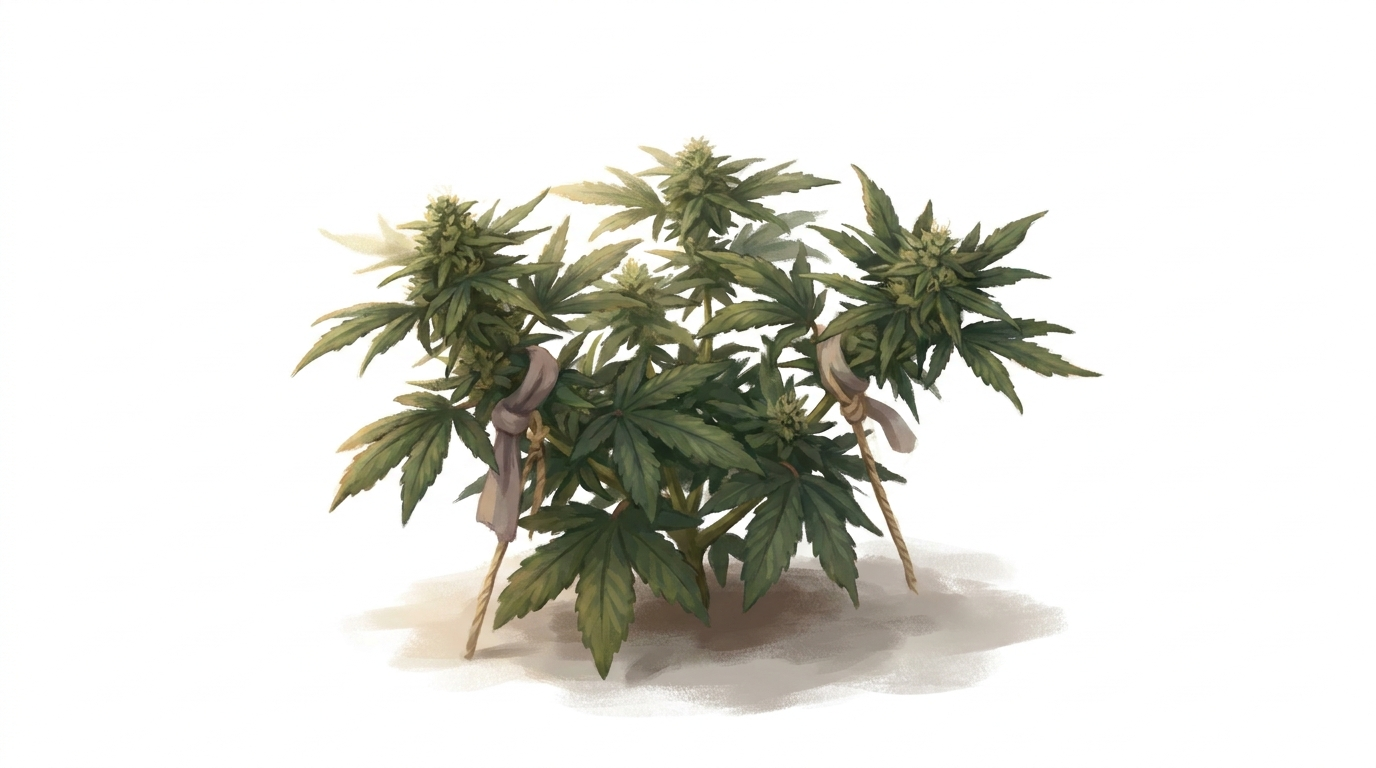
This is one of the most common beginner mistakes, and it comes from doing a correct technique on the wrong plant. Topping is standard on photoperiods. On an autoflower, the same cut can cost you most of the harvest — not because topping is bad, but because an auto runs on a clock that won’t wait for it to heal.
The short version:
- Technically you can top an auto — but it usually stunts the plant
- Autos flower by age (around week 3–4), not by light, with no recovery window
- A cut early in life is spent healing instead of building structure
- Low-stress training (gentle bending and tying) is the safe way to train an auto
- If you must top, do it very early and accept the risk
Want the full breakdown? Keep scrolling.
Why does topping hurt autoflowers?
A photoperiod is a flexible lease — you decide when it flowers by changing the light, so if it needs another week of veg to recover from a cut, you give it. An autoflower is a fixed-term contract: it flowers based on age, usually around week three or four, no matter what you do. The Eager Surgeon topped his auto on day fourteen, the way he had his photoperiods. The plant went into flower at day twenty-one still stressed and still trying to heal the cut, and grew to eight inches with two sad little colas — about seven grams from a strain that should have done ten times that. He didn’t do anything wrong; he did a photoperiod technique on an autoflower timeline. The seed type put the plant on a fixed schedule, and he spent a quarter of it asking it to recover from surgery.
How should I train an autoflower instead?
Low-stress training only. Bend and tie, don’t cut. Start early while the stems are flexible, ease the tallest growth out to the sides to flatten the canopy, and stop once the stretch begins — from there she needs her energy for buds, not for fighting your ties. Soft plant ties (DIG stock them) anchored to the pot rim are all you need. Because there’s no wound to heal, LST gives you a fuller, more even canopy without costing the plant any of its fixed timeline. Done gently, an auto trained this way fills a small tent nicely and finishes on schedule.
What if I really want to top an auto?
If you’re set on it, the only way to reduce the damage is to do it very early — while the plant is young enough to have a little recovery before the clock flips — and to accept it’s still a gamble. Many experienced auto growers skip topping entirely for exactly this reason and lean on LST, which gets most of the canopy benefit with none of the timeline risk. The honest beginner advice: keep your hands gentle on an auto. Pick a photoperiod if you want the freedom to top, train hard and recover from mistakes; pick an auto for speed and simplicity, and train it softly.
FAQ
Can you top an autoflower? You can, but it often stunts the plant because autos flower on a fixed schedule with no time to recover. Most growers use low-stress training instead.
What’s the best way to train an autoflower? Low-stress training — gentle bending and tying, started early and stopped once the stretch begins. It flattens the canopy without a wound to heal.
Why did my topped autoflower stay tiny? It spent its short, fixed life healing the cut instead of building structure, then flipped to flower on schedule while still stressed. The timing, not the technique, caused the stunting.