The Entourage Effect: Do Terpenes Change Your High?
The “entourage effect” is the reason growers say two strains at the same THC can come across completely differently. It’s an appealing, intuitive idea, and there’s real science exploring it — but it’s also overstated and oversold, so it’s worth being clear about what it does and doesn’t claim. Here’s a careful look.
The short version:
- The entourage effect = the idea that cannabinoids and terpenes work together, not in isolation
- It’s offered as why identical-THC strains can feel different
- Research (e.g. Chacon et al., open access) is exploring terpene–cannabinoid interactions
- The evidence is developing and not settled — treat it as a framework, not a fact
- Practically: read the terpene profile, not just the THC number — as a smell-and-feel guide
Want the full breakdown? Keep scrolling.
What is the entourage effect?
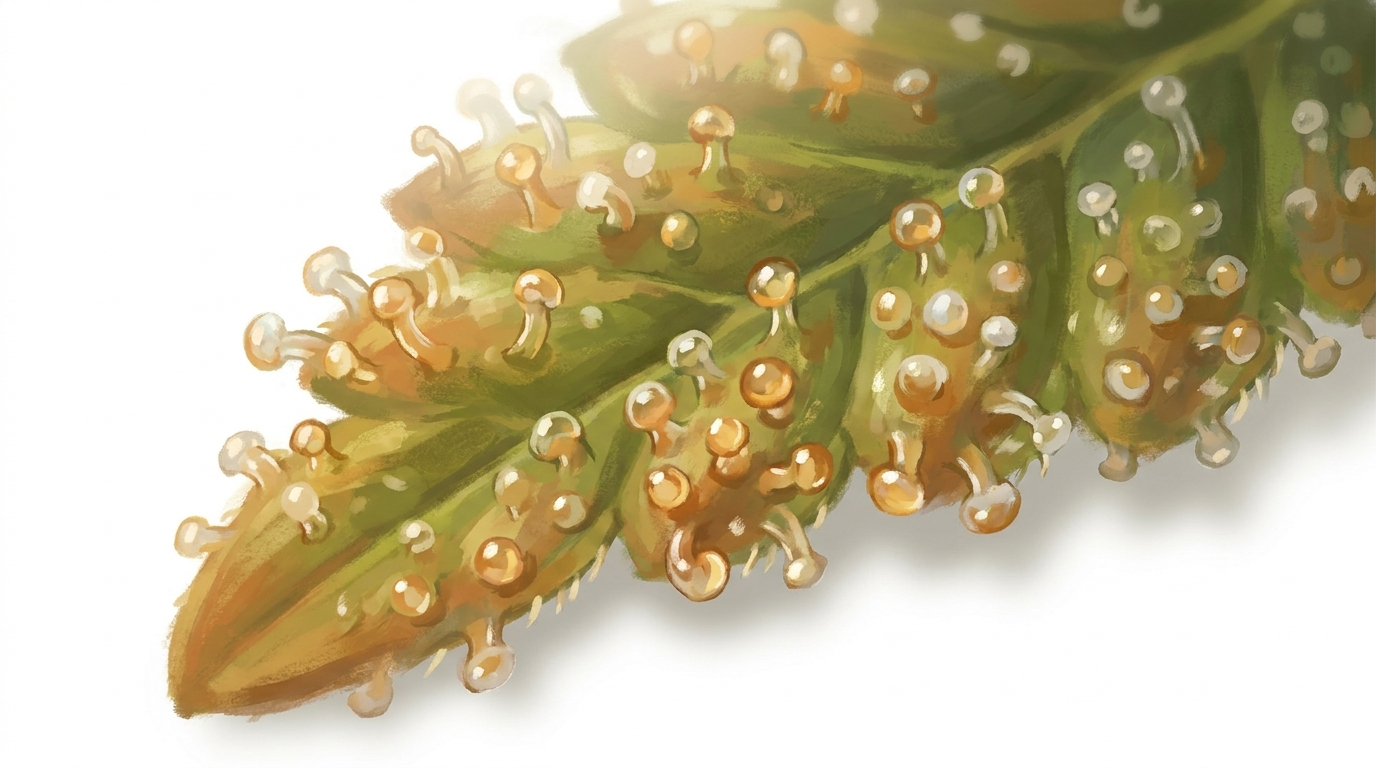
The claim is that the plant’s compounds — the cannabinoids like THC and CBD plus the aromatic terpenes — act together to shape the overall experience, rather than each working alone. So a strain high in THC and high in myrcene is said to come across differently from a strain high in THC and high in limonene, even at the same THC percentage. It’s the standard explanation for why THC alone is a poor predictor of how a strain feels, and why growers and users put weight on the terpene profile. The compounds are made side by side in the same trichomes, which is part of why the “they work as a team” idea is so intuitive.
What does the evidence actually say?
This is where honesty matters. There’s genuine research into terpene–cannabinoid interactions — work like Chacon and colleagues (open-access) looks at secondary terpenes and possible synergy — and the patterns growers report are consistent enough to be useful. But the entourage effect is a developing area, not a settled fact: the mechanisms aren’t fully pinned down, study designs vary, and not everyone agrees on how strong or real the interaction is. So the responsible position is the in-between one: the smell-and-feel patterns are real and consistent enough to guide a strain choice, but you should treat the entourage effect as a framework that’s still being tested, not an established law — and certainly not as any kind of health claim, which it isn’t.
How should I use this as a grower?
Practically, and modestly. The takeaway that holds up regardless of how the science resolves is: don’t judge a strain on THC alone — look at the dominant terpenes too. A myrcene-led strain at 20% THC will likely read heavier than a limonene-led one at 25%, and that’s useful for choosing something that suits you. Use the terpene profile as a smell-and-feel marker, not a promise of a specific effect. And if a breeder lists terpenes, that’s a good sign they know their genetics; if they only ever shout the THC number, take the hint. The entourage effect, treated as a sensible guide rather than a slogan, points you toward the most reliable habit in strain selection: trust the nose and the profile, not just the headline percentage.
FAQ
What is the entourage effect? The idea that cannabinoids and terpenes work together, rather than in isolation, to shape the overall experience of a cannabis strain. It’s used to explain why identical-THC strains can feel different.
Is the entourage effect proven? Not settled. There’s real research into terpene–cannabinoid interactions, and the patterns are consistent enough to be useful, but the mechanisms aren’t fully established. Treat it as a developing framework.
How do I use the entourage effect when choosing a strain? Look at the dominant terpenes, not just THC. Use the terpene profile as a smell-and-feel guide to how a strain will likely come across — a more reliable cue than the THC number alone.