How to Diagnose a Sick Cannabis Plant (Step by Step)
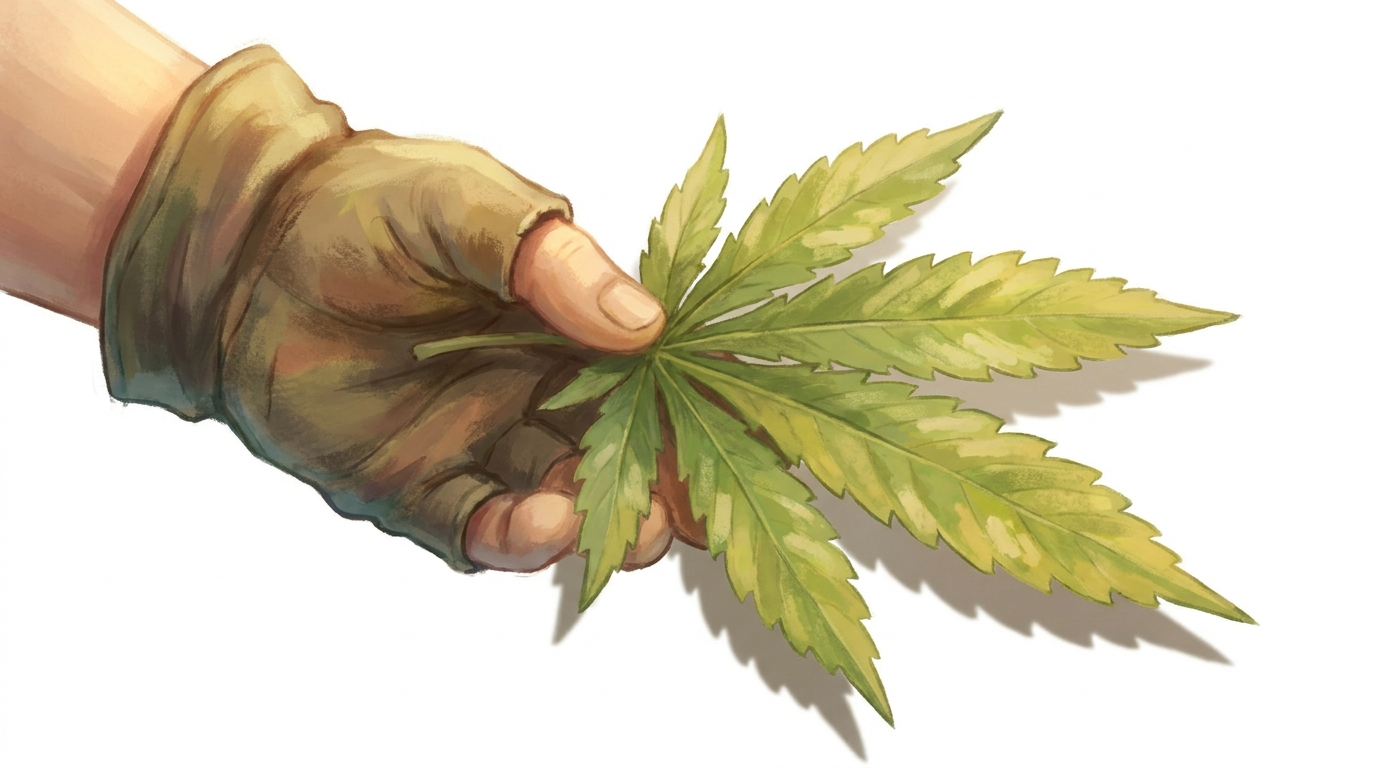
The Googler had one yellow leaf and threw the whole pharmacy at it. Flush, CalMag, a foliar spray, a brand change — five moves in an afternoon, on a plant that was fine. He couldn’t tell you which move helped because none of them were needed. The fix wasn’t a product. It was a checklist.
Before you change a single thing, run these five questions. In this order. Every time.
The short version:
- Where is the symptom — bottom, middle, top, or all over?
- How many leaves — one, or a pattern?
- Is it spreading or has it stopped?
- Sudden or gradual?
- What changed recently in your inputs?
- Diagnose in this order: environment, water, pH, nutrients — nutrients last
Want the full breakdown? Keep scrolling.
Where on the plant is the problem?
This single question narrows the field fast. Bottom, moving up = a mobile nutrient (nitrogen, phosphorus, potassium, magnesium) or natural ageing — the plant strips old leaves to feed new growth. Top, new growth twisted or pale = an immobile nutrient (calcium, iron, manganese) the plant can’t move around, so the youngest growth shows it first. Whole plant, all over = environmental or root-zone: over/underwatering, root rot, bad pH, temperature shock. Random, patchy spots or holes = pests or physical damage, not nutrients — nutrient problems are systematic, pests are messy.
Is it one leaf, and is it spreading?
One old leaf at the bottom is almost never an emergency. Many leaves with the same symptom across a section is a pattern, and patterns get investigated. Then check movement: look now, wait 24 hours, look again. Static and it might be a one-off — a splash of feed, a brief heat spike that’s passed. Spreading means something’s actively wrong. Sudden changes (overnight droop, fast yellowing) point to the environment; gradual fades over days point to root zone, pH or the plant’s own life cycle.
What changed — and what do I check first?
The question that would have saved the Googler entirely: nothing had changed. Same tent, same light, same feed — just one old leaf gone yellow. If your inputs didn’t change, the plant is usually following its own clock, not reacting to a mistake. And when you do act, follow the order: environment first, water second, pH third, nutrients last. Nine times out of ten you never reach nutrients, because the cause was simpler than the panic. A tenner jeweller’s loupe (DIG stock them) settles the pest-versus-nutrient question in seconds — flip the leaf, look close.
FAQ
What’s the first thing to check on a sick plant? The environment — temperature, humidity, light distance, airflow. Most problems start there, and it’s the fastest thing to rule in or out before you touch nutrients.
Should I treat one yellow leaf? Usually not, especially an old, shaded, lower leaf. Plants drop leaves like trees do. Watch it; act only if a pattern spreads.
How long should I wait to see if a fix worked? Change one thing, then wait 48–72 hours. The plant responds slowly — the root zone takes days to show in the leaves. Changing five things at once teaches you nothing.