IPM for Cannabis: Stopping Pests Before They Start
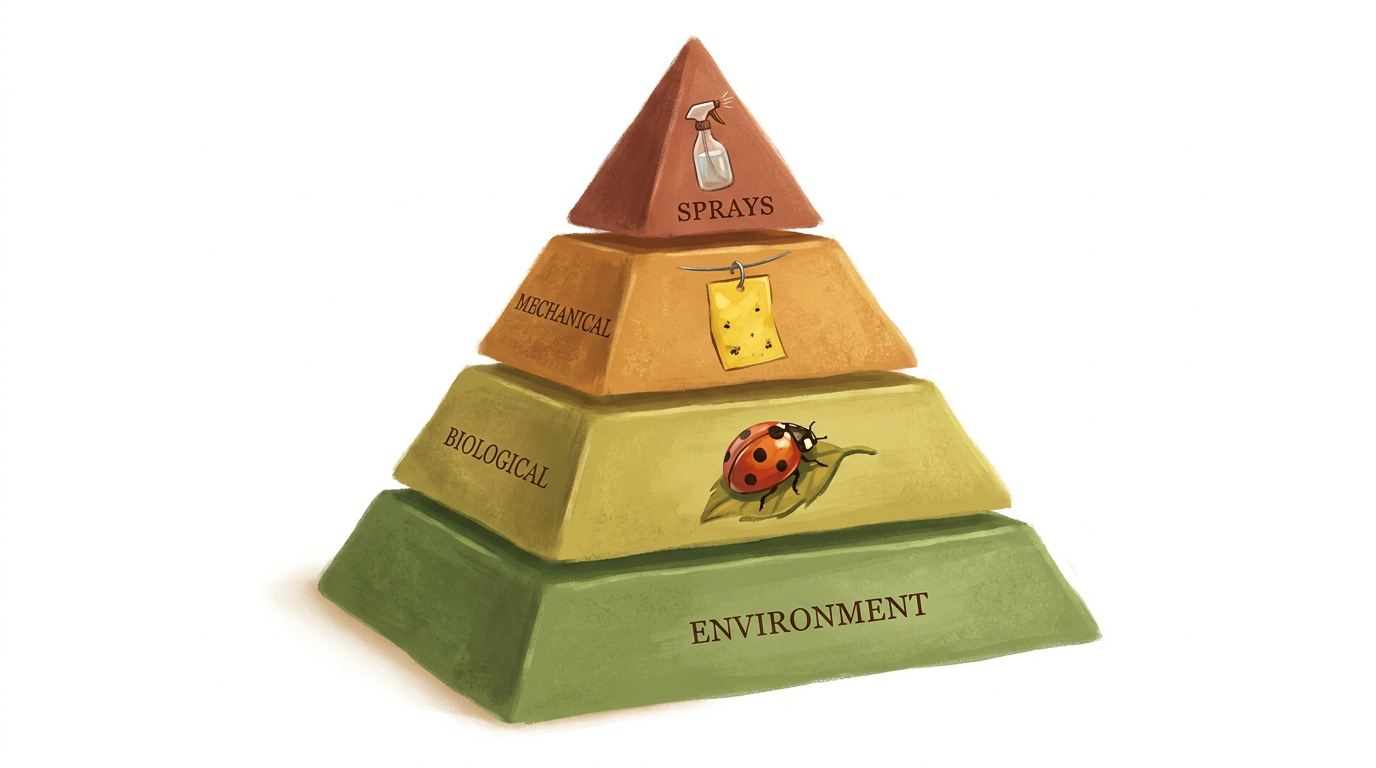
The Chemist reached for the spray bottle the moment anything moved. Fungus gnat? Spray. Spot on a leaf? Spray. Not sure what it is? Spray, just in case. The tent smelled like a garden centre, the plants were coated in residue, and the beneficial insects that had been quietly eating his aphids got wiped out along with everything else — so now the aphids had no predators and exploded. He built a system: it was just the wrong one. IPM is the opposite — think first, spray last.
The short version:
- IPM = Integrated Pest Management: a layered system, not a spray
- Layer 1, environment, does about 80% of the work
- Layer 2 is biological controls — predators that eat your pests
- Layer 3 is mechanical — traps, hand-removal, a jet of water
- Layer 4, sprays, is the last resort, used with intention
Want the full breakdown? Keep scrolling.
Layer 1 — environment (most of the job)
This is the foundation and it prevents more than any product. Temperature, humidity, airflow, cleanliness. Spider mites struggle above 55% humidity and in moving air. Powdery mildew struggles below 55% and in moving air. Fungus gnats can’t breed in dry topsoil. Bud rot needs high humidity in still air. Dial the environment for the stage and most pests and diseases simply can’t get established. Then keep the space clean: sweep dead leaves, bin spent plant matter, don’t leave runoff in trays, wipe kit between grows, wash your hands, and don’t wander in wearing the hoodie you just crossed the garden in. Growers and their tools carry pests between plants as readily as the pests move themselves — a dedicated, cleaned set of scissors for the tent sounds excessive until you lose a grow to something you carried in on your sleeve.
Layers 2 and 3 — biologicals and mechanical
Biological controls are nature’s pest management: predatory mites for spider mites, ladybird larvae that eat aphids faster than they breed, nematodes that hunt fungus-gnat larvae in the soil. You order a sachet, hang it in the tent, and they work continuously — no residue, no spray timing, a living balance that’s exactly how commercial grows stay clean (DIG stock the common ones). Mechanical controls sit alongside them: yellow sticky traps to monitor and catch flyers, squishing the aphid you see, pruning an affected leaf, a strong jet of water to knock pests off in veg. These are tools you use with the biologicals, not instead of them.
Layer 4 — sprays, last and with intention
When the environment’s right, the biologicals are working, and a problem is still growing — then you spray, with the right product for the right pest. Neem oil (veg only) disrupts lifecycles and repels. Insecticidal soap kills soft-bodied pests on contact and breaks down fast — the go-to when you must spray. Pyrethrin kills on contact and breaks down in a day, but it’s broad-spectrum so it hits beneficials too — spot-treat, don’t blanket. The hard rule never moves: you’re going to smoke this. No systemic pesticides ever, even “organic” ones, and nothing sprayed in the last two to three weeks before harvest. If a problem is bad enough to need spraying inside that window, the answer is an early harvest, not a late spray.
FAQ
What is IPM in cannabis growing? Integrated Pest Management — a layered system that prevents most pests through environment and biologicals, uses traps and hand-removal next, and treats sprays as a last resort.
What’s the most important part of IPM? The environment. Correct temperature, humidity, airflow and cleanliness prevent the majority of pests and diseases before any product is needed.
Can I just spray everything to be safe? No. Blanket spraying kills the beneficial insects keeping pests in check and leaves residue on what you’ll smoke. Spray only as a targeted last resort.