Root Aphids and Mealybugs: Hidden Root-Zone Pests
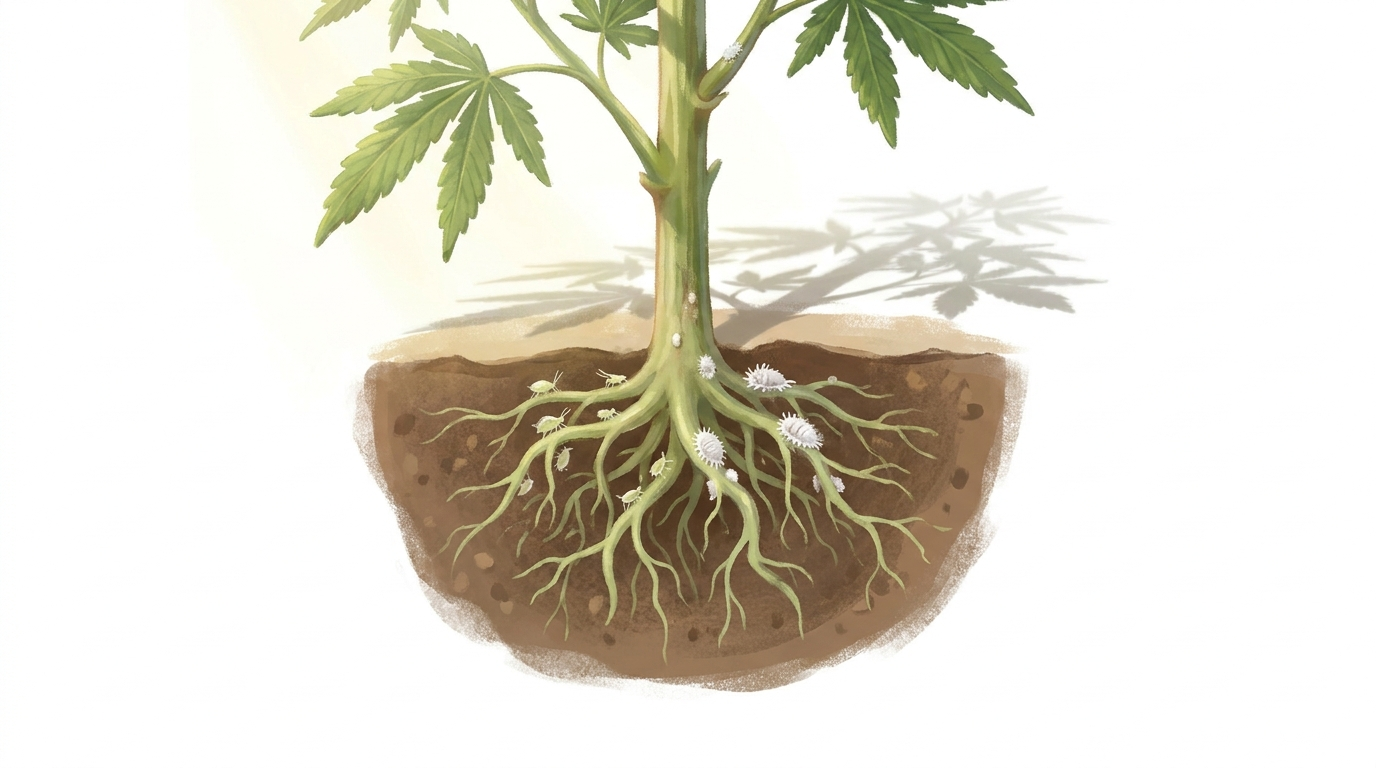
Most pests at least have the decency to sit on a leaf where you can find them. Root aphids and mealybugs don’t. They work the root zone and the lower stem, out of sight, and the first thing you usually notice is a plant that’s stalled, hungry-looking and not responding to feed — which sends you chasing a deficiency that was never the problem. They’re uncommon, but when they turn up they’re stubborn, because the damage is happening where you don’t look.
The short version:
- They live in the root zone and lower stem, not the canopy — so you spot them late
- Symptoms read like a deficiency: stalled growth, yellowing, a plant that won’t perk up
- Root aphids may send winged adults up the stem; mealybugs look like white waxy fluff
- Often arrive on clones or in reused soil — quarantine and fresh medium prevent most cases
- Treat the soil, not the leaves: beneficial nematodes and a soil drench
Want the full breakdown? Keep scrolling.
How do I know it’s a root-zone pest?
You usually don’t, at first — that’s the trap. The plant looks hungry and slow despite correct feeding and pH, because the pests are damaging the roots that do the feeding. Look for the clues that don’t fit a deficiency: small winged insects climbing the lower stem or appearing on nearby sticky traps (root aphids produce winged adults when crowded), or white, waxy, cottony clumps tucked at the base of the stem or on roots when you check the pot (mealybugs). If you can slip the plant out of the pot, healthy roots are white and firm; pest-ridden ones look dirty, sparse and may carry tiny insects or white wax. Yellow sticky traps laid on the soil surface catch the wandering adults and tell you something’s down there.
How do I treat root aphids and mealybugs?
Treat where they live — the medium. Beneficial nematodes watered into the soil hunt soil-dwelling pests and their young without harming the plant or roots (DIG stock them); repeat over a couple of weeks. A soil drench with insecticidal soap or diluted neem in veg can knock down what’s in the top of the root zone. For mealybugs on the lower stem, a cotton bud of dilute isopropyl alcohol removes the waxy clusters directly. Because the egg and juvenile stages hide in the medium, one treatment won’t do it — repeat to break the cycle, same as any pest. In a bad case on a cheap plant, the honest move can be to bin it, sterilise, and start clean rather than nurse it for weeks.
How do I stop them?
Two habits. Quarantine every clone and cutting for a week before it joins the tent — root aphids and mealybugs are classic hitchhikers on someone else’s cut. And don’t reuse old soil for new plants; tired medium from a previous grow can carry eggs. Fresh medium and a week of isolation prevent the large majority of root-zone infestations.
FAQ
How do I know if I have root aphids? Stalled, hungry-looking growth that doesn’t respond to correct feeding, plus small winged insects on the lower stem or soil sticky traps. Confirm by checking the root zone.
What do mealybugs look like on cannabis? White, waxy, cottony clusters at the base of the stem or on the roots. They suck sap and weaken the plant from below.
Can I treat root pests with a leaf spray? Not effectively. They live in the medium, so treat the soil — beneficial nematodes and a soil drench — and repeat to catch the hidden stages.