When Prevention Fails: Safe Cannabis Pest Treatments
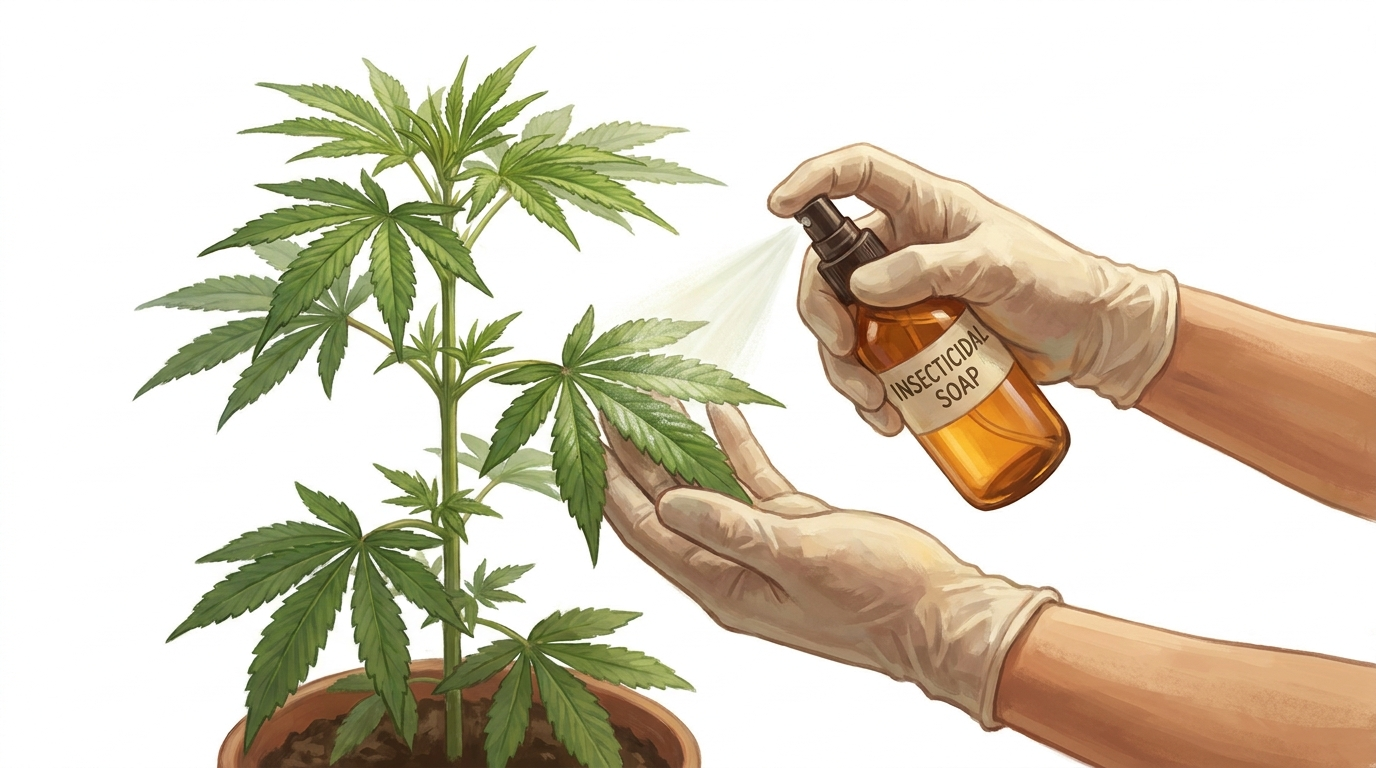
Sometimes you do everything right and it still goes sideways — or, more honestly, you did something wrong three weeks ago and you’re only finding out now. The Hospice couldn’t let go: half the leaves gone, mites webbing the top colas, and still spraying, still hoping, a new forum concoction every day. The treatment cost more than the harvest would be worth, and while he nursed one dying plant the problem spread to the healthy ones. So before the sprays, the rule that governs all of them.
The short version:
- You’ll smoke this plant — so contact sprays that break down fast, never systemics
- Insecticidal soap and pyrethrin are the safer, fast-breakdown options
- Neem oil is veg-only — you don’t want it on flowers
- No spraying in the last 2–3 weeks before harvest, full stop
- Sometimes the best “treatment” is a bin bag or an early chop
Want the full breakdown? Keep scrolling.
What’s safe to spray on cannabis?
Think contact, not systemic. Insecticidal soap kills soft-bodied pests — mites, aphids, whitefly, thrips — on contact by breaking down their cell membranes, then breaks down itself fast with minimal residue. It’s the go-to when you actually need to spray. Pyrethrin, from chrysanthemum flowers, kills on contact and breaks down in sunlight within a day; it’s broad-spectrum, so it also kills beneficials — spot-treat, don’t blanket. Neem oil disrupts pest lifecycles and repels, used as a foliar spray or soil drench, but veg only — its smell and taste have no business on flowers you’re going to smoke. As with any pest, repeat applications spaced a few days apart to break the lifecycle, rather than one spray and a prayer.
What should I never use?
Never use systemic pesticides on cannabis — not even ones labelled “organic.” Systemics travel inside the plant tissue, which means they end up in the buds, which means they end up in your lungs or your edibles. Contact sprays sit on the surface and break down; systemics don’t give you that out. And the cut-off is absolute: nothing on the plant in the last two to three weeks before harvest. If an infestation is bad enough to need spraying inside that window, spraying isn’t the answer — the answer is an earlier harvest.
When do I stop treating and cut my losses?
There’s a moment in every bad infestation when the unsentimental truth lands: this plant is done, and the best pest tool in the kit is a bin bag. Bin it if the infestation is severe and the plant is more than three weeks out — the cost in time, stress and residue exceeds the harvest, and removing it protects the healthy plants nearby. One plant in the bin beats three in the bin next week. Harvest early if it’s within two to three weeks and the buds are still mostly clean — a slightly premature, smokeable harvest beats a rotten one. Then strip and sterilise the tent before the next run, so you’re not starting the next grow with the last one’s problem. Starting clean is far easier than getting clean.
FAQ
Can I spray pesticide during flowering? Only safe contact products like insecticidal soap, and never in the final two to three weeks. No systemics at any point. If it’s that bad late in flower, harvest early instead.
Is neem oil safe on buds? No. Neem is for veg only — its smell and taste linger and you don’t want it on flower you’ll smoke. Use insecticidal soap if you must treat in flower, well before harvest.
When should I just throw the plant out? When the infestation is severe and you’re more than three weeks from harvest, or it’s spreading to healthy plants. Removing it protects the rest of the crop — one loss beats several.