Why Curing Matters: The Science of Better Bud
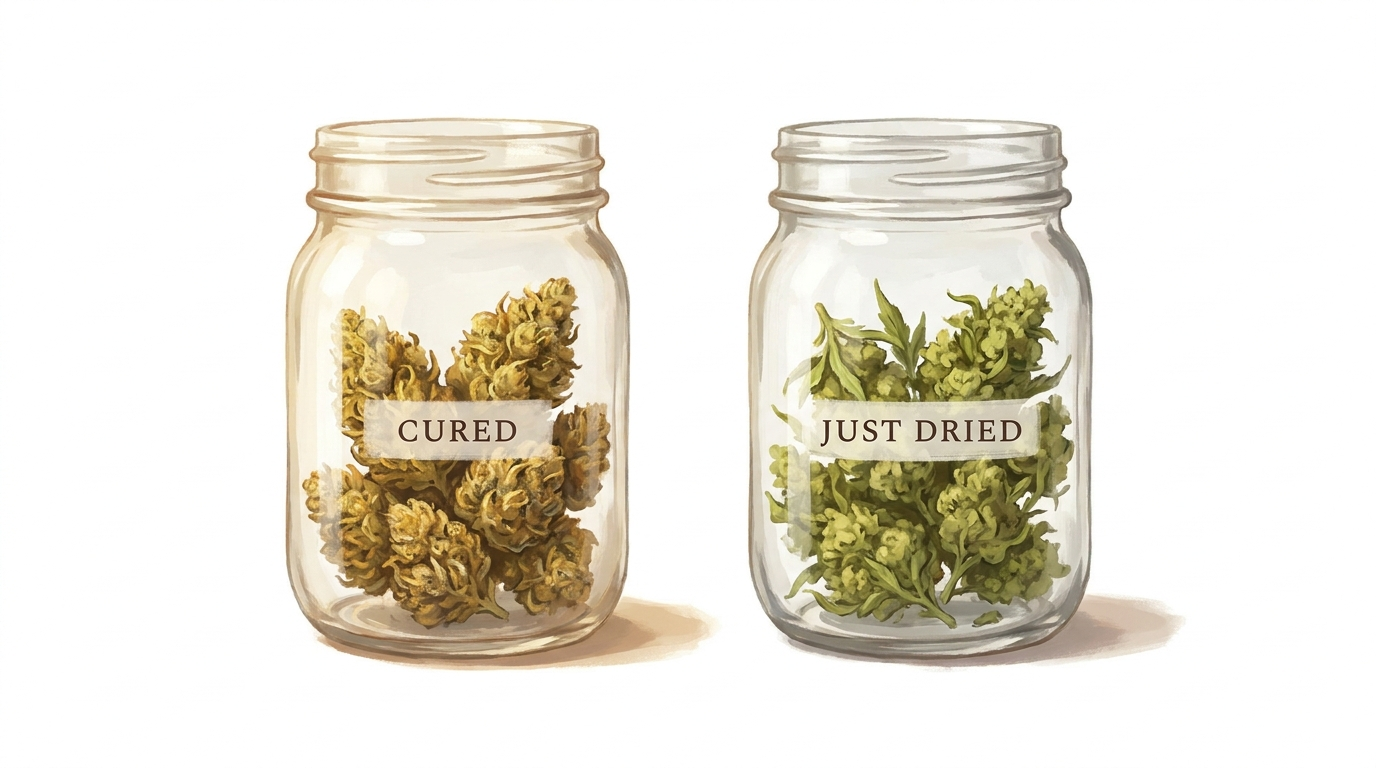
People skip curing because the bud is already dry and smokable, so it feels like optional faffing. It isn’t. Curing is chemistry happening slowly in a sealed jar, and it’s the single biggest jump in quality between drying and smoking. Understand what’s going on and you’ll never rush it again.
The short version:
- Drying removes most water; curing redistributes the moisture still trapped deep in the bud
- The remaining chlorophyll keeps breaking down — that’s the grassy, harsh smell leaving
- Terpenes develop and stabilise, so aroma and flavour deepen
- It also smooths the smoke and improves shelf life
- Minimum two weeks; the real complexity arrives at four to eight
Want the full breakdown? Keep scrolling.
What’s actually happening during a cure?
Three processes, all slow. First, moisture redistribution: even after a good dry, the dense centre of a bud holds more moisture than the outside. Sealed in a jar, that moisture migrates outward and evens through the flower, so it smokes consistently instead of crispy-outside, damp-inside. Second, chlorophyll breakdown: chlorophyll is the green pigment that powered the plant, and until it degrades the bud tastes like a hedge. Curing gives it the time to break down — that fading “cut grass” smell is the chlorophyll leaving. Third, terpene development: the aromatic compounds that give a strain its specific smell and flavour continue to develop and stabilise, which is why a cured bud smells of citrus or pine or fuel where a fresh-dried one just smells green.
Why can’t I just dry longer instead?
Because drying and curing do different jobs. Drying pulls the bulk of the water out; if you simply dried harder and longer you’d get brittle, over-dry bud with the chlorophyll and harshness locked in — you’d lose moisture without gaining the chemistry. Curing happens in a sealed, humidity-controlled environment (around 62%) precisely so the bud keeps enough moisture for those slow reactions to continue while the air is periodically exchanged by burping. It’s the controlled, slightly-moist, sealed conditions over weeks — not just more time in open air — that let the chlorophyll break down and the terpenes mature. Mason jars with a 62% pack (DIG stock both) create exactly that environment.
Is the difference really worth it?
Yes, and it’s not subtle. The same flower, dried identically, tastes and smells dramatically better after four weeks in jars than it does fresh-dried: harshness fades, the strain’s true aroma comes through, and the smoke turns smooth. Curing also improves how the flower keeps — properly cured, sealed and stored cool and dark, it holds quality for six to twelve months, where poorly cured bud degrades fast. The minimum worthwhile cure is two weeks, but the real payoff lands between four and eight. It’s the cheapest quality upgrade in the whole grow: some jars, a humidity pack, and the patience to open a lid now and then.
FAQ
Is curing cannabis really necessary? For quality, yes. Curing breaks down chlorophyll, redistributes moisture and develops terpenes — the difference between harsh, grassy smoke and smooth, flavourful flower. Drying alone doesn’t achieve it.
How does curing improve flavour? It lets chlorophyll degrade (removing the grassy harshness) and lets terpenes develop and stabilise, so the strain’s specific aroma and taste come through clearly.
Can I over-cure cannabis? Past about eight weeks you get diminishing returns rather than harm. Properly cured and stored flower simply holds its quality for months; it doesn’t keep dramatically improving forever.