Seedling
The first two weeks set the ceiling — give her a clean start, then get out of the way.
Everything from the seed you choose to how you germinate it decides how well the whole grow goes. Get the genetics, the moisture, and the patience right, and the plant does most of the work herself.
What good looks like
How the seedling stage unfolds
- 12-18 hrs
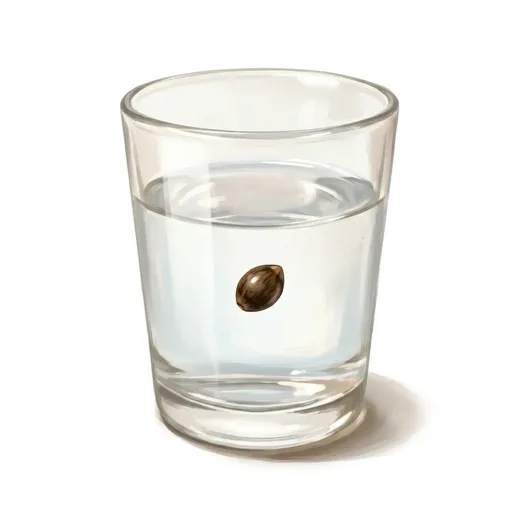
Soak
Seeds rest in a glass of room-temperature water for twelve to eighteen hours — long enough to soften the shell and wake the hormones inside. Floaters are fine; don’t read too much into them.
- Day 1-3
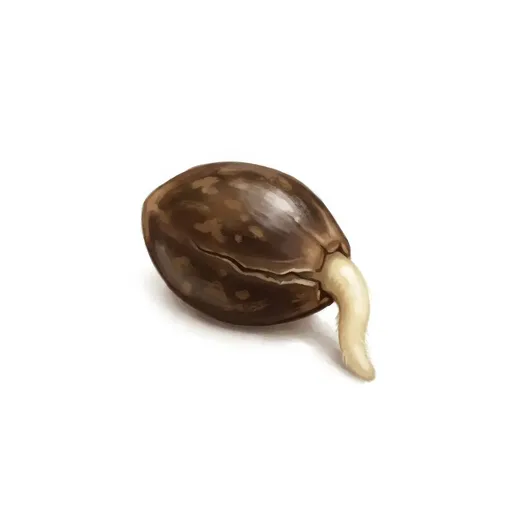
Taproot
On damp paper towel between two plates, kept dark and around 25°C, a small white taproot pushes out within 24-72 hours. Plant it once it’s half a centimetre to a centimetre long — don’t let it tangle.
- Day 3-5
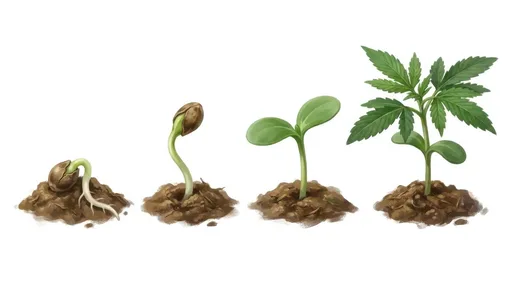
Sprout breaks soil
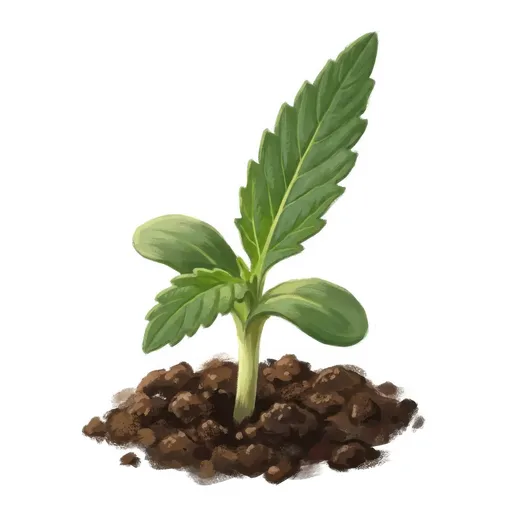
A pale stem pushes through the surface, often still wearing the shell like a hat. That’s normal — the shell usually drops off on its own.
- Day 5-7
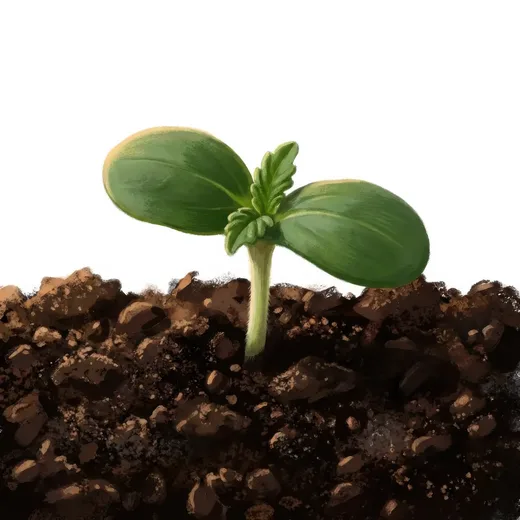
Cotyledons open
Two small round leaves spread out and feed the plant from the seed’s stored energy. They don’t look like cannabis leaves, and they’ll yellow and drop later — that’s fine.
- Day 7-14
First true leaves
The first real serrated leaves appear — a single finger, then three. She’s photosynthesising on her own now and building roots below the surface.
- Wk 3
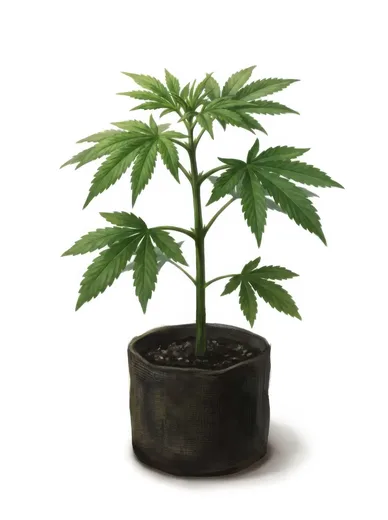
Young plant
Growth speeds up, the stem thickens, and roots fill the small pot. Three or four sets of true leaves and a stem you can’t easily bend means she’s ready for the next stage.
The numbers that matter
The numbers that matter
Do this
The seedling checklist
- Buy feminised seeds from a seed bank that names its breeders.
- Soak in water for 12-18 hours, then move to damp paper towel between two plates.
- Keep it damp, never soggy — the seed needs air as much as water.
- Plant the taproot down, about 1cm deep, in a light mix with no added nutrients.
- Keep the LED 60-75cm up and the light on 18-24 hours a day.
- Run a small fan on its lowest setting, not pointed straight at the plant.
- Water lightly with a spray bottle around the base every day or two — lift the pot to check.
- Hold all nutrients for the first two weeks, then start at quarter strength.
Watch for
Catch these early
The early sign, what it means, and the fix. The full stories are in the book.
Tall, thin, leaning like it’s had a few pints.
The Stretch — the light is too far away or too weak, so she’s reaching and building a stem that can’t hold itself up.
Fix: Lower the light or raise the plant, and mound a little soil up around the base for support. She’ll thicken once she’s getting enough light.
📖 Dave’s seen the stretchy ones recover in a week — and the ones left too long fold under their own weight. The full story →
Drooping, soil dark and wet, the base of the stem thin and slightly translucent.
The Drown — overwatering tipping into damping off, a fungus that thrives in wet, still, warm air.
Fix: Prevention is the only cure: less water, more air, and a fan. By the time the stem goes soft at the base, it’s usually too late.
📖 The same drowning Dave gave his barbecue-bag seed in a glass — three days with no oxygen turned it to compost. The full story →
Leaves curling, yellowing, or bleaching closest to the light.
The Scorch — the light is sitting too close and burning the first leaves.
Fix: Move it up. For seedlings, 60-75cm is usually safe with an LED, and when in doubt further away beats closer.
📖 Unlike the stretch, scorch is the one they don’t come back from. The full story →
Cotyledons yellowed and dropped, first leaves pale, barely any growth in a week.
The Starvation — a very light seed-starting mix can run out of food before you start feeding.
Fix: Start a quarter-strength feed, nothing stronger. A pale seedling greens up in days on a gentle feed and burns on a full dose.
📖 Dave saw a customer pot a seedling into full-strength compost — a three-course meal for something that needed a glass of water. The full story →
Questions
Seedling FAQ
Feminised or autoflower for my first grow?
Either, as long as it says feminised — that one word means only female plants, which is what you want. Autos are faster and more forgiving (seed to harvest in 8-12 weeks) but give you less control over size; photoperiods let you decide when to flip. For a first grow, an auto’s trade-off is usually worth it.
How long should I soak my seeds?
Twelve to eighteen hours in room-temperature water, then onto damp paper towel. Not longer. Leaving a seed swimming for days starves it of oxygen and it rots — that’s exactly how a forgotten bag seed ends up grey and mushy.
My seed hasn’t cracked after three days — is it dead?
Probably not. Some seeds take up to seven days, especially older or harder-shelled ones. Only call it dead if it’s gone soft and mushy, or if it’s still completely unchanged after a full week.
When do I start feeding nutrients?
Not for the first two weeks. The seedling feeds itself from the cotyledons and whatever’s in the soil. Wait until the cotyledons start to yellow and the plant has two or three sets of true leaves, then start at quarter strength — not half, not full.
How do I know she’s ready for a bigger pot?
Look for three or four sets of true leaves (not counting the cotyledons), a stem you can’t easily bend with two fingers, and roots poking out the drainage holes. Leave her too long and the roots circle the pot and growth stalls — that’s rootbound, and it’s the next stage’s territory.
The whole story is in the book
The full germination stories — the drowned barbecue seed, the two-euro ten-pack that hermied a whole grow — and every scar Dave earned learning this are in Grow Good Bud.
The web gives you the lesson; Grow Good Bud keeps the scars. The kit to grow it is at Dublin Indoor Gardening.