Best Soil for Growing Cannabis (and What to Avoid)
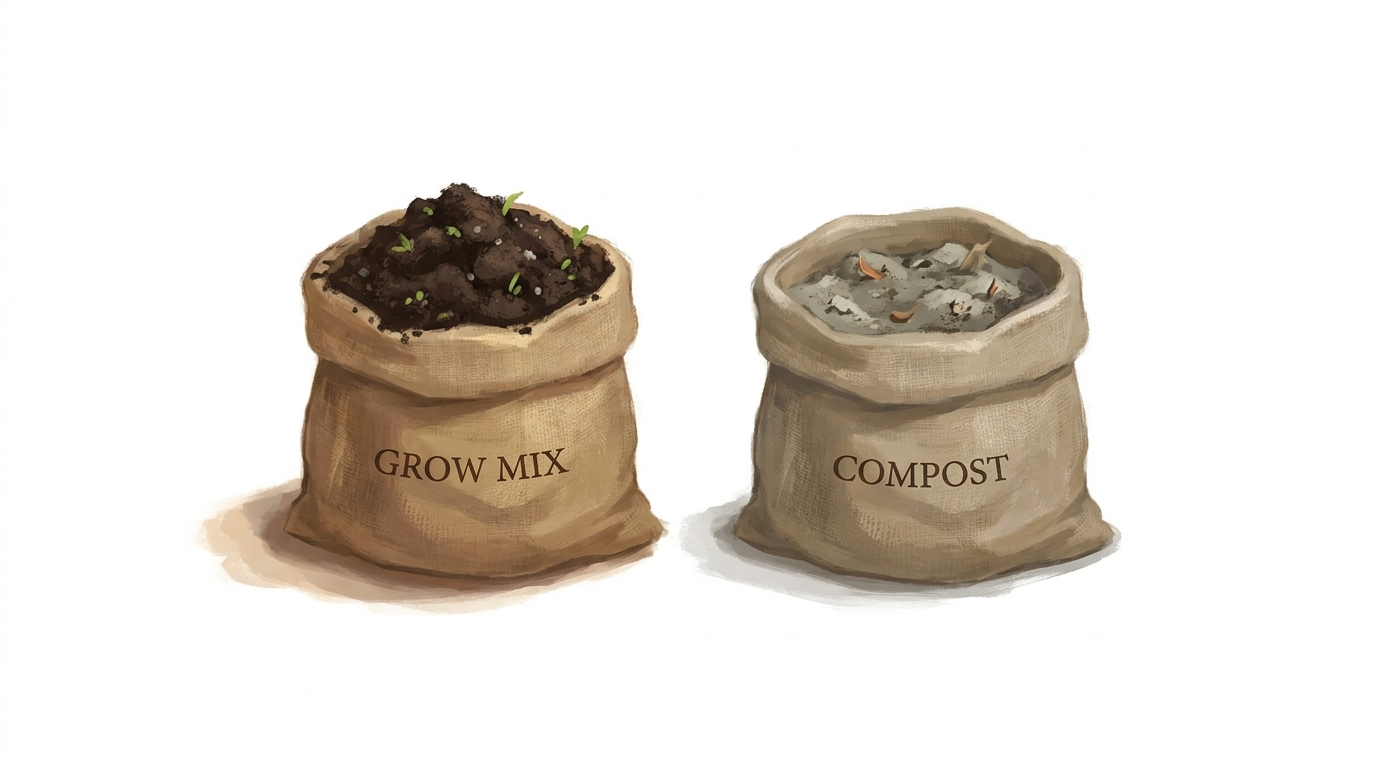
Soil is the most under-rated decision a beginner makes, and the cheapest place to wreck a grow. My first plant died in a four-euro bag of garden-centre compost — dense, airless, acidic — and I spent weeks feeding a plant that couldn’t eat because it couldn’t breathe. Here’s what actually goes in a good cannabis soil and how to pick one.
The short version:
- Roots want air more than water — good soil is an oxygen system that also holds water and food
- A proper mix balances three jobs: hold water (peat/coco), make air (perlite), feed (castings)
- Garden-centre “multipurpose” compost is too dense and too acidic — avoid it
- Use a light mix for seedlings, a rich mix for the final pot
- Buy one right bag from a grow shop; don’t play chemist
Want the full breakdown? Keep scrolling.
What makes a good cannabis soil?
Three jobs happen in the bag, and everything in the mix does one of them. Holding water: the bulk is peat (acidic, decent retention) or coco coir (pH-neutral, better air-to-water, doesn’t compact). Making air: perlite — the white volcanic-glass bits that create permanent air channels so the roots can breathe between waterings. That’s the thing my garden compost had none of. Feeding: worm castings (gentle, slow nitrogen — the plant’s “packed lunch” for its first weeks), sometimes bat guano (phosphorus for flower). Plus a couple of helpers: dolomite lime to buffer pH into the 6.0–7.0 cannabis wants (peat is naturally too acidic), and mycorrhizae, beneficial fungi that extend the roots’ reach. A good bag has these dialled in — which is exactly what the Alchemist forgets when he piles extra guano and blood meal onto a soil that’s already balanced and burns his seedling in four days.
Why not just use garden-centre compost?
Because “multipurpose compost” is built for window boxes and bedding plants that sit in the rain and don’t mind wet feet — not for cannabis in a pot. It’s usually fine peat with no perlite and poor drainage, the pH is often too low (mine was around 4.5, where roots can’t absorb nutrients even if they’re there), and the nutrient content is unpredictable. It compacts, turns to sludge when overwatered, and recreates the exact swamp that kills first plants. That’s the gap between four euro and twelve: twelve buys soil engineered for the plant; four buys three weeks of yellow leaves and confusion. One aside for Ireland — peat is increasingly restricted as protected bogland, so you’ll see more coco-based and “peat-free” mixes, and that’s no bad thing: coco holds air and water better and doesn’t compact as fast.
Which bag should I buy?
Match the mix to the stage. A light mix (Biobizz Light Mix, Plagron Lightmix) has minimal nutrients and gentle structure — that’s where germinated seeds and fresh transplants go, because it won’t burn them. A rich mix (Biobizz All Mix, Plagron Royalmix) is pre-loaded with castings and composted material to carry a plant through its first weeks of main growth — that’s the final pot, not the seedling pot (a seedling in rich soil is the Alchemist’s burnt plant). There’s also a middle road like Canna Terra Professional — consistent batch to batch, lighter on pre-loaded nutrients so you control the feeding yourself. DIG stock the light and rich mixes. For a first grow: one light mix for starting, one rich mix for the final pot, and resist the urge to build your own super-soil.
FAQ
Can I use garden compost to grow cannabis? Not recommended. Multipurpose compost is too dense, drains poorly and is usually too acidic, creating the waterlogged, locked-out conditions that kill plants. Use a grow-shop cannabis soil instead.
What’s the difference between light mix and all-mix soil? Light mix has minimal nutrients for seedlings and transplants that can’t handle feeding yet; all-mix (rich mix) is pre-loaded with nutrition for the final pot where the plant does its main growing.
Do I need to add nutrients to bagged soil? A rich mix carries the plant for the first few weeks before you start liquid feeds; a light or lower-nutrient mix means feeding sooner. Either way, start gentle — overfeeding burns more plants than underfeeding.