Cannabis Hydro Systems Compared (DWC, Drip, Ebb and Flow)
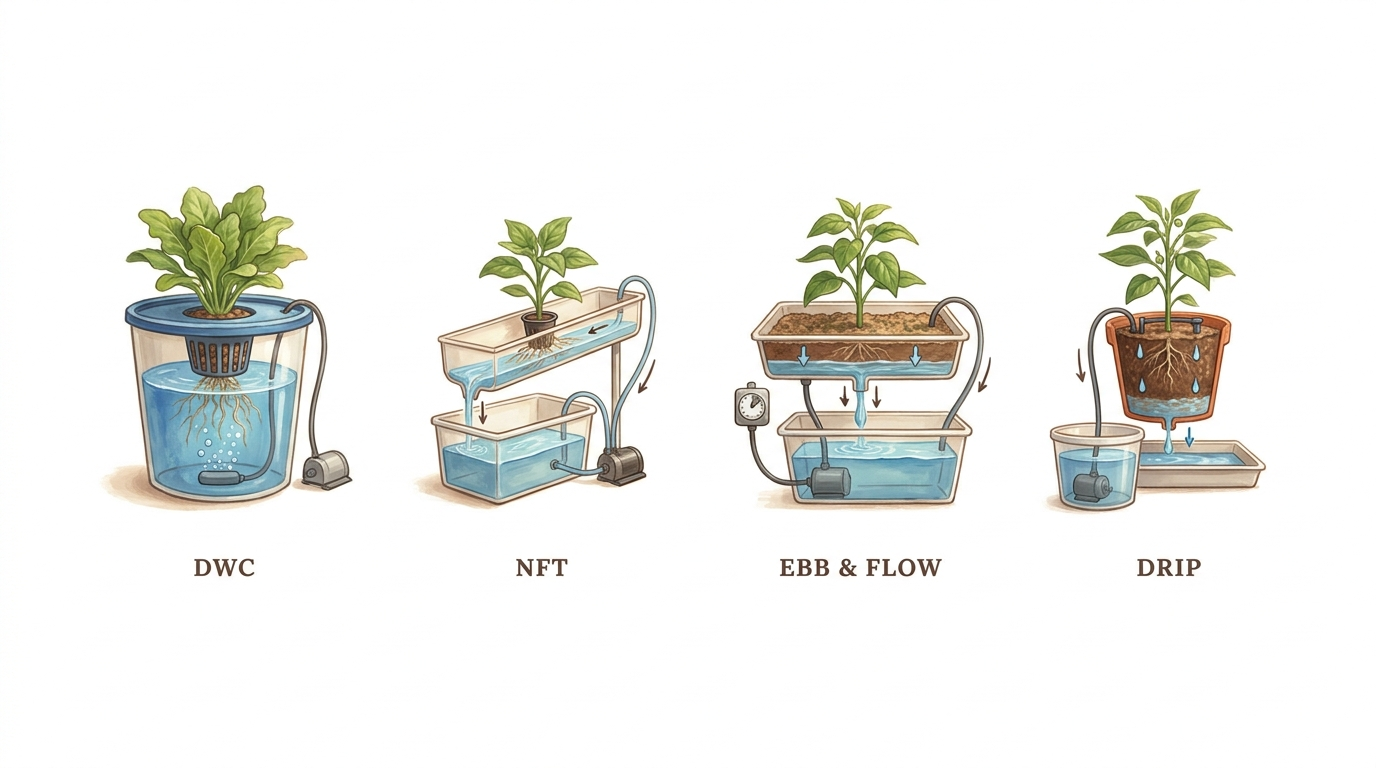
People want a ranking of hydro systems. There isn’t one. Each system trades simplicity, performance and how unforgiving it is when something fails. Knowing how each works — and how fast it punishes a pump failure — is what lets you pick the one that suits you.
The short version:
- DWC — roots in an aerated bucket; simplest to start, but the reservoir is everything
- NFT — a thin film flows over roots; high-performance but pump-failure is fast death
- Ebb and flow — floods and drains a tray; the most forgiving active system
- Drip — feeds a medium from above; closest to coco/soil feel
- Aeroponics — roots misted in air; maximum performance, maximum risk — not for beginners
Want the full breakdown? Keep scrolling.
The simpler systems — DWC and ebb and flow
DWC (Deep Water Culture) is where most beginners start: a bucket of nutrient solution, a net pot in the lid holding the plant in clay pebbles, roots hanging into the water, and an air pump running 24/7 to keep it oxygenated. One bucket, one pump, no timer — and roots that come in dense and white. But the reservoir is everything: temperature, pH, dissolved oxygen and cleanliness are non-negotiable, and warm water (the Hot Tub) brings root rot within days. DWC rewards five minutes of daily attention; skip it and the bucket tells you about it. Ebb and flow (flood and drain) is arguably the most forgiving active system: a pump floods a tray holding pots or cubes several times a day, then it drains back to the reservoir, giving roots an alternating wet/dry rhythm closer to soil. A pump failure isn’t instantly fatal because the medium holds moisture from the last flood — keep flood cycles under half an hour, though, or submerged roots drown in oxygen-depleted solution.
The demanding systems — NFT, drip and aeroponics
NFT (Nutrient Film Technique) flows a thin film of solution continuously over roots in a sloped channel — high-performance when dialled in, but utterly pump-dependent: stop the flow and the roots dry in hours, not days, because there’s essentially no medium holding moisture (the Power Cut grower loses six hours and comes back to crispy roots). Drip systems drip solution onto a physical medium (rockwool, clay pebbles, or coco) from above and let it drain — the closest hydro gets to the feel of soil, and if you’ve drip-fed coco you’ve used a form of it; the enemy is blocked or kinked emitters. Aeroponics mists bare roots hanging in a sealed chamber — maximum oxygen, maximum growth, maximum disaster when a nozzle clogs; respect it and move on, it’s not a beginner system. There’s also the humble wick system — no pump, capillary action draws solution up — nearly foolproof and low-maintenance, but slow, and the one hydro setup that forgives you forgetting about it.
Which should I pick?
Match it to your temperament and space, not to a “best” list. If you want the simplest entry and you’ll check it daily, a single DWC bucket is the usual starting point. If you want something more forgiving of a missed moment, ebb and flow or a drip setup buys you more time. Steer clear of NFT and aeroponics until you’ve a system or two behind you, because their failure timelines are measured in hours. And whichever you choose, the non-negotiables — pH, EC and water temperature — matter more than the system you pick. DIG stock DWC kits and air pumps if you want to start with the simplest.
FAQ
What’s the easiest hydroponic system for beginners? DWC (deep water culture) — one bucket, one air pump, no timer. Just keep the reservoir cool, clean and correctly dosed, and check it daily.
Which hydro system is most forgiving of a pump failure? Ebb and flow and drip systems, because the growing medium holds moisture from the last feed. NFT and aeroponics dry out in hours when the pump stops.
Is there a best hydroponic system? No. Each trades simplicity, performance and risk differently. The right one depends on your space, budget and how much daily attention you’ll give it.