Cannabis Early Veg: What to Expect (Weeks 3–5)
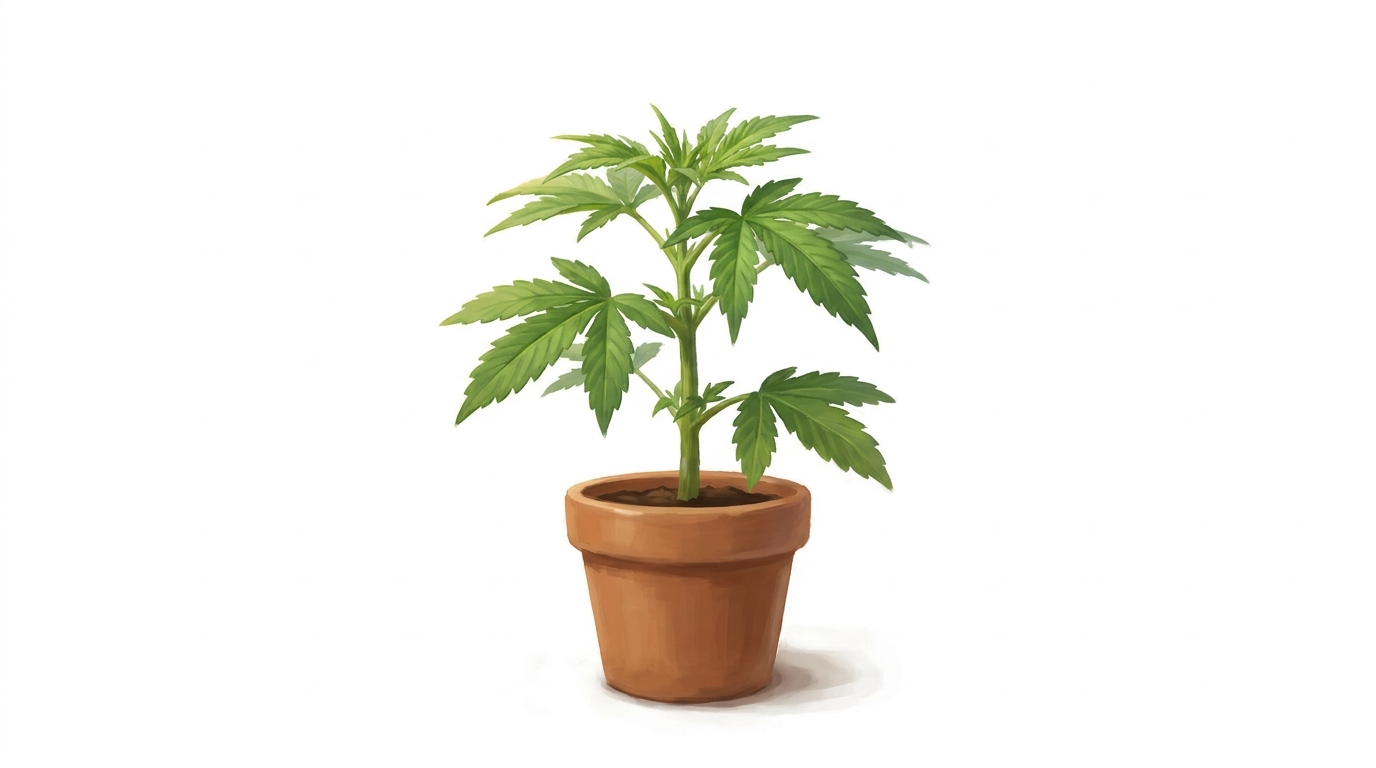
After the slow seedling fortnight, early veg is when growth becomes obvious week to week. It’s also where two classic beginner mistakes show up: feeding too hard and training too early. Here’s what weeks three to five actually look like and how to ride them.
The short version:
- The plant drinks faster — soil now dries in ~2 days instead of 4
- Start feeding around day 21, at quarter strength, and build up slowly
- The bottle’s recommended dose is a ceiling, not a starting point
- Begin gentle low-stress training once there are 5–6 nodes
- Top photoperiods at node 4–5 (when established), never an autoflower
Want the full breakdown? Keep scrolling.
What happens in early veg?
The root system fills in and the plant starts drinking properly for the first time — soil that lasted four days now dries in two, so you water more often (still by pot weight, not a schedule). Growth speeds up visibly: new fingered leaves, more nodes, the plant getting bushier. This is when you begin feeding, around day 21, because the seedling’s stored energy and the soil’s starter nutrition are running down. Hold your environment steady — roughly 24°C, moderate humidity, 18/6 light — and the plant rewards you with the fastest, most forgiving growth of the whole cycle. Mistakes here are recoverable in a way they won’t be in flower, so it’s the place to learn.
How do I feed and train in early veg?
Feed gently. Start at quarter-strength veg nutrient (plus CalMag if you’re in coco or on soft water), pH-adjusted, and build up only if the plant looks hungry. The Bottle Chaser bumps straight to the label dose because the plants “look hungry,” and gets burnt tips within three days — the recommended dose is a maximum, not a starting point. Burnt tips mean back off; pale, slow growth means nudge up. Train when the plant is strong, not when the calendar says. Low-stress training (bending and tying stems flat) can begin once there are 5–6 nodes. If you’re topping a photoperiod, do it at node 4–5 when it’s well established — topping at node 3 stalled growth for a week in the case study, while plants topped at node 5 bounced back in three days. Never top an autoflower.
What should I watch for?
Mostly that you’re not overdoing it. Burnt leaf tips = overfeeding (back to half strength, new growth comes clean). Drooping in wet soil = overwatering (lift the pot, let it dry back). Stretchy, leggy growth = light too far or weak. And resist topping or heavy training too early — veg plants are resilient, but topping is surgery, so do it on a strong plant. By the end of week five the plant should be a bushy young thing with a developing canopy, ready for late veg and, soon, the flip. Early veg rewards patience and a light touch: feed gently, train gently, and let it run.
FAQ
When should I start feeding in veg? Around day 21, once the seedling’s stored energy and the soil’s starter nutrients run low. Begin at quarter strength and increase gradually while watching the leaf tips.
When can I start training a cannabis plant? Low-stress training can begin around 5–6 nodes while stems are flexible. Top photoperiods at node 4–5 once established; don’t top autoflowers at all.
Why did my plant get burnt tips in veg? Overfeeding — usually jumping to the bottle’s full dose too soon. Cut back to half strength and water plain next feed; new growth should come in clean.