How to Cool a Grow Tent (Beat the Heat)
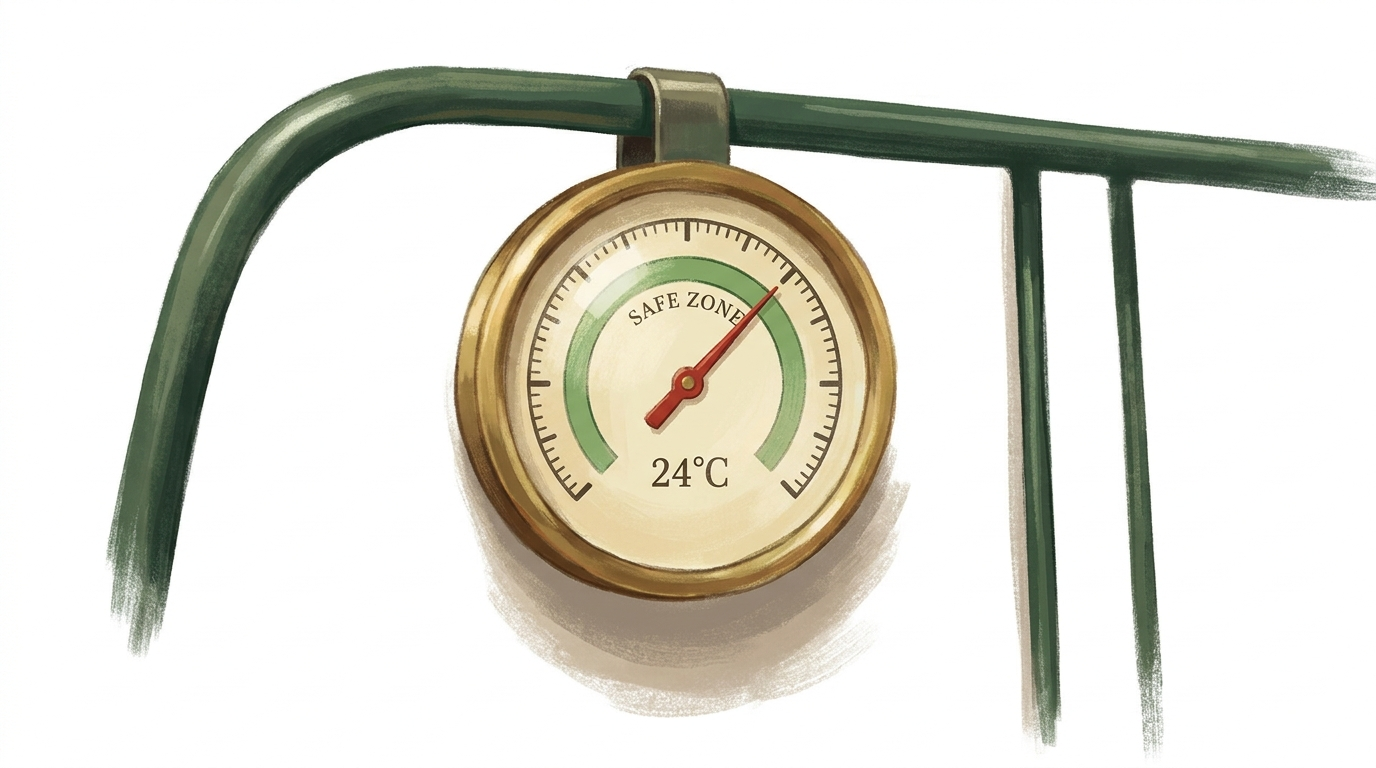
A hot tent is a common summer (and attic) problem, and it costs you density and resin without ever looking like a disease. The good news is most overheating is an extraction and airflow problem you can fix cheaply before you ever think about a chiller. Here’s the ranges to hold and how to bring the temperature down.
The short version:
- Aim for 20–26°C lights-on, 17–21°C lights-off, measured at canopy height
- Over 30°C: stomata close, growth slows, plant stretches, buds go airy
- Most overheating is weak extraction — fix the fan first
- A clip fan breaks up the hot layer at the canopy for a couple of degrees
- Cool the room (siting, lights-off timing, the right-size light) rather than fighting it
Want the full breakdown? Keep scrolling.
What temperature should a grow tent be?
A range, not a number: 20–26°C with lights on, 17–21°C lights-off, with a gentle few-degree night drop (five or six is plenty, not more than eight or nine). Measure it at canopy height where the plant actually lives — a floor thermometer can read 5°C cooler and is useless data. Push past 30°C and the stomata close to save water, photosynthesis slows, the plant stretches trying to escape the heat, buds come out loose and fluffy, and powdery mildew gets comfortable. The plant doesn’t want perfection; it wants boring stability — 25°C day, 18°C night, the same every day — and it’ll grow like something promised it a future.
How do I actually cool the tent?
Start with the extraction, because a hot tent is usually a fan that can’t shift the heat the light puts in. A properly sized inline fan pulling warm air out the top (and fresh air in the bottom) is your main cooling tool — if the tent runs over 26°C without CO2, the fan is undersized or the ducting too restrictive, so fix that before anything else. Add a clip fan running during the hottest part of the day: it won’t remove heat, but breaking up the hot layer that forms at the canopy buys you 2–3°C (DIG stock both). Beyond that, cool the room the tent inherits its temperature from — better siting (a ground-floor room runs cooler than an attic), and you can run the lights at night so the hottest part of the light cycle lands during the cooler hours.
What if it’s still too hot?
Look at the heat source and the space. A light that’s too powerful for the tent dumps heat the extraction can’t keep up with — right-sizing the light helps. In a summer attic, the honest answer is often to move the tent downstairs for the warm months rather than fight a 35°C oven. Keep the lights-off period genuinely cooler so the plant gets a real night, and avoid sealing the tent up (the Sauna mistake — no intake means no fresh cool air, so temperature and humidity both spike). Only once siting, extraction, airflow and light-size are sorted does fancy cooling kit come into it — and most home growers never need it.
FAQ
What’s too hot for cannabis? Sustained temperatures over 30°C at canopy height. Above that the plant stretches and stalls, buds go airy, and mildew risk rises. Keep lights-on between 20–26°C.
How do I lower the temperature in my grow tent? Fix extraction first (a properly sized fan removing the light’s heat), add a clip fan to break the canopy hot layer, cool the room it sits in, and consider running lights at night.
Where should I measure tent temperature? At canopy height, next to the plant — not on the floor, which can read several degrees cooler and misleads you about what the plant is actually experiencing.