How to Make Kief and Dry Sift at Home
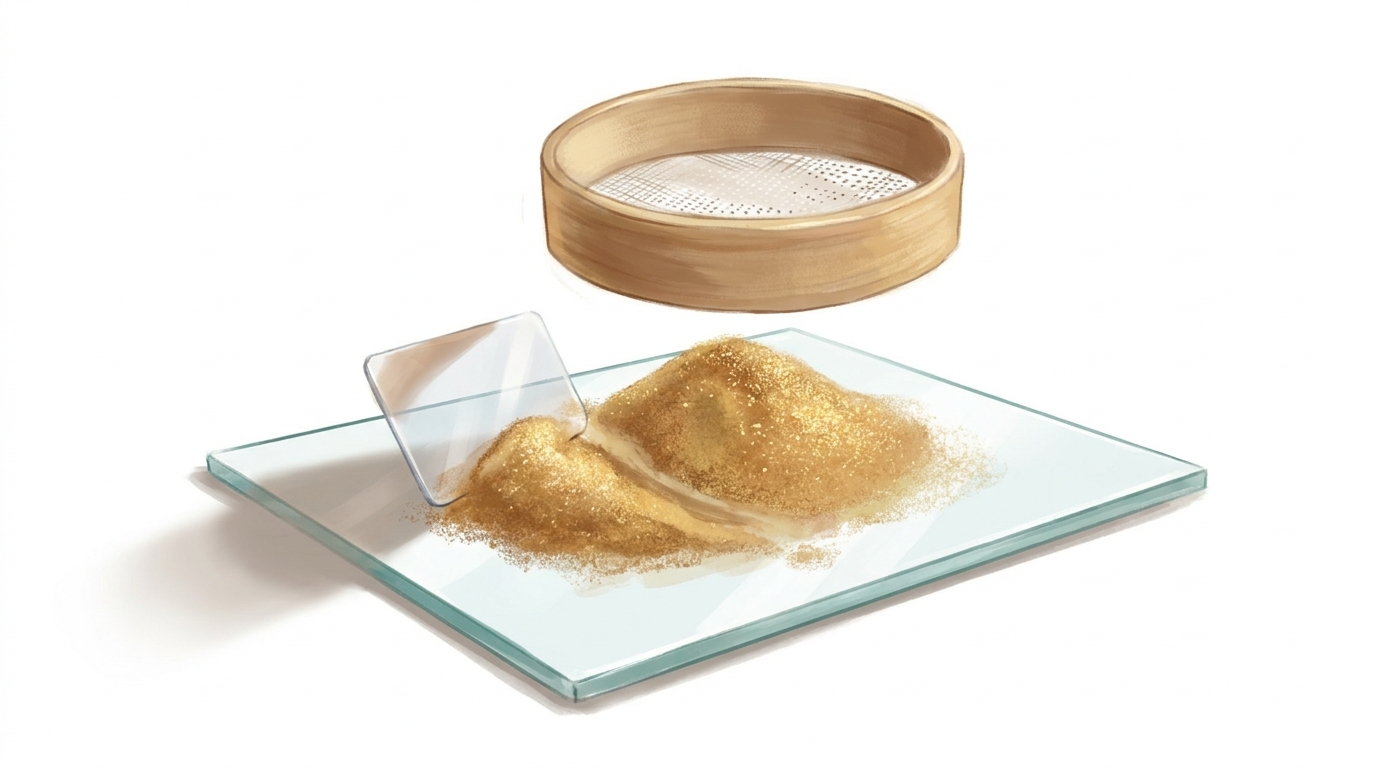
If you want to turn your saved trim into something better in the least possible effort, dry sift is where to start. It’s just trichome heads shaken off frozen plant material through a mesh — no water, no solvents, no faff. Here’s the whole method and how to press the result into hash.
The short version:
- Freeze the trim first — cold makes trichome stalks brittle so the heads snap off clean
- Shake or tap it over a fine micron screen onto clean glass
- The golden powder that falls through is kief — pure-ish trichome heads
- Screen size: finer = purer but less; 160 micron is the beginner sweet spot
- Press the kief with parchment and body heat to turn it into hash
Want the full breakdown? Keep scrolling.
How do I dry sift trim?
Freeze the trim — at least two hours, ideally overnight. Cold is the whole trick: it makes the trichome stalks brittle so the heads snap off, while room-temperature trim just bends and holds onto them. Place a silk screen or sift box over a clean glass surface — a mirror, a glass table, even glass from a picture frame (DIG stock sift screens). Break the frozen trim onto the screen and tap and shake gently — let gravity and vibration do the work; don’t grind it, or you push plant matter through too. The trichome heads fall through, the leaf stays on top, and you collect the kief — golden, faintly sticky powder — from the glass below. That’s it. Work in a cold, dry room: humidity re-moistens the material, clogs the screen and makes trichomes sticky instead of brittle. (Your grinder’s kief catcher does this on a tiny scale every time you grind.)
Which micron screen should I use?
Mesh is measured in microns — smaller number, finer mesh, purer (but less) product. 73 micron catches only trichome heads: golden, very clean, connoisseur grade, low yield. 160 micron lets heads plus some stalk through: good quality, noticeably more of it — the sweet spot for most home growers and the right answer for a first attempt. 220 micron lets everything through including plant matter: higher yield but greener and harsher. You don’t need to memorise numbers — just the principle: finer is purer but less. One nuance: sativa-leaning strains have smaller trichome heads, so very fine screens (45–50 micron) suit them, while 73–160 covers most hybrids and indica-leaning autos.
How do I press kief into hash?
The powder is already usable — sprinkle it on flower or add it to a vaporiser — but pressing turns it into something that looks and handles like traditional hash. The simple way: fold parchment paper around a small pile of kief, warm it between your hands and apply firm, sustained pressure. Body heat and compression partly melt the trichome heads together, and after a few minutes of kneading the powder becomes a cohesive, slightly waxy mass — that’s hash, made by hand in five minutes. For a neater result, the bottle technique: fill a glass wine bottle with boiling water and roll it with gentle even pressure over the parchment-wrapped kief, the heat softening the resin as the rolling compresses it. Either way you’ve gone from “trim I’d have binned” to pressed hash, cleaner and more potent than a lot of fussier methods, with a screen and a freezer.
FAQ
What is kief? The loose trichome heads collected from cannabis — golden, potent powder separated from plant material by sifting over a fine screen. It can be used as-is or pressed into hash.
Why do I need to freeze the trim before sifting? Cold makes the trichome stalks brittle so the heads snap off cleanly. Room-temperature trim is pliable, so the trichomes bend instead of breaking and you collect far less.
What micron screen is best for kief? 160 micron is the sweet spot for beginners — a good balance of yield and purity. 73 micron is purer but lower-yield; 220 micron gives more but greener, harsher kief.