Perlite, Vermiculite and Amendments: What They Do
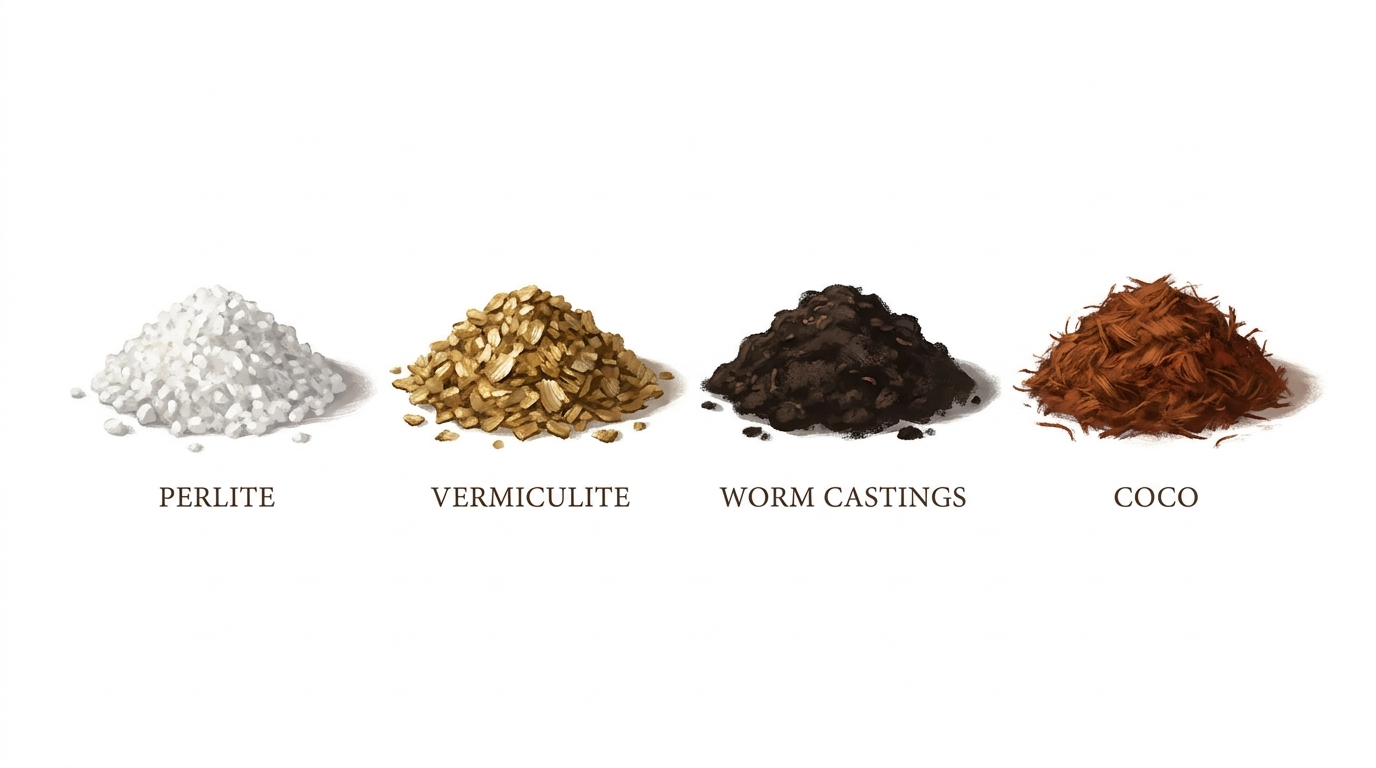
Amendments are the bits you mix into soil to tune it, and a little knowledge here prevents both the swampy under-aerated soil that kills first plants and the over-amended “super soil” that burns them. Here’s what each one actually does and how much to use.
The short version:
- Perlite makes air channels for drainage — the single most useful amendment
- Vermiculite does the opposite: holds water (rarely needed for cannabis)
- Worm castings feed gently; bat guano adds phosphorus (but burns if overdone)
- Dolomite lime buffers pH; mycorrhizae extend the roots
- Mix amendments through the medium, not on top — and don’t overdo it
Want the full breakdown? Keep scrolling.
Perlite and vermiculite — air vs water
Perlite — volcanic glass popped like popcorn — is the most useful amendment you can add, and the thing cheap compost lacks. It holds little water, doesn’t break down or shift pH, and creates permanent air channels: water drains through and around it, and between waterings those channels fill with air, giving roots the wet/dry rhythm they need. Add 20–30% by volume to soil; if your bag already has some, add more anyway in the final pot where drainage matters most — slightly too much perlite just means faster drying, while slightly too little means a swamp one enthusiastic watering away. Mix it through the medium before filling the pot — the Volcano grower sprinkles it on top as mulch and watches it float off, because drainage happens inside the medium, not on the surface. Vermiculite does the opposite job — it absorbs and holds water — so it’s rarely wanted for cannabis, where most growers are fighting excess moisture. It earns a place in seed-starting mixes (keeping germinating seeds consistently damp) or a very hot, dry environment, but for most Irish grows you can leave it out.
What about the feeding amendments?
Worm castings are the gentlest feed there is — slow-release nitrogen and beneficial microbes that won’t burn the plant; mix in 10–15% by volume if your soil lacks them (DIG stock them). Bat guano is high in phosphorus and useful in flower, but concentrated — add too much and you get nutrient burn, so for a beginner it’s better left to pre-mixed soils that dose it correctly than added solo. Dolomite lime buffers pH and adds calcium and magnesium — a tablespoon per gallon brings up an acidic soil, though most quality mixes already include it. Mycorrhizae — beneficial fungi sprinkled on the roots at transplant — colonise the root zone and help the plant absorb phosphorus and water; not essential, but a small advantage that compounds quietly over the grow.
How do I avoid over-amending?
Respect what’s already in the bag. A good soil is a balanced recipe, and the Alchemist’s mistake is piling castings, guano and blood meal on top of a mix that’s already dialled in, then frying a seedling that only needed a sip of water. The safe approach: add perlite for drainage (you can’t really overdo air), keep feeding amendments modest and skip them entirely for seedlings, and treat concentrated inputs like guano with caution. Mix everything thoroughly through the medium before potting. Amendments are for tuning a sound base, not for building a nutrient bomb — more amendments is not more better.
FAQ
How much perlite should I add to cannabis soil? About 20–30% by volume, and a bit more in the final pot for drainage. Mix it through the soil rather than layering it on top, which does nothing.
What’s the difference between perlite and vermiculite? Perlite creates air channels and improves drainage; vermiculite absorbs and retains water. Cannabis usually wants more drainage, so perlite is standard and vermiculite is mostly for seed-starting.
Do I need to add amendments to good soil? Usually just extra perlite for drainage. A quality cannabis soil already balances feeding amendments and pH buffers, so adding more risks over-amending and burning the plant.