Recirculating vs Drain-to-Waste Hydro: Which Is Better?
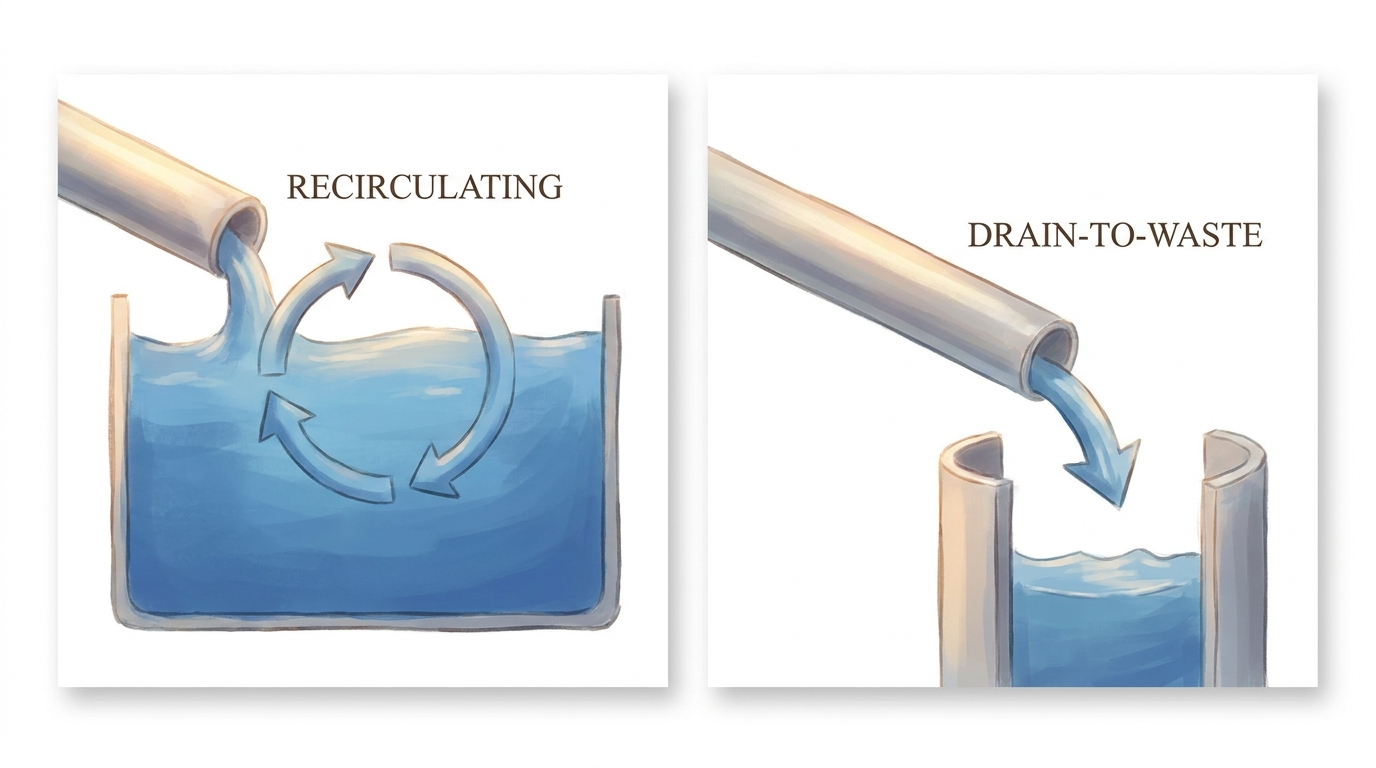
Once you’re past “should I do hydro,” the next fork is how the nutrient solution moves: recirculating (it returns to a reservoir and gets reused) or drain-to-waste (each feed passes through the medium and drains away). Neither is simply “better” — they trade efficiency against simplicity and stability. Here’s how to choose.
The short version:
- Recirculating — solution returns to the reservoir and is reused (DWC, NFT, ebb and flow)
- Drain-to-waste (DTW) — fresh solution each feed, runoff discarded (coco/rockwool drip)
- Recirculating uses less water and nutrients but the chemistry drifts and needs daily monitoring
- DTW is more stable per feed and simpler to dose, but uses more solution
- For most home growers stepping up, drain-to-waste in coco is the gentler path
Want the full breakdown? Keep scrolling.
How are they different?
In a recirculating system — DWC, NFT, ebb and flow — the same nutrient solution cycles through the roots and back to a reservoir, used again and again across the week. It’s efficient: less water, less nutrient, less waste. In drain-to-waste, you mix fresh solution for each feed, run it through the medium (usually coco or rockwool) to 10–20% runoff, and the runoff drains away rather than returning. Every feed is fresh, at the strength and pH you set. So the core trade is reuse-and-drift versus fresh-and-discard.
The trade-offs
Recirculating saves the most resources, but the chemistry drifts: the plant doesn’t absorb nutrients evenly, so over a week the ratios skew and the pH shifts constantly as solution passes through roots and back — the Topper-Upper’s EC reads fine while the underlying balance is a mess. That means daily pH/EC checks and a full weekly reservoir change to reset the chemistry are non-negotiable. Drain-to-waste sidesteps most of that drift because each feed is fresh — there’s no reservoir slowly going wrong, so it’s more stable per feed and simpler to dose, which is why coco-drip DTW is the common on-ramp from soil. The cost is consumption: you use more water and nutrients because you discard the runoff rather than reusing it, and you’re mixing feed more often.
Which should I choose?
If you want maximum efficiency and you’ll commit to daily monitoring and weekly reservoir changes, recirculating (especially DWC for simplicity) rewards the attention with fast growth and low running cost. If you want stability and a gentler learning curve, drain-to-waste in coco is more forgiving — each feed is a clean slate, so a small dosing slip doesn’t compound in a reservoir over days. For most growers stepping up from soil, drain-to-waste coco is the sensible bridge: hydro-speed feeding with soil-like handling and fewer ways for the chemistry to quietly go wrong. Either way, a pH pen and EC meter (DIG stock them) are what keep you honest — in hydro, guessing costs plants.
FAQ
What’s the difference between recirculating and drain-to-waste hydro? Recirculating reuses the same nutrient solution from a reservoir; drain-to-waste mixes fresh solution each feed and discards the runoff. One saves resources, the other stays more stable per feed.
Is drain-to-waste better for beginners? Generally yes, especially in coco. Each feed is fresh, so the chemistry doesn’t drift in a reservoir, making it more forgiving than a recirculating system that needs daily monitoring.
Does recirculating hydro save money? It uses less water and nutrients, so running costs are lower — but it demands daily pH/EC checks and weekly reservoir changes to stop the solution’s balance drifting.