Where to Put Your Grow Tent (Siting Guide)
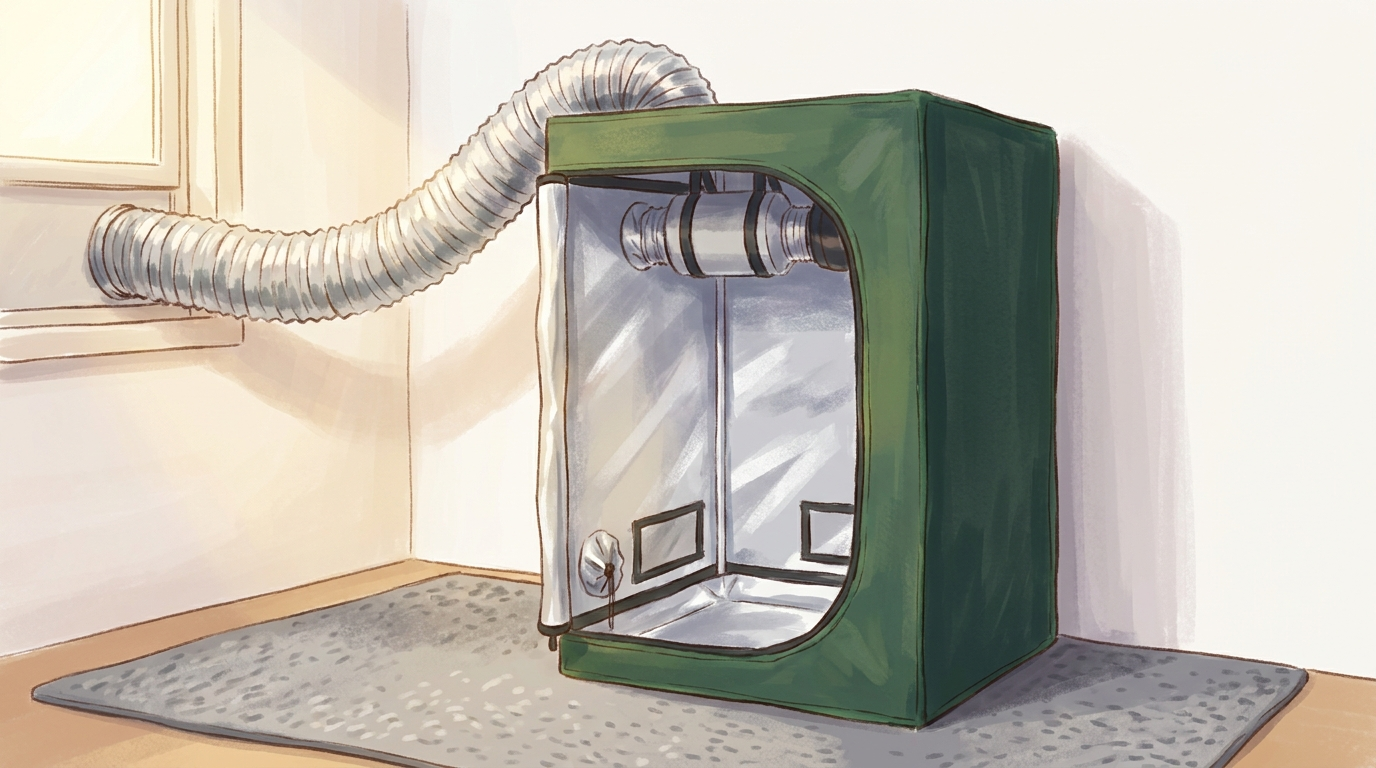
People obsess over kit and barely think about where the tent goes, then spend the whole grow chasing temperature and damp problems that come from the room, not the box. Each spot in a typical Irish house has trade-offs. Here’s how they stack up.
The short version:
- The tent inherits the room’s ambient temperature — cold room, cold tent at lights-off
- Spare bedroom: warm and handy, but mind the carpet and the door (light leaks)
- Garage: concrete floor solves water, but cold in winter — you’ll need a heater
- Attic: free winter heat, but a summer oven and a condensation risk
- Also weigh access, noise and where the exhaust can go
Want the full breakdown? Keep scrolling.
Why does siting matter so much?
Because the tent doesn’t make heat, it inherits it. The light adds a little during lights-on, but at lights-off the tent drifts back toward the room’s ambient temperature — so a tent in a 10°C January room runs cold at night, growth stalls, nutrient uptake drops, and you chase problems that have nothing to do with what’s inside the tent. Get the location right and half your environment is sorted before you plug anything in; get it wrong and no amount of kit fully rescues it. One subtle factor: heat rises, so a ground-floor room runs cooler than an upstairs one — upstairs benefits from the whole house’s rising warmth.
What are the trade-offs of each spot?
Spare bedroom — warm, accessible, has sockets, but two hidden pitfalls: carpet (runoff and condensation make a damp reservoir under the tent, so you need floor protection) and the door (every opening during the dark period leaks light, and people, kids and cats use doors). Garage — the concrete floor solves the water problem entirely and extraction through a wall is easy, but it’s cold (8–12°C in winter, radiating up into the tent), so you’ll likely need a thermostat oil heater (DIG stock them); a detached garage also means trekging out in the rain at 10pm. Attic — heat rises, so it’s free winter warmth and the plants are comfortable November to March, then July turns it into a 30–40°C oven that cooks the buds, and poor insulation invites condensation dripping through the ceiling below. Shed — out of sight, but usually uninsulated, damp and a security risk; you’ll spend more heating it than a decent indoor spot would cost.
What else should I weigh?
Access — can you reach every side of the tent and carry water to it without stairs, ladders or a trail of extension leads? If watering is a hassle, you’ll cut corners by week four. Noise — inline fans hum 24/7, and a carbon filter makes them work harder and louder; site the tent where the noise has somewhere to go before it reaches a neighbour’s bedroom wall, and consider acoustic ducting or a speed controller. Exhaust route — you need somewhere for the warm, smelly air to actually go (a window or wall vent), ideally out of the building rather than into the same room. Pick the spot that’s warm-ish, water-safe, accessible and quietly ventable, and the grow gets a lot easier.
FAQ
Where’s the best place to put a grow tent? Often a spare ground-floor room that stays reasonably warm, with floor protection for water and an easy exhaust route. The key is stable temperature, water safety, access and somewhere to vent.
Can I put a grow tent in the attic? In winter it’s great — free rising heat. But Irish attics overheat badly in summer and risk condensation through poor insulation, so treat it as a winter-only space or insulate and ventilate seriously.
Is a garage a good place for a grow tent? The concrete floor solves water worries and venting is easy, but it’s cold in winter and usually needs a thermostat-controlled heater. In summer it’s stable and close to ideal.