Pale New Growth? It Says Iron, But It Usually Means pH
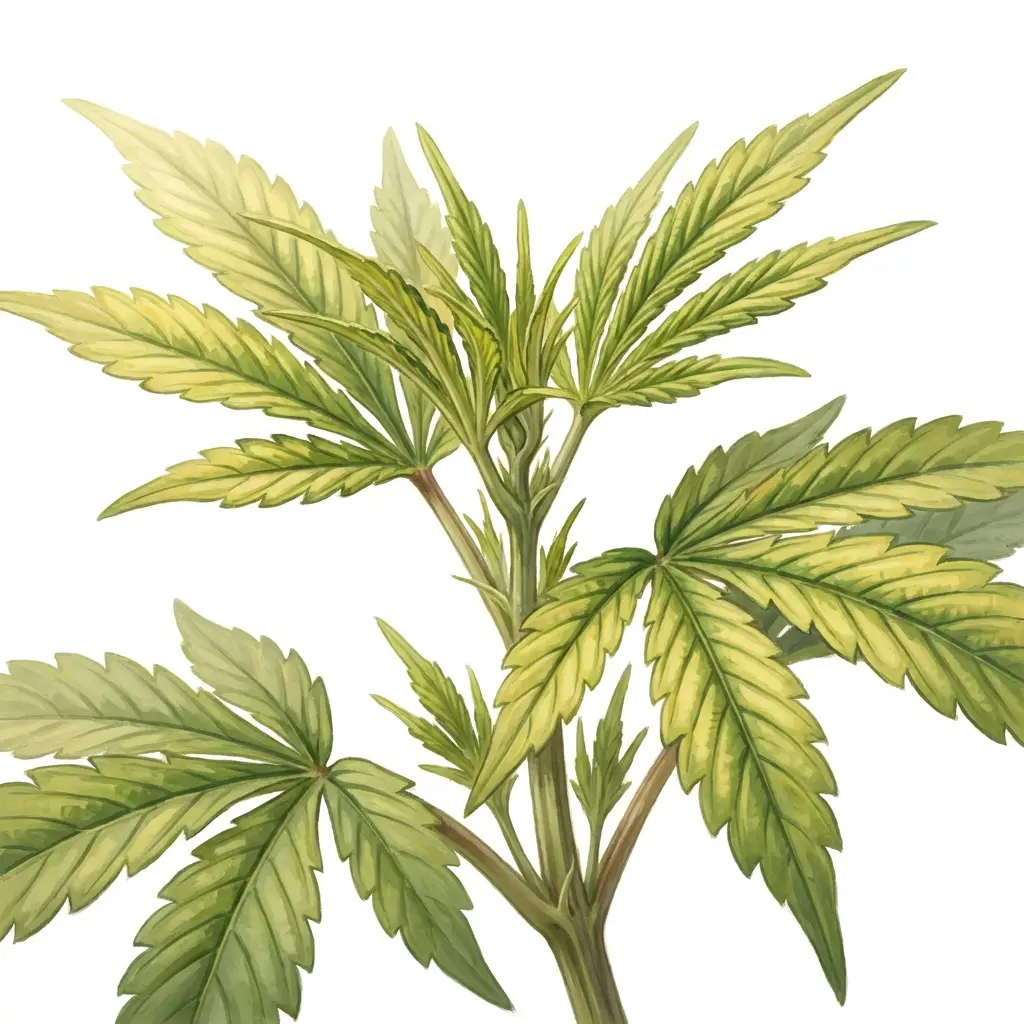 Iron deficiency: the newest growth goes bright yellow while the veins stay green.
The top of the plant is where the good news is supposed to be. New growth, fresh leaves, everything ahead of her. So when the newest leaves come out pale yellow — practically white in bad cases — with the veins still bright green, it rattles people. It rattled me. I fed iron for a week. The problem was my pH pen needed calibrating, and I was watering her with the wrong number the whole time.
The short version:
- The NEWEST top leaves come in pale or yellow between bright green veins — old leaves look fine
- New growth is the tell: iron doesn’t move within the plant, so shortages hit the freshest leaves first
- Nine times out of ten it’s not a shortage at all — it’s pH drift locking iron out
- Fix the pH first. The green usually comes back on its own. Supplement only if it doesn’t
Want the full breakdown? Keep scrolling.
Why is my new growth yellow but old leaves are green?
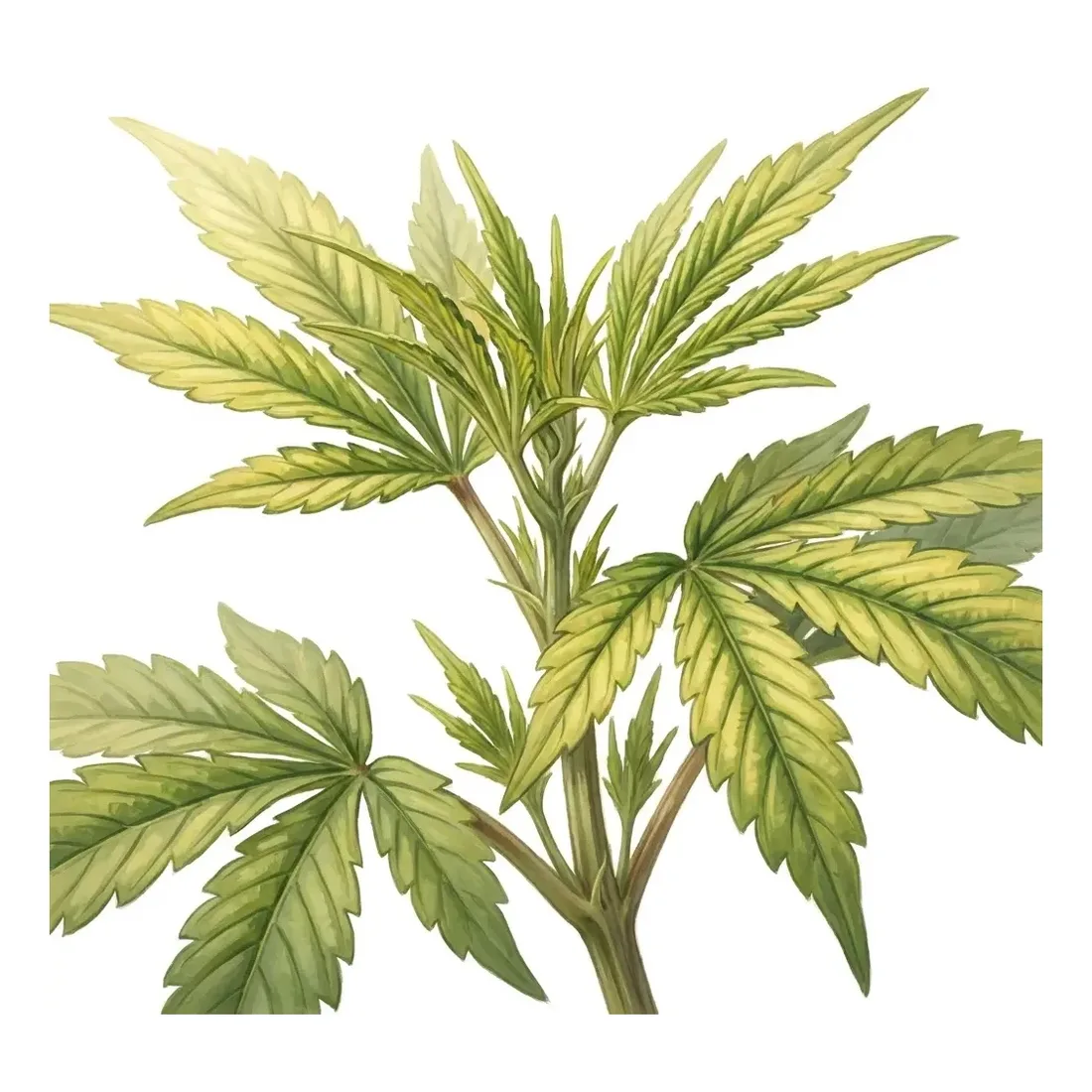
 Left unchecked: striking interveinal yellow on the top of the plant.
This is the one piece of plant-reading that makes everything else click: some nutrients are mobile inside the plant, and some aren’t. Mobile ones — nitrogen, magnesium — get robbed from old leaves and shipped to new growth when supplies run short, so those deficiencies show up DOWN LOW first. Iron is immobile. Once it’s built into a leaf it stays there. So when iron runs short, the old leaves keep theirs and it’s the brand-new top growth that goes without.
New growth pale between green veins = iron. Same pattern on the old lower leaves = magnesium, and that’s the magnesium guide. Top or bottom — that one observation does the diagnosis for you.
Is iron deficiency actually a pH problem?
Nine times out of ten, yes. Iron is in your feed, it’s in most water, it’s in decent soil. What it isn’t, is available when pH climbs too high. Iron locks out as pH drifts upward — and pH drifts upward quietly in lots of setups: hard tap water, a reservoir left standing, soil that’s been limed.
So the honest fix order is:
- Test the pH of what’s going in. Coco and hydro want 5.8–6.2. Soil wants 6.2–6.5. If you haven’t calibrated the pen in a while, do that first — a lying pH pen is worse than no pH pen. DIG stock reliable ones if yours is past saving.
- Correct it and hold it there. Mix your feed, adjust to the right number, and check it every time for a couple of weeks rather than assuming.
- Watch the new growth. With pH back in range, the next leaves out usually come in green within a week or two. The pale ones may green up a bit, but it’s the newest ones that tell the truth.
- Only then supplement. If pH is genuinely in range and held there, and new growth is still pale — RO water grows can run short for real — then a cal-mag with iron, or a dedicated iron chelate, fills the gap.
Buying iron before checking pH is the classic move. I know because I made it. The bottle’s still in the shed, mostly full, a monument to not testing first.
FAQ
Will the pale leaves turn green again? Partly, sometimes — iron deficiency recovers better than most because the young leaves are still building. But judge the fix on the next new growth, not the damaged set.
What pH causes iron lockout? Trouble starts as pH climbs above the target windows — above about 6.2 in coco/hydro, above about 6.5 in soil. The higher it drifts, the less iron the roots can pull.
Can I foliar-spray iron? You can — a chelated iron spray greens leaves quickly and some growers use it as a stopgap. But it’s painting over the problem. If pH is off at the roots, fix that or you’ll be spraying forever.
Iron or light bleaching? Bleaching from a too-close light whitens the tops nearest the bulb, veins and all, often with crispy edges — see the light burn guide. Iron keeps the veins green and doesn’t care how far the light is.
Not sure this is your problem? Run her through the Diagnosis Buddy — five questions and you’ll know.
Fixed it?
Here’s how this stage goes when it’s going right — walk the grow →. Still not sure what you’re looking at? Ask the Diagnosis Buddy →