Root-Bound: The Plant That Outgrew Her Flat
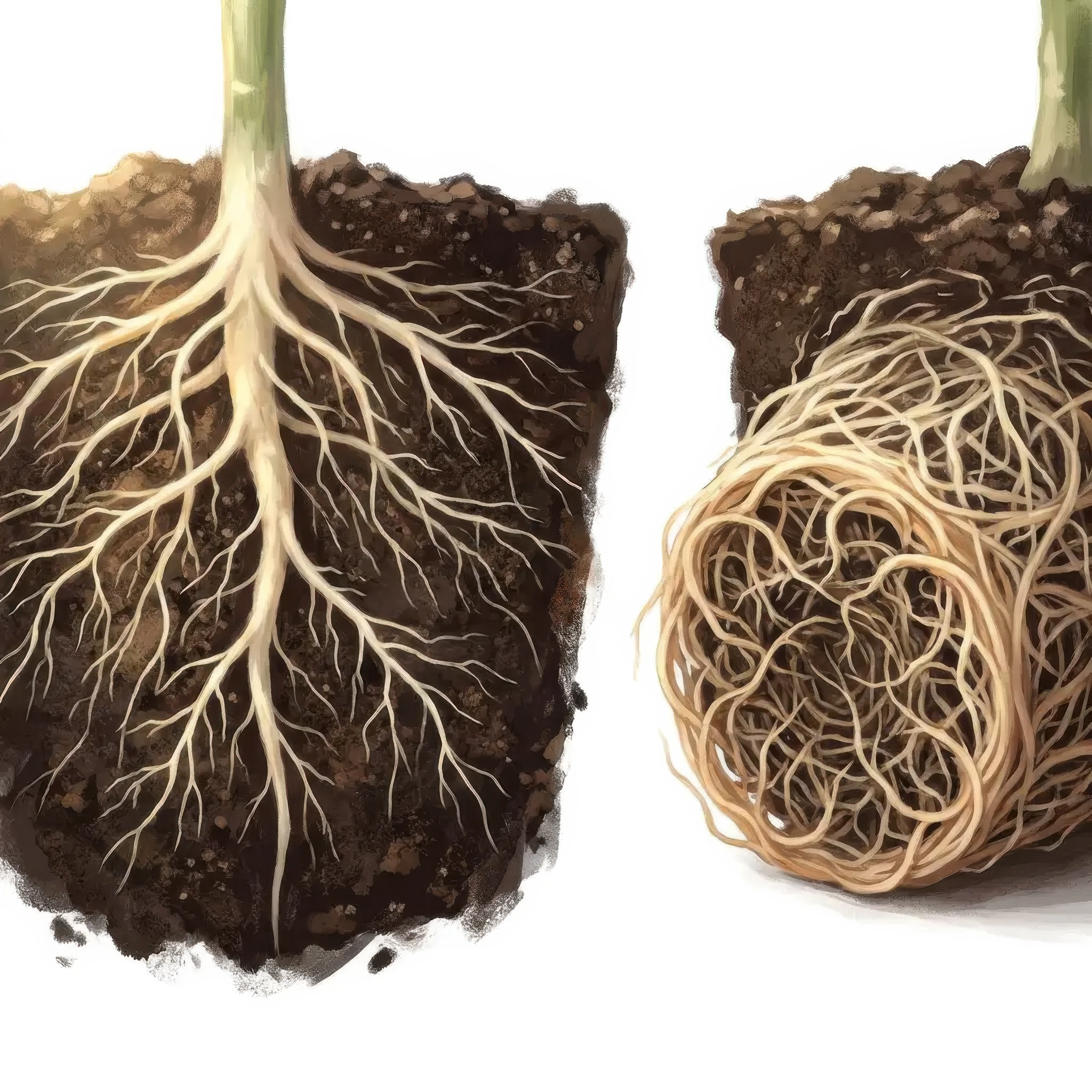 Healthy roots (left) vs root-bound (right): circling, matted, out of room.
It’s a strange one to diagnose, because everything you can see looks fine-ish. Leaves okay. No spots, no bugs, no drama. She’s just… stopped. Growth crawling along, water running through the pot like it didn’t even slow down, and you standing there doing everything right and getting nothing back. The problem is downstairs, where you can’t see it: she’s filled the pot wall-to-wall, and there’s nowhere left to grow.
The short version:
- Growth slowed to a crawl, water running straight through the pot, plant drying out fast and drinking constantly
- Tip her out and look: roots circling round and round the outside of the root ball, packed solid — root-bound
- Common when a plant sits too long in a small container, especially seedling pots
- Fix: pot up a size into fresh medium, handle the root ball gently, water her in
- She’ll usually take off again within a week
Want the full breakdown? Keep scrolling.
How do I know if my plant is root-bound?
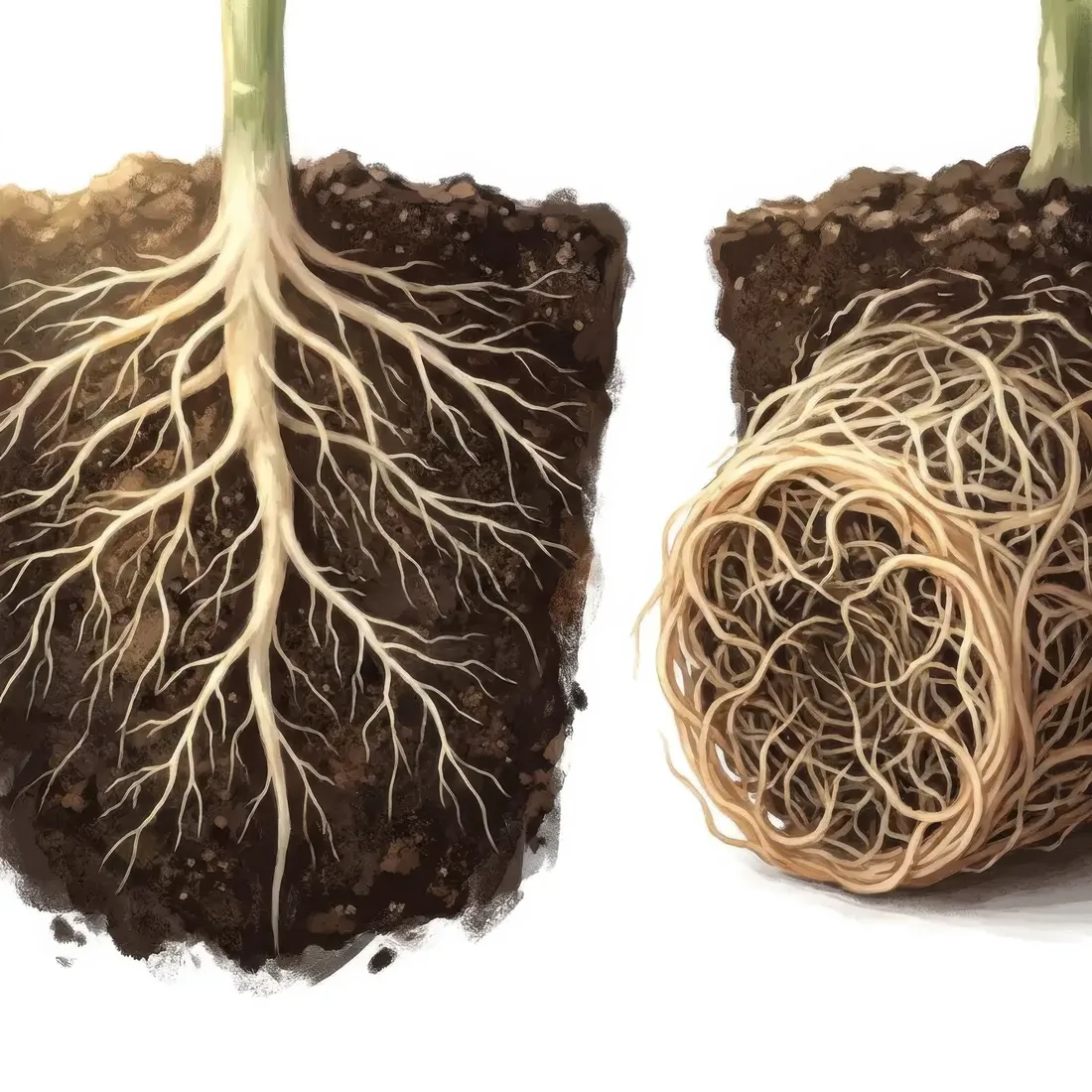
The above-ground clues are circumstantial: a small pot that’s hosted the plant a long time; growth that’s slowed for no visible reason; the pot drying out fast and needing water constantly; and water that runs straight through and out the bottom in seconds — because the pot is now mostly roots, with hardly any medium left to hold moisture.
The confirmation is one look. Water her lightly, let it settle, then tip the pot sideways with a hand spread over the top of the medium and slide the root ball out. A root-bound ball holds the pot’s exact shape and is wrapped in roots circling round and round the outside — sometimes a solid white mat with barely any medium showing. That’s your answer. (A healthy un-bound ball shows white root tips threaded through visible medium, and may half fall apart — also your answer: the problem’s something else, so go back through the Diagnosis Buddy.)
Why is being root-bound a problem?
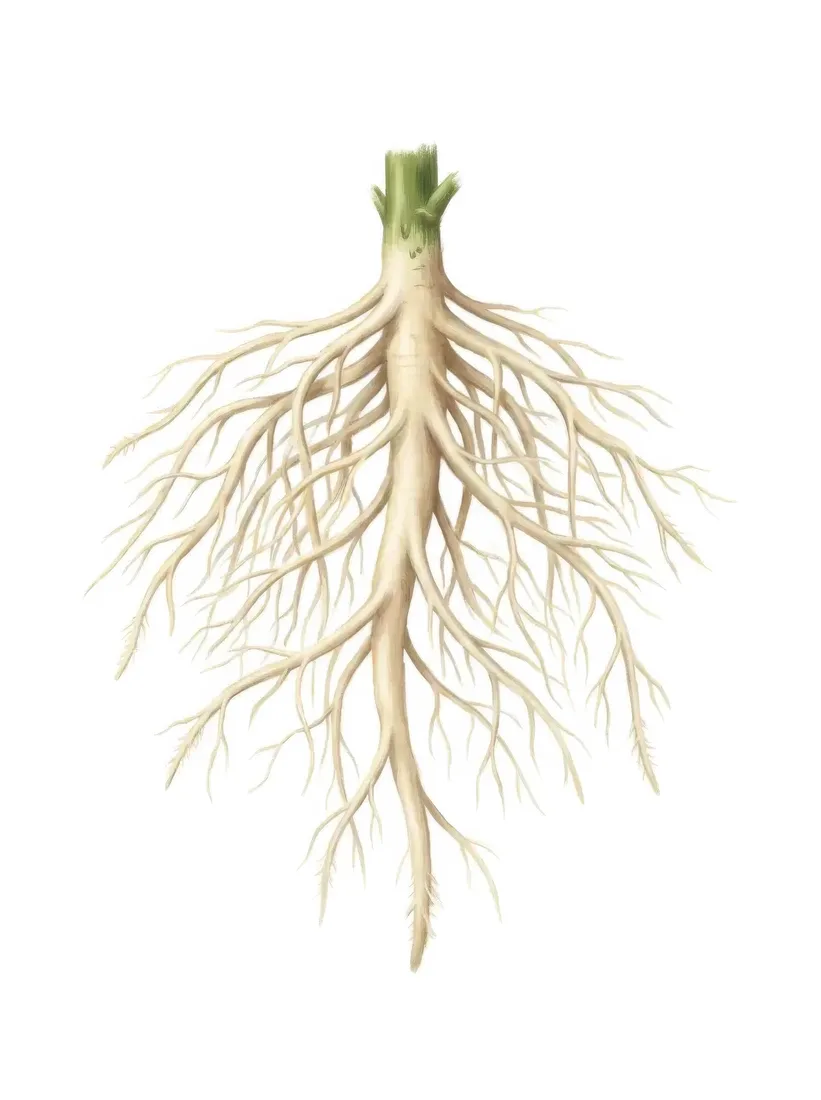
Roots are the half of the plant you don’t see, and they do half the work — water, food, oxygen, anchorage. When they hit the pot wall they turn and circle, and eventually the circling roots strangle the root zone: nowhere new to explore, hardly any medium to hold water or feed, roots crossing over themselves. The plant up top can only match what the basement supports. Small pot, small plant — not as a rule of thumb but as a hard ceiling.
It happens most with plants left too long in seedling pots or solo cups, and with big plants vegged for ages in mid-size containers.
How do I repot a root-bound plant?
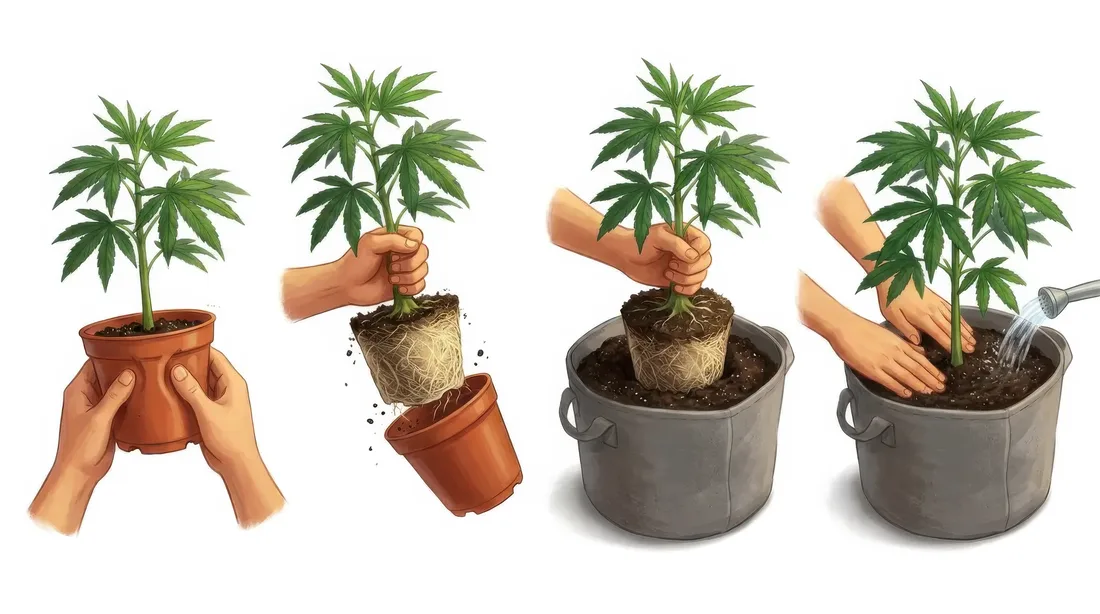
- Go up a size. From her current pot to the next size up — into a fabric pot if you’re choosing, because fabric air-prunes the roots at the wall and largely prevents the circling happening again. DIG stock them in every size, along with fresh medium.
- Half-fill the new pot with fresh medium of the same type she’s already in — same soil, or same coco. A change of address is enough stress without a change of diet.
- Handle the ball gently. Slide her out, sit her in, no surgery. If the circling is severe, lightly tease the outer roots loose with your fingers so they’re pointed outward rather than around — gently, like detangling hair, not pulling weeds.
- Backfill and water her in. Medium snug around the sides, no stamping it down, then a proper watering until it runs from the bottom to settle everything into contact.
- Then let her settle. No feed changes, no training, no enthusiasm for a few days. She’s got a new building to fill.
Most root-bound plants take off again within a week of potting up — it’s one of the most satisfying fixes in growing, because the plant was never sick. She was just waiting for more room.
FAQ
Can a root-bound plant recover? Almost always, and quickly. Pot up, water in, leave her alone — new growth usually kicks within a week.
Can I repot during flower? Early flower, carefully, if she’s badly bound. Deep in flower it’s usually better to nurse her through with frequent watering and finish the run — the stress of moving may cost more than the cramped pot.
What size pot should I use? One step up at a time — roughly double the volume. Going from a tiny pot straight into a massive one leaves a ring of permanently soggy medium the roots haven’t reached, which is how the overwatering chapter of your life begins.
Do fabric pots stop plants getting root-bound? Mostly, yes. When a root tip reaches the fabric it hits air and stops — air-pruning — so the plant branches new roots inside the ball instead of circling the wall. It’s the cheapest insurance there is against doing this twice.
Not sure this is your problem? Run her through the Diagnosis Buddy — five questions and you’ll know.
Fixed it?
Here’s how this stage goes when it’s going right — walk the grow →. Still not sure what you’re looking at? Ask the Diagnosis Buddy →