Male, Female or Hermie? Sexing Your Cannabis Plant
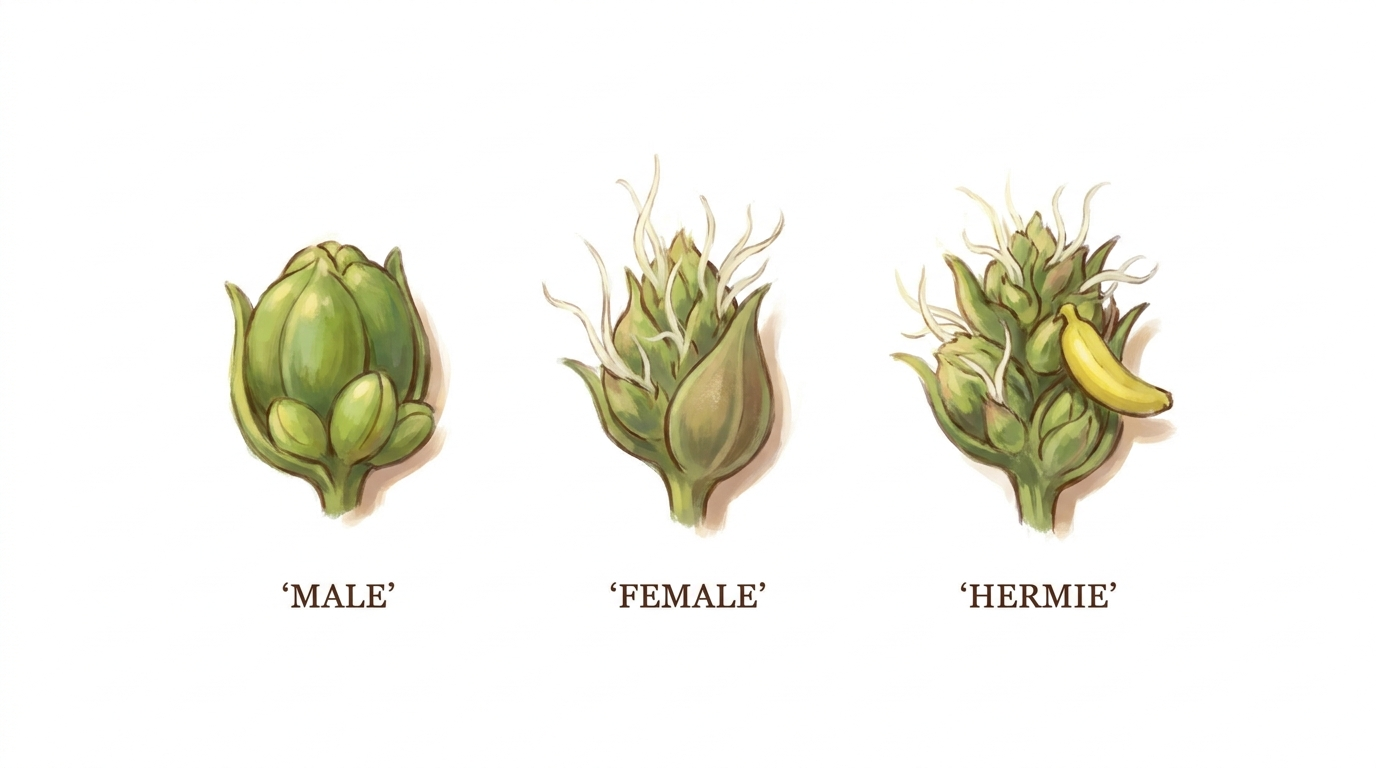
Unless you’re breeding, your tent should be all females — and one unspotted male or hermaphrodite can seed an entire crop, turning smokable flower into a bag of seeds. Sexing is just learning to read the small structures at the nodes. Here’s how to tell them apart and what to do about each.
The short version:
- Sex shows in pre-flowers at the nodes (where branches meet the stem)
- Female: a pointed calyx with two white hairs (pistils)
- Male: small, round, ball-shaped pollen sacs, like tiny grapes
- Hermaphrodite: a female that also throws pollen sacs — usually from stress
- Feminised seed gives near-all females, but always check before flower
Want the full breakdown? Keep scrolling.
How do I tell male from female?
Look at the pre-flowers at the nodes, ideally with a loupe (DIG stock them). A female shows a small pointed calyx with two white pistils — fine hairs — emerging from the tip. A male shows small, round, ball-shaped pollen sacs on thin stems, clustered like tiny green grapes, with no hairs. Males typically reveal sex one to four weeks before females of the same variety, which gives you a window to separate them before any pollen flies. With feminised seeds you expect females — that’s the whole point of buying them — but it’s still worth a check, because the cost of missing a male is a seeded harvest. If you spot a male and you’re not breeding, remove it from the space before its sacs open.
What’s a hermaphrodite, and what causes it?
A hermaphrodite (“hermie”) is a female that also produces male pollen sacs — so it self-pollinates and often pollinates everything around it, filling buds with seeds. There are two flavours. Most common is stress-induced: a light leak during the dark period, heat stress, root damage or harsh training pushes a female to hedge her bets and reproduce. The fix is prevention — a genuinely dark, sealed 12-hour night and a calm environment. Less common is a genetic predisposition baked into the seed (a reason to buy from reputable breeders who select against it). Watch for “nanners” — banana-shaped yellow pollen sacs poking out between the calyxes, often late in flower. Catch a single sac early and you can carefully remove it with clean tweezers and monitor; if the plant’s covered in them, it’s too late — remove it and light-proof the tent before the next run.
How do I protect my crop?
Three habits. Check pre-flowers in late veg / early flower and remove any males promptly. Keep the dark period dark — get in the tent at night, shut it, and tape any light you can see, since light leaks are the leading hermie trigger. And keep the environment calm in flower — stable temperature, no harsh stress. If you do find a male or hermie among regular-seed plants, isolate it the moment you’re sure: pollen is microscopic and travels on air, clothes and hands, so change your shirt and wash up before going near the females. Get sexing right early and you protect months of work from being turned into a seed bag overnight.
FAQ
How do I tell if my cannabis plant is male or female? Check the pre-flowers at the nodes: females show a calyx with two white pistils, males show small round pollen sacs like tiny grapes. Males usually show sex earlier than females.
What causes a cannabis plant to turn hermaphrodite? Usually stress — most often a light leak during the dark period, but also heat, root damage or harsh training. Some plants are genetically prone, which is why breeder quality matters.
Will one male ruin my whole crop? It can. A male’s pollen will seed nearby females, turning flower into seeds. Remove males before their sacs open, and isolate carefully because pollen travels on air, clothes and hands.