Photoperiod vs Autoflower: Which Should a Beginner Grow?
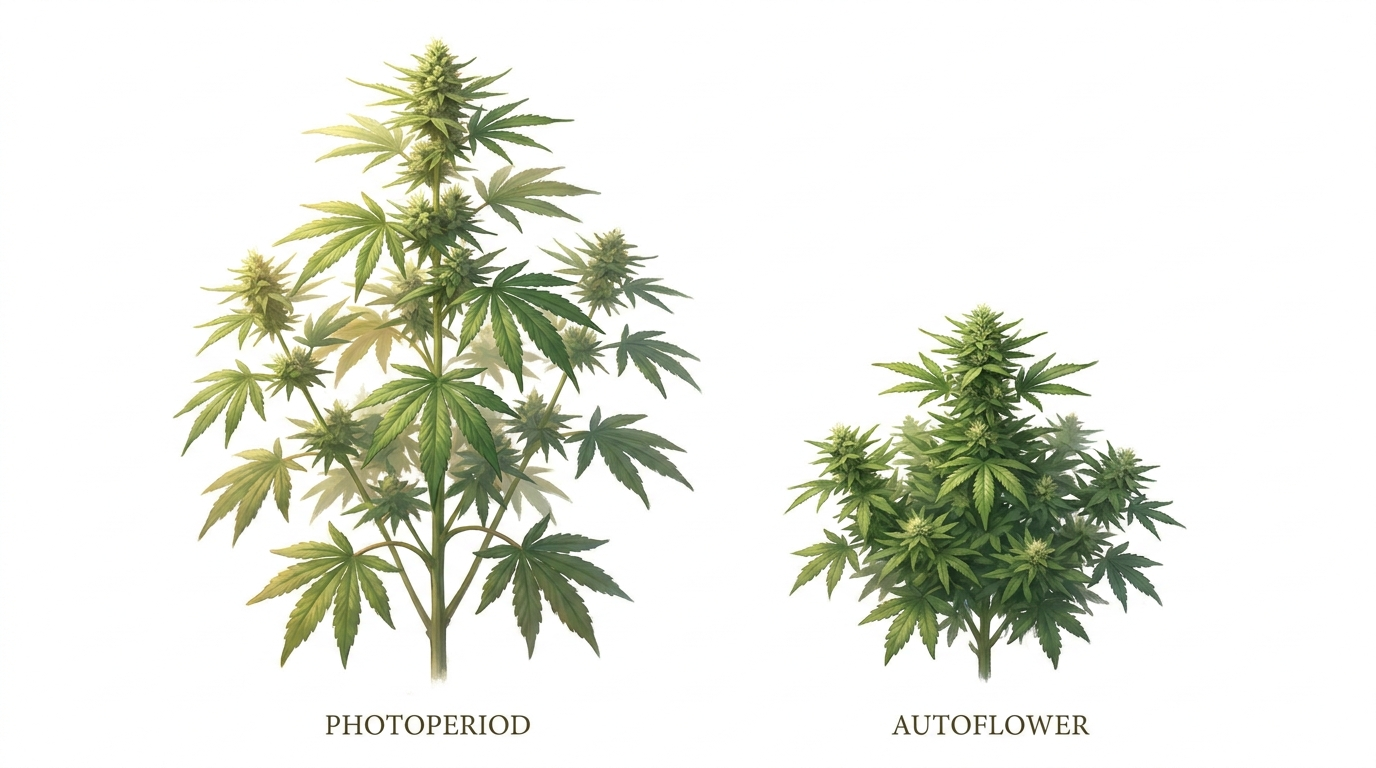
This is one of the first real choices you make, and most beginners make it on the wrong information — picking on “which yields more” or “which is stronger” rather than which contract suits their life and their tolerance for mistakes. The two plant types aren’t better or worse than each other. They’re different deals.
The short version:
- Photoperiod — flowers when you change the light (18h → 12h); you control the timeline
- Autoflower — flowers by age (around week 3–4), no light change needed
- Photoperiods are more forgiving: you can extend veg to recover from mistakes
- Autos are faster and simpler, but punish early mistakes with no recovery window
- Beginners who want forgiveness pick photoperiod; those who want speed-and-simplicity pick auto
Want the full breakdown? Keep scrolling.
How are they actually different?
A photoperiod plant flowers when you tell it to. Eighteen hours of light for growth, flip to twelve to start flower — you decide when she’s big enough. Need another week of veg to fill out? Give it. Snapped a branch or overfed her? Extend veg to let her recover before asking for buds. The clock’s in your hands, which makes it forgiving. An autoflower doesn’t wait. She flowers based on age, usually week three or four from seed, no matter the light — keep it on 18–20 hours the whole way through and she flips herself. That’s the appeal: simpler, faster, no schedule changes, no waiting to sex her. But the packet’s quiet bit is the cost of that: a mistake in the first three weeks has no recovery window. She’s flowering whether she’s ready or not.
Which should a beginner grow?
It comes down to what you value. If you want forgiveness for errors — and most first-timers make a few — the photoperiod is the safer contract: a flexible lease where you can pause and let her recover. If you want speed and simplicity and you can genuinely keep your hands off the plant for the first month, an auto from a reputable breeder can be brilliant, especially in a small tent in Ireland where you just want a successful harvest under your belt. The classic beginner trap is doing a photoperiod technique (like topping) on an auto’s fixed timeline — that’s not the auto’s fault, it’s a mismatch of deal and method. CSB list both types with honest grow notes if you want to compare before you commit.
What about yield and potency?
Don’t choose on these alone — they’re closer than the old reputation suggests. Modern autos from good breeders produce dense, resinous flower and finish in eight to ten weeks from seed; potency is comparable to photoperiods, if not always identical. Photoperiods have a higher yield ceiling if you get everything right and more room to learn training, because you control veg length. Per day of growth, the maths often lands similar. So pick on the contract — control and a higher ceiling, or speed and simplicity — and let yield be a secondary consideration.
FAQ
Are autoflowers good for beginners? Yes, if you’ll leave the plant largely alone for the first month. They’re fast and simple, but their fixed timeline gives no room to recover from early mistakes or high-stress training.
Can I grow photoperiod and autoflower in the same tent? It’s awkward, because autos want 18–20 hours of light right through flower while photoperiods need 12/12 to flower. Running both well usually means separate spaces or schedules.
Which yields more, photoperiod or autoflower? Photoperiods have a higher ceiling if grown well, since you control veg length. Good modern autos still yield respectably and finish faster, so per day of growth they’re closer than people think.