
Fungus Gnats: Overwatering's Best Mate
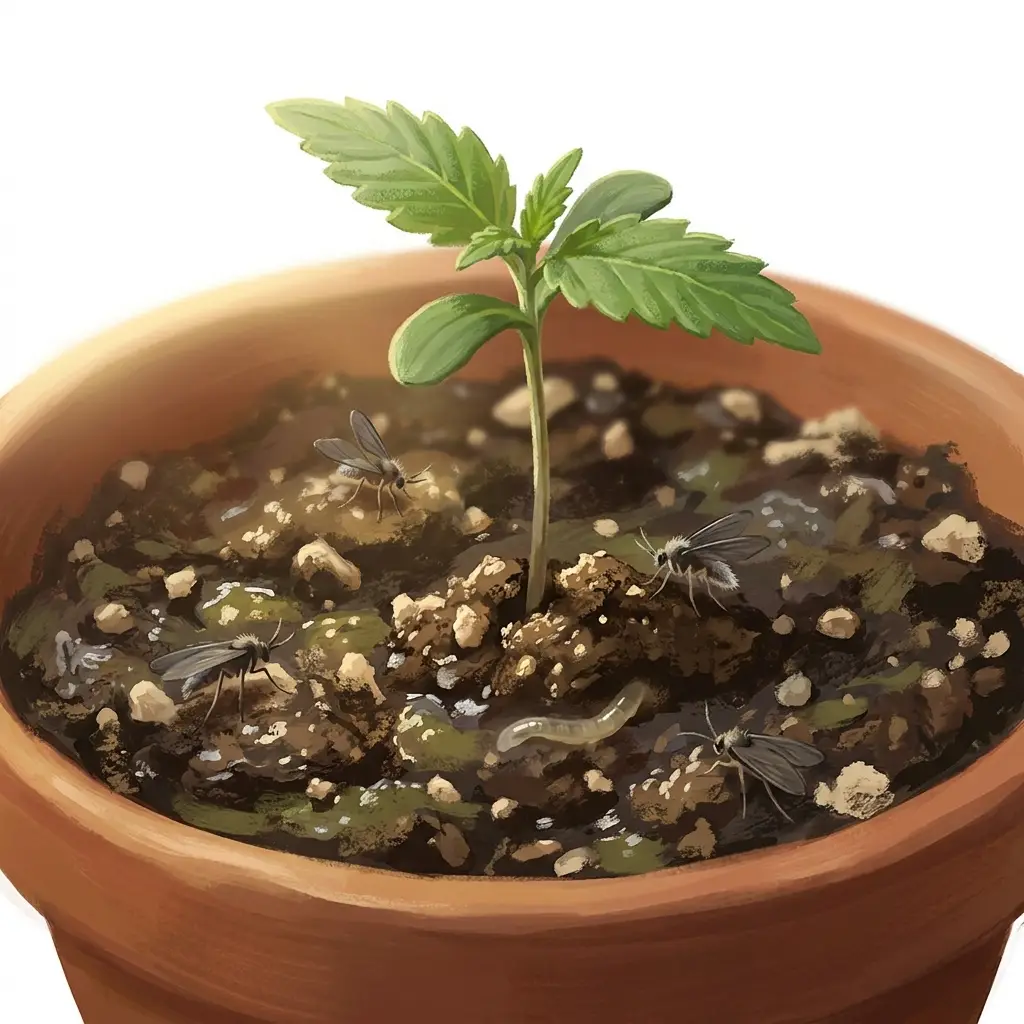 Fungus gnats: little black flies hopping off wet topsoil when you move the pot.
The Waterer gave the plant a splash every morning because the soil looked dry on top. The top inch was dry. The middle was soaked. The bottom was a swamp. He never lifted the pot to check the weight, so the surface stayed permanently moist — and moist topsoil is a fungus gnat maternity ward. The flies you see are the least of it. Little black flies skipping around the soil surface, lifting when you water, means fungus gnats, and the larvae in the wet soil are chewing your young roots. They ride in on damp soil, which makes them overwatering with wings. If you’ve overwatered once — and based on most first grows, you have — you’ve already built the conditions for them.
The short version:
- Small dark flies skipping over the soil and rising when you water or knock the pot
- Fungus gnats — the adults are harmless, but the larvae in the wet soil chew young roots
- Let the top of the soil dry hard between waterings, drop yellow sticky traps, and treat the soil with BTi
- They breed in damp topsoil, so a dry surface is both the cure and the prevention
Want the full breakdown? Keep scrolling.
What do fungus gnats look like?
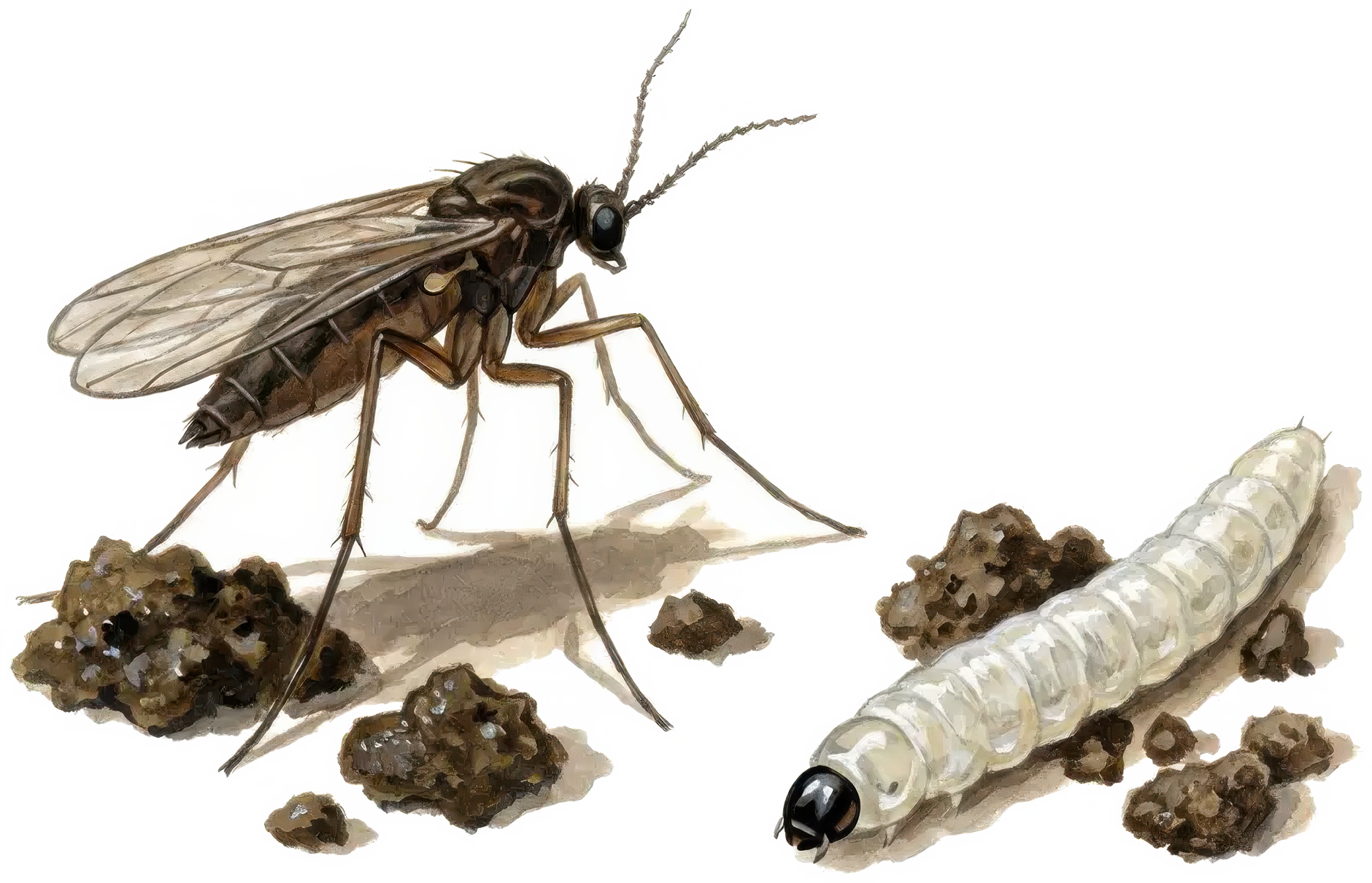 Adult and larva: the flies annoy you, the larvae in the soil do the root damage.
Small dark flies, a couple of millimetres long, hanging around the soil surface, bumping into the light, and lifting off in a little cloud when you water or disturb the pot. That’s the whole visible sign. If a few small flies rise off the soil when you move it, you’ve got fungus gnats — don’t wave it away as nothing. The Waterer waved it away and ended up with thousands.
The adults are annoying but basically harmless. The real damage is underground, where you can’t see it. Female gnats lay eggs in the top layer of wet soil; the larvae hatch out small, translucent and worm-like, and feed on organic matter and, critically, on your root hairs. In small numbers she barely notices. In large numbers — which arrive fast, because each female lays up to two hundred eggs — the root damage slows growth, weakens her at the foundation, and opens the door to root rot. A yellow sticky trap on the soil surface tells you how bad it is: covered after a day means a serious problem, a few over a week means you’re on top of it.
Where do fungus gnats come from?
Damp soil and an Irish climate, mostly. They ride in on a bag of soil stored moist, or on a new plant, and then breed in whatever wet topsoil they can find. Ireland is damp, Irish houses are damp, and fungus gnats love damp — which is why they’re the single most common indoor pest in our climate. A pot that stays wet on top gives them everything they need.
The cause underneath the cause is a watering habit. Female gnats can only lay in moist soil — they physically can’t lay in a dry surface. So a grower who splashes a little on every day, keeping the top inch permanently moist, is running a continuous breeding programme without knowing it. The fix isn’t really a pesticide. It’s a watering change, which is why this guide and the overwatering guide are two halves of the same lesson. Lift the pot, learn its weight, and water by how heavy it is, not how the surface looks.
How do I get rid of fungus gnats?
You hit the adults and the larvae separately, because they live in two different places.
- Dry the surface hard. Let the top inch of soil dry out properly between waterings. Gnats can’t lay in dry soil, so this alone breaks the cycle. Water by pot weight, not by calendar or by how the top looks.
- Drop yellow sticky traps. Lay them flat on the soil or hang them just above it. The gnats are drawn to the yellow, stick, and die — which cuts the breeding population and tells you how bad things are. DIG stock them.
- Treat the larvae with BTi. BTi — the mosquito-bits bacterium — kills gnat larvae in the soil when they eat it, and harms nothing else: not the plant, not the roots, not the microbiology you’ve been building. Soak the bits and water it in, or use it as a drench. Three or four applications over a couple of weeks and the larval population collapses. DIG stock it.
- Cap the soil. Half an inch of coarse perlite or sand over the surface is a dry mineral layer the gnats can’t lay in — a physical barrier that costs almost nothing.
Get the surface dry and the larvae treated and the problem ends, because you’ve removed the only thing they need: wet topsoil. Dry surface, no gnats. It really is that blunt.
FAQ
Are fungus gnats actually harmful or just annoying? The adults are mostly just annoying — they bump into the light and land on your face. The damage is the larvae in the soil chewing root hairs, which slows growth and, in big numbers, weakens the plant and invites root rot. So they’re worth dealing with, not just tolerating.
How do I get rid of fungus gnats permanently? Let the top inch of soil dry hard between waterings — they can’t breed in a dry surface, so this is the permanent fix. Add sticky traps for the adults and BTi for the larvae to clear the existing population. Then keep watering by pot weight so the surface never stays wet enough for them to come back.
Why do I keep getting fungus gnats after I overwater? Because overwatering keeps the topsoil permanently moist, and moist topsoil is the only place fungus gnats can lay their eggs. They’re effectively a symptom of the watering habit. Fix the watering — lift the pot, water by weight — and the gnats lose their nursery.
Will sticky traps alone clear fungus gnats? No. Sticky traps catch the flying adults and tell you how bad it is, but they don’t touch the larvae breeding in the soil. You need to dry the surface and treat the soil with BTi to break the cycle. Traps are a useful part of the plan, not the whole plan.
Not sure this is your problem? Run her through the Diagnosis Buddy — five questions and you’ll know.
Fixed it?
Here’s how this stage goes when it’s going right — walk the grow →. Still not sure what you’re looking at? Ask the Diagnosis Buddy →