
Bud Rot: The One That Costs the Most
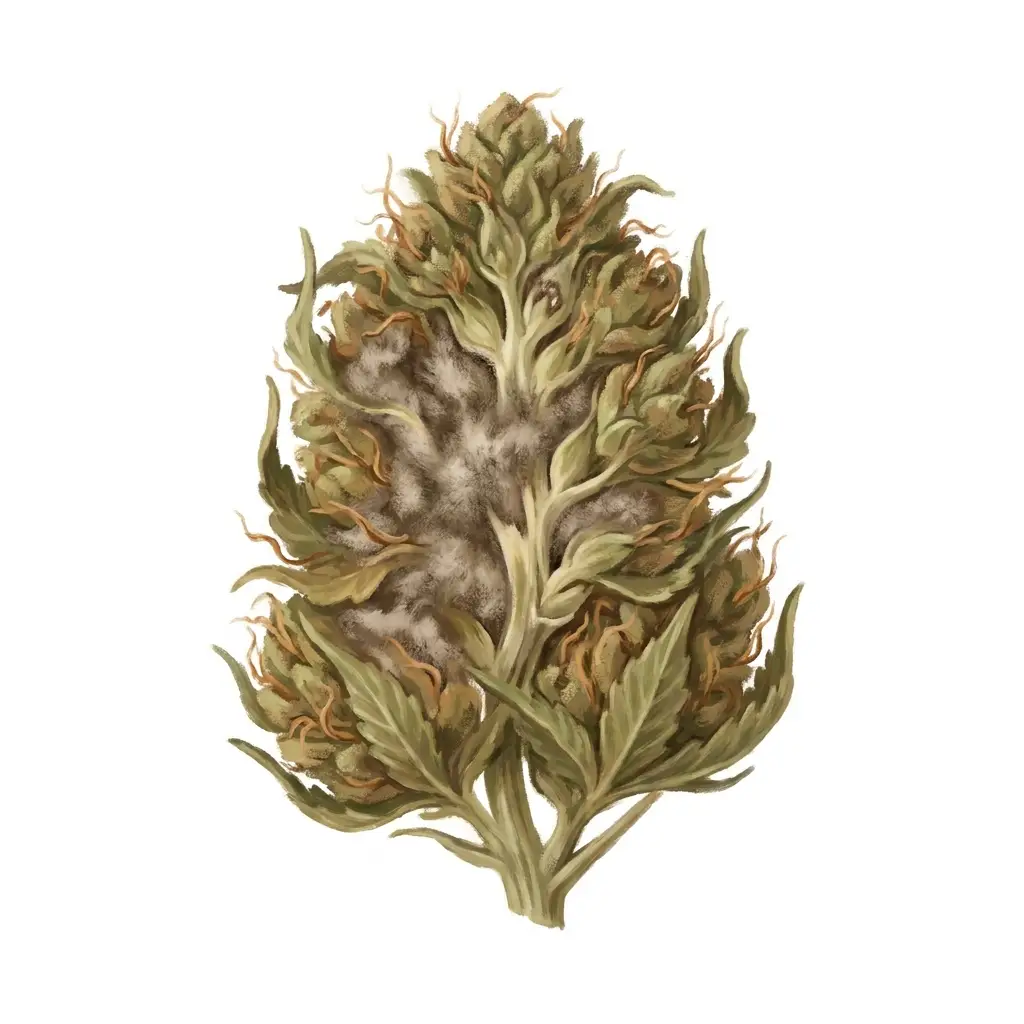 Bud rot (botrytis): grey fuzz working out from the dense core of a cola.
The Squeezer checked his buds by squeezing them. Loved the feeling of density building in late flower, gave the main cola a press every evening. Didn’t notice the slightly soft patch at the base. Didn’t clock the single sugar leaf that had yellowed and wilted while everything else stayed green. Didn’t catch the faint musty smell. One morning he pulled back a leaf and the inside of the bud was brown mush with grey fuzz through the core. The rot had eaten the densest, proudest bud on the plant from the inside out, and by the time it showed on the outside, the inside was gone. Grey fuzz inside the bud and a mushy brown core is botrytis — the bad one. Move now, because this is the problem that hits hardest at the finish line.
The short version:
- Grey fuzz inside a dense bud and a mushy brown core — sometimes one yellow, wilted sugar leaf is the only outside sign
- Botrytis — it attacks dense colas from the inside out, worst in the final weeks when she’s most valuable
- Cut every affected bud well past the rot, bag it, bin it (don’t compost), and dry the space out fast
- It’s a damp-air problem — dense buds plus humidity above 50% in late flower is the cause
Want the full breakdown? Keep scrolling.
What does bud rot look like and how do I catch it early?
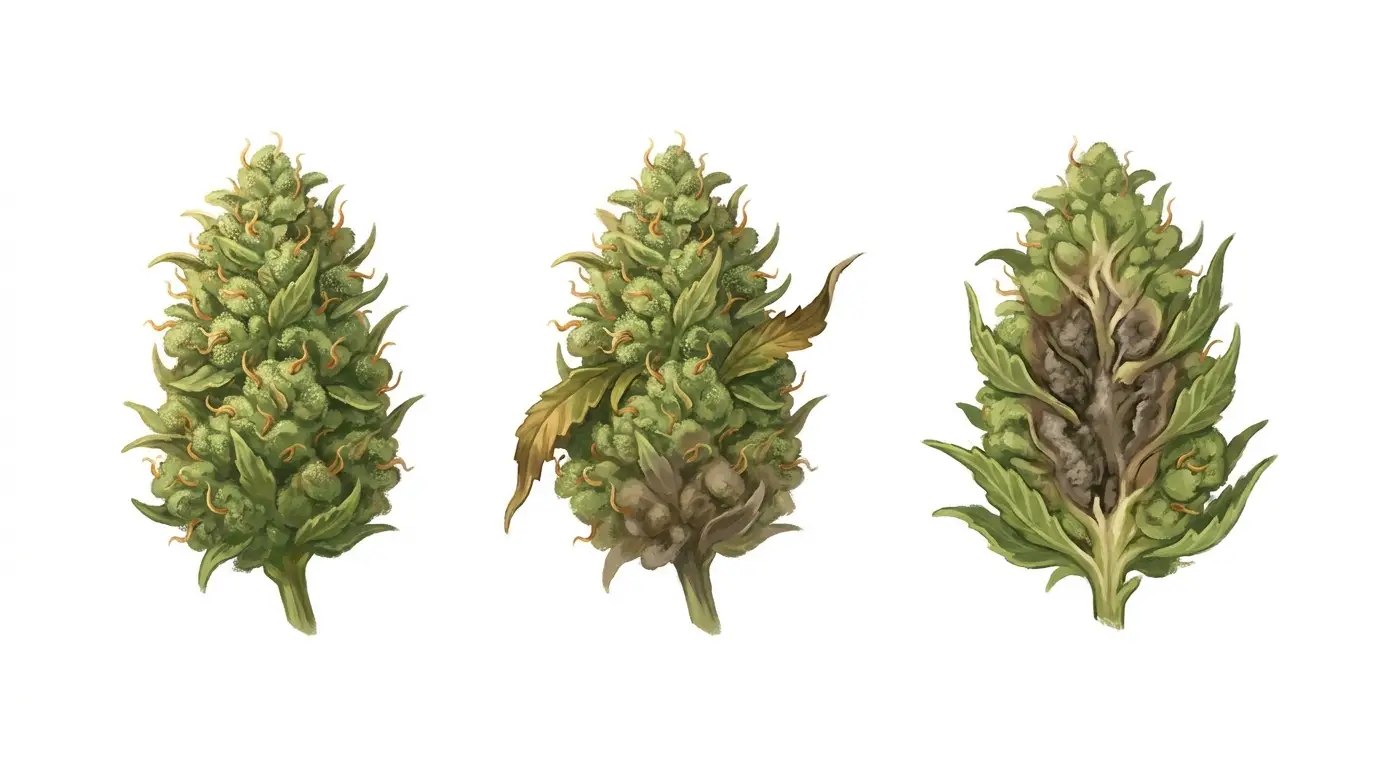 How fast it moves: a clean cola to a browning, hollow one in days.
The visible version is unmistakable and too late: pull a bud open and the core is grey-brown, fuzzy, mushy, the flower turned to rot. The catchable version is subtle. The earliest sign is usually a single sugar leaf sticking out of an otherwise healthy bud, gone yellow or wilted, pulling away too easily — no resistance, like it’s already given up. There’s often a faint musty or ammonia smell near the cola before you see anything at all.
If you spot any of those, look closer immediately. Don’t wait, don’t hope it’s a nutrient thing. Gently open the bud and inspect the core. Grey or brown discolouration inside, or any fuzzy mould, means act now. Bud rot doesn’t start on the outside — it starts deep in the densest part where humidity has been pooling for a week, invisible until it’s eaten through. The grower who catches it investigates a single odd leaf instead of squeezing past it.
Why does bud rot happen?
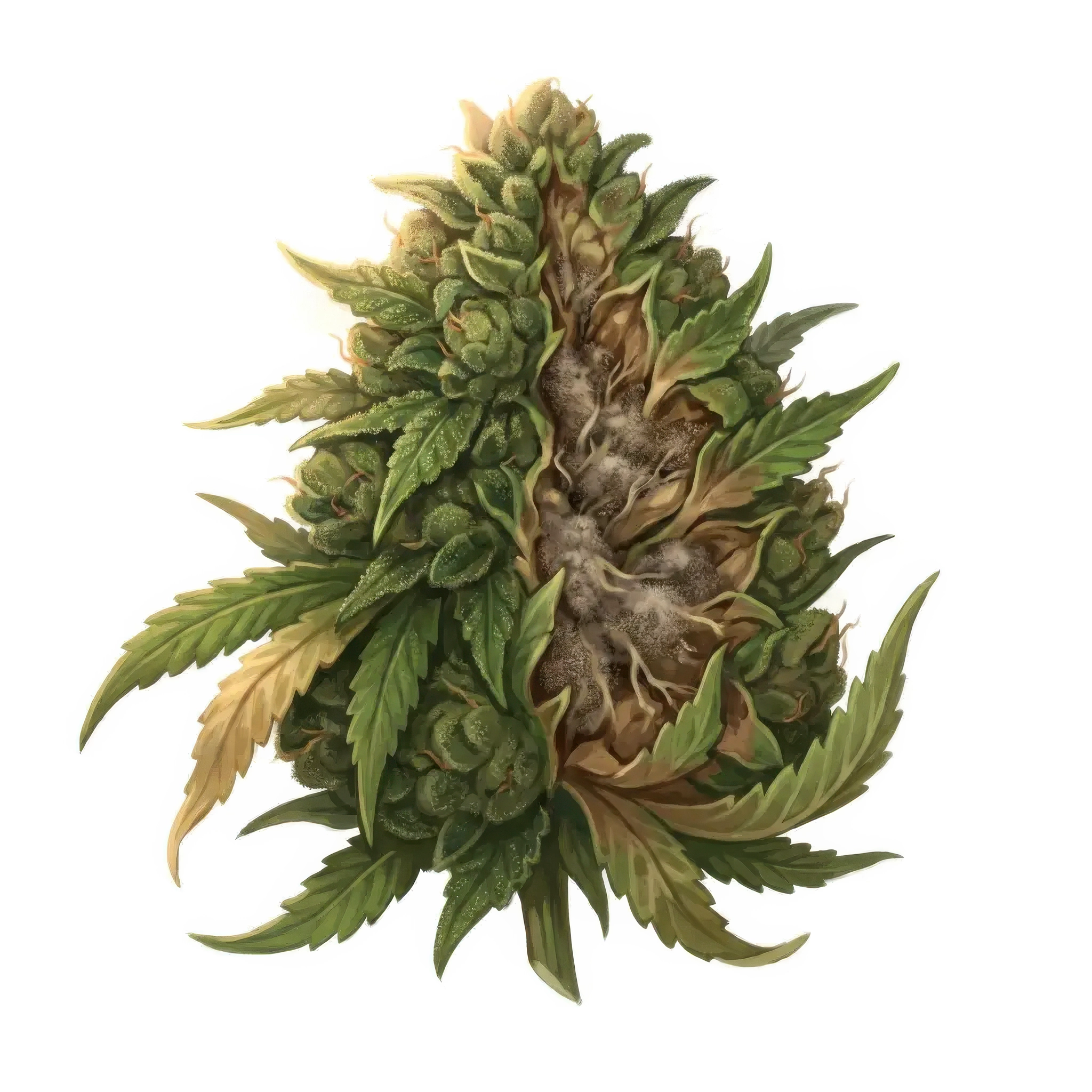 Why you miss it: clean on the outside, rotted in the middle where you can’t see.
Moisture gets trapped inside a dense bud. The core of a fat cola in late flower holds higher humidity than the air around it — warm, moist, dark, no airflow getting in. That’s a perfect botrytis nursery, even if your tent reading looks fine at the canopy. Dense buds are the most vulnerable precisely because they’re the ones you wanted: the tighter she packs, the worse the air gets in the middle.
The trigger is the environment in the final weeks. Humidity above 50% in late flower and the risk climbs hard. A big temperature swing between lights-on and lights-off makes it worse, because the drop causes condensation, and condensation inside a cola is what the mould is waiting for. This is why low humidity and a managed day-night temperature gap in late flower matter so much — it was never just about preserving trichomes, it was about this. Prevention starts weeks before you’d ever see a spot, with a dehumidifier earning its keep and a hygrometer you actually read. DIG stock both.
How do I treat bud rot and stop it spreading?
There’s no fixing infected tissue. The whole game is removal and damage control.
- Cut well past the rot. Not just the fuzzy part — cut the affected bud back into clean, healthy tissue below it. Botrytis runs further than it looks.
- Bag it and bin it. Don’t compost it, don’t leave it in the room. Botrytis spores are airborne and sticky and they’ll spread off a discarded bud sitting in the tent.
- Clean your hands and tools. Before you touch another plant, wash up. You’re the most efficient way for the spores to travel between colas.
- Dry the space out. Increase airflow, drop humidity as low as you can manage, and break up any big temperature swing. The damp is the cause — fix it or the rest comes back.
- Inspect every bud, every day, until harvest. If more spots turn up, you’re in a race against the rot.
The hard decision is the one The Squeezer couldn’t make. If it’s spreading and you’re still two to three weeks off ideal harvest, you choose: wait and risk more loss, or chop early and save what’s clean. There’s no formula — just the unsentimental sum of what you can keep. A slightly early harvest that’s clean beats a rotten one. The Squeezer waited because he couldn’t accept his best bud was gone, and lost two more while he decided.
FAQ
Can I smoke a bud that had bud rot next to it? Cut well past the rot into clean tissue and inspect the neighbouring buds closely before you keep them. Anything with grey fuzz, brown discolouration, or that musty smell goes in the bin, not the jar. If a bud is clean through after you’ve opened and checked it, it’s fine — but when in doubt, throw it out.
What humidity stops bud rot? Keep humidity at 40-55% through flower, and as low as you can manage in the final weeks. Above 60% in flower with no airflow, botrytis is almost guaranteed. A managed temperature gap between day and night matters too, because a hard drop causes the condensation the mould needs.
Why does it start inside the bud where I can’t see it? Because the core of a dense cola traps moisture and holds higher humidity than the surrounding air — warm, damp, dark and still, which is everything botrytis wants. By the time it shows on the outside, the inside is usually already gone. That’s why the early signs are a single odd leaf or a faint smell, not a visible patch.
Is bud rot the same as powdery mildew? No. Powdery mildew is a white, flour-looking dust on the leaf surfaces and is treatable if you catch it early. Bud rot is grey-brown fuzz inside the buds and there’s no treatment for infected tissue — only removal. Both are damp-air problems, so the same environment fix prevents them.
Not sure this is your problem? Run her through the Diagnosis Buddy — five questions and you’ll know.
Fixed it?
Here’s how this stage goes when it’s going right — walk the grow →. Still not sure what you’re looking at? Ask the Diagnosis Buddy →