
Powdery Mildew: The White Dust That Spreads When You Tidy It
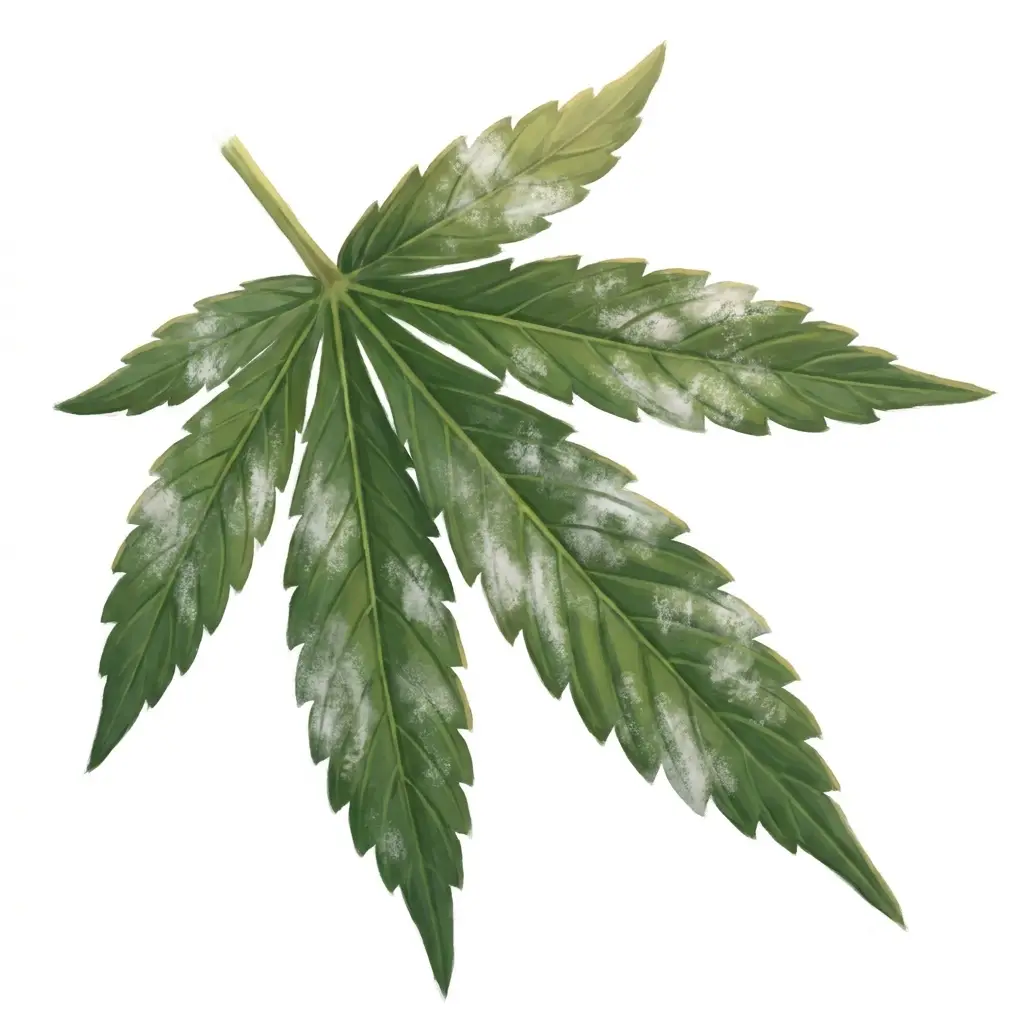 Powdery mildew: looks like someone flicked flour across the leaf.
The Hairdresser saw white powdery patches on a few leaves and did the logical thing — wiped them off with a damp cloth. Methodical too, going plant to plant, leaf to leaf. The trouble is those white patches are colonies of fungal spores, and wiping just smeared them across every leaf surface in the tent. Three days later the mildew was on every plant. He turned a local problem into a systemic one by being thorough in exactly the wrong way. White flour-looking dust on the leaves is powdery mildew, and it’s a damp-air problem far more than a dirty-plant one. Don’t wipe it. Below is what to do instead.
The short version:
- White, powdery, flour-looking dust on the leaf surface — starts as small circular patches, usually on the tops of fan leaves
- Powdery mildew — a fungus that thrives in high humidity and still air, not a sign of a dirty plant
- Drop the humidity, get air moving, and cut out the worst leaves before it reaches the buds
- Don’t wipe it off — you just spread the spores across the whole tent
Want the full breakdown? Keep scrolling.
Why is there white powder on my leaves?
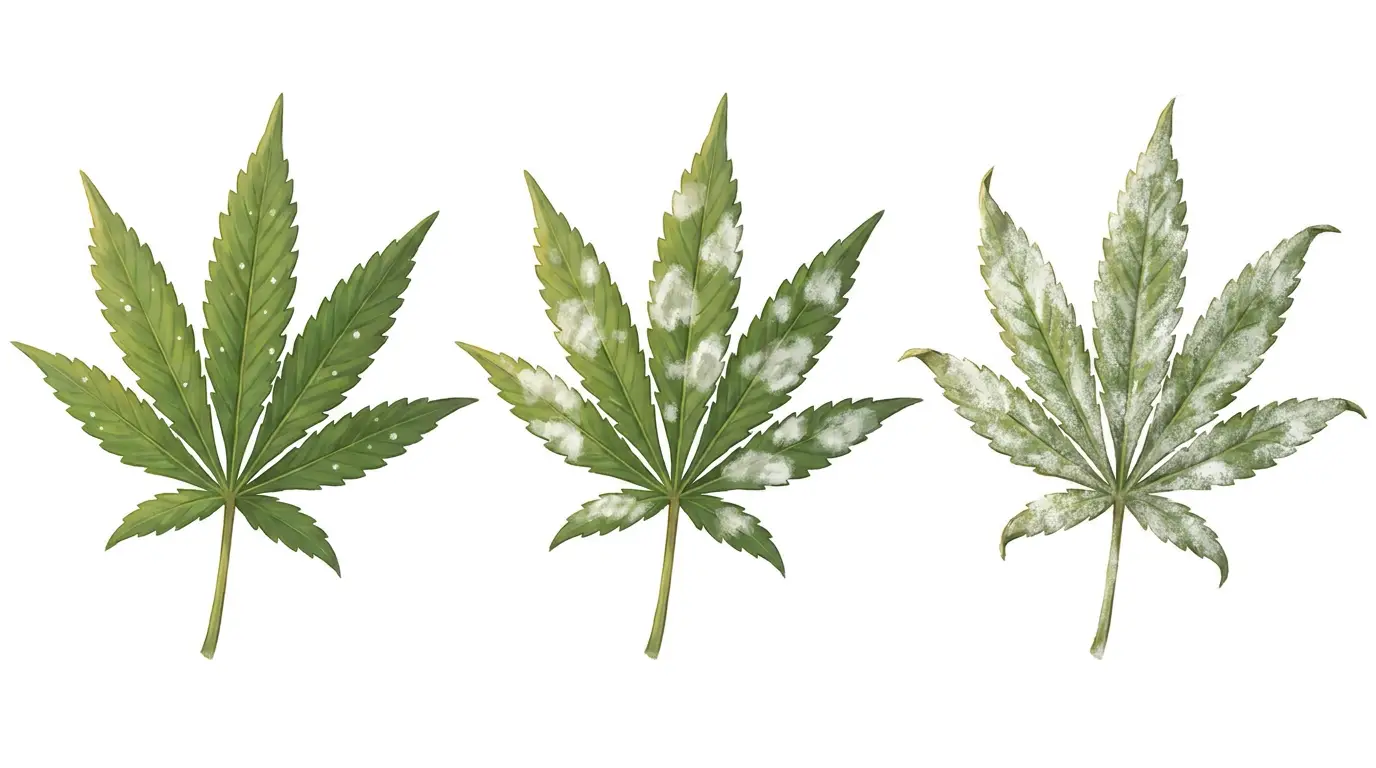 Left alone: a few spots become a dusted canopy, then it’s into the buds.
It looks like someone shook talcum powder on the plant. It starts as small circular patches, usually on the upper surface of fan leaves, and spreads out from there into a dusty white film. That’s powdery mildew, the most common disease in indoor growing, and it’s a fungus — the white you see is the fruiting body, the part that’s gone to spore.
Here’s what most growers don’t know and the reason wiping fails: PM is systemic. The visible patches are just the surface. The mycelium — the root network of the fungus — can be inside the leaf tissue before the patches even show. So wiping removes the visible part while the infection underneath carries on, and the spores you’ve dragged across the cloth start fresh colonies on every surface you touched. That’s how The Hairdresser turned a few leaves into the whole tent. You don’t clean powdery mildew. You change the conditions that let it grow and remove the worst tissue properly.
What causes powdery mildew on cannabis?
Damp, still air. PM thrives in high humidity — above 60% — with poor airflow, and that’s a fair description of an Irish spare room in autumn with a tent and an extraction fan you keep meaning to upgrade. It’s a damp-air problem, not a hygiene problem. A spotless grower in a humid, stagnant tent gets it; a messier one with dry air and good circulation doesn’t.
It starts in the parts of the tent the air forgets. Dense canopy with no airflow through it. Lower leaves sitting shaded and damp. The corners where air doesn’t circulate. And especially leaves touching the tent walls — common in smaller setups — because the leaf traps moisture against the fabric and makes a humid microclimate the mildew loves. If your canopy is a thicket and your only fan is the extraction pulling air out, you’ve built an incubator. The same environment fixes that prevent bud rot prevent this — it’s the same damp-and-still problem showing up on the leaves instead of inside the buds.
How do I get rid of powdery mildew?
Two fronts: remove the worst, then change the air so it can’t come back.
- Cut out the worst leaves — don’t wipe them. Cut the heavily affected leaves off, bag them, and take them out of the tent straight away. Don’t wipe, don’t compost, don’t leave them in the room. Those spores are airborne and you’ll only spread them.
- Treat the rest with potassium bicarbonate. A potassium bicarbonate spray changes the pH of the leaf surface and makes it inhospitable to PM — about a tablespoon per litre of water with a couple of drops of liquid soap as a surfactant, sprayed thoroughly over the remaining foliage including the undersides.
- Drop the humidity. Get it below 55%. A dehumidifier running during the day in flower earns its keep here. DIG stock them.
- Get air moving through the canopy. Not just extraction pulling air out, but circulation inside the tent. An oscillating clip fan keeps air moving across the canopy and breaks up the stagnant pockets PM needs. DIG stock them.
- Defoliate if she’s a thicket. If the canopy is too dense for air to pass through, thin it so light and airflow reach the middle. Keep leaves off the tent walls.
- Mind the buds. Get on top of it before it reaches the flowers — and you’re going to smoke this, so no spraying in the last two to three weeks before harvest. If it’s that bad that late, it’s an early-harvest decision, not a late spray.
FAQ
Can I just wipe powdery mildew off my leaves? No, and it makes it worse. PM is systemic — the fungus is inside the leaf tissue, not just sitting on top — so wiping removes the visible dust while the infection stays. Worse, you smear spores across every surface the cloth touches and spread it through the whole tent. Cut the worst leaves off and remove them instead.
What humidity stops powdery mildew? Get it below 55%, with good airflow moving through the canopy. PM thrives above 60% in still air, so the two fixes go together — dropping humidity without also moving the air leaves stagnant damp pockets where it still takes hold. A dehumidifier plus an oscillating fan covers both.
Is powdery mildew on cannabis dangerous to smoke? Treat any flower with mildew on it as not worth the risk — remove affected buds and leaves rather than keeping them. The point of acting early is to stop it reaching the buds at all. Keep the plant clean through to harvest by fixing the environment, not by trying to clean infected flower.
Is white powder on leaves always powdery mildew? Usually, if it’s a fine flour-like dust on the leaf surface in damp, still conditions. Don’t confuse it with the fine even speckling of spider mites or thrips, which is damage to the leaf rather than a coating on top of it — flip the leaf and check for pests underneath. PM sits on the surface and looks dusted on; pest damage looks like the colour’s been lifted out.
Not sure this is your problem? Run her through the Diagnosis Buddy — five questions and you’ll know.
Fixed it?
Here’s how this stage goes when it’s going right — walk the grow →. Still not sure what you’re looking at? Ask the Diagnosis Buddy →