Caterpillars: Something's Been Eating Her
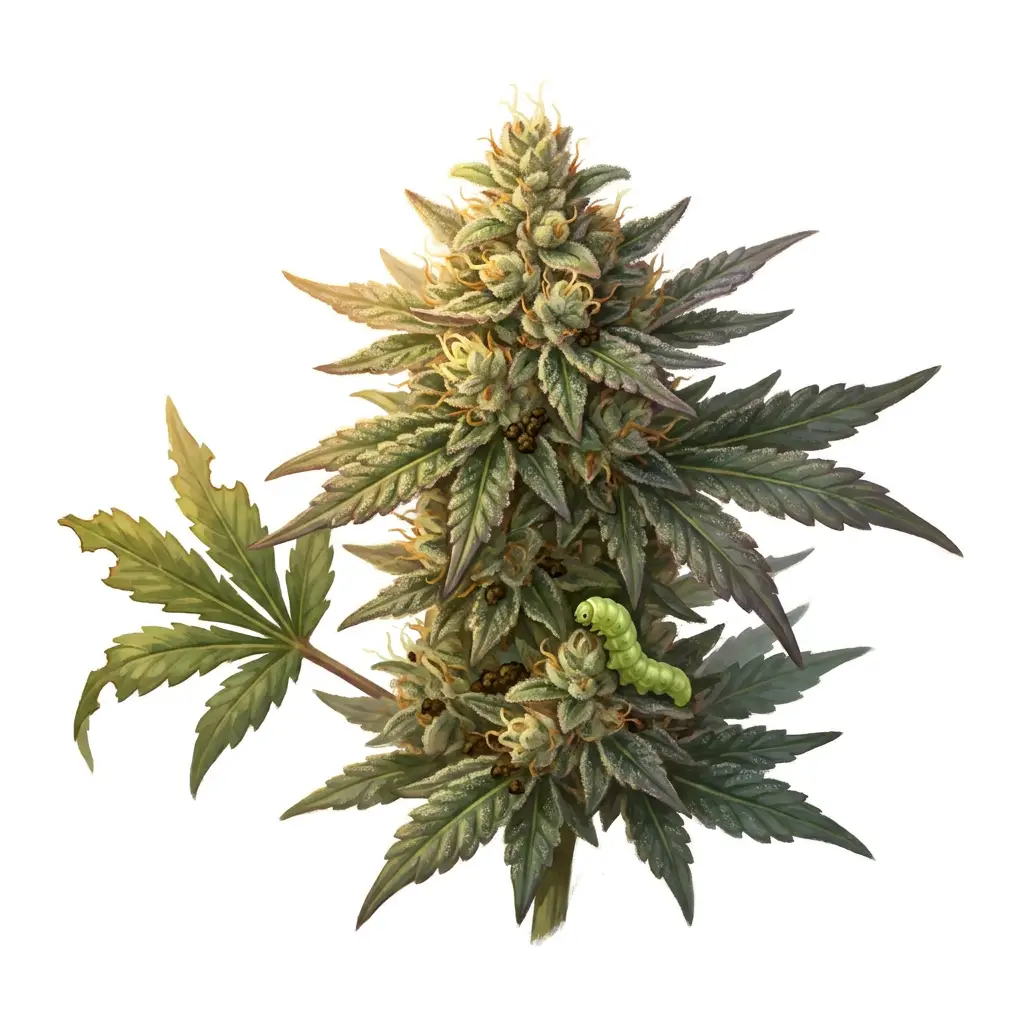 Caterpillars: the damage and the droppings (frass) show before the worm does.
Most pests in this book are too small to see without a loupe. Caterpillars are the opposite — big enough to spot, but shy, and brilliant at hiding right where you don’t want them. You won’t usually see the caterpillar first. You’ll see the evidence: ragged holes chewed out of the leaves, the edges torn rather than spotted, and little dark grains scattered on the leaves and tucked into the buds. Those grains are frass — caterpillar droppings — and they’re the giveaway. Ragged holes and dark frass means something’s eating her, usually a caterpillar burrowed in where you can’t see it. This is one you act on fast, because a caterpillar inside a bud does the same damage as bud rot from the inside out.
The short version:
- Ragged, torn holes chewed in the leaves, and little dark grains (frass) on the foliage and in the buds
- Caterpillars — the damage and the droppings show before the culprit does, and they hide deep in the buds
- Pick them off by hand, check daily, and treat with a BT spray that hits caterpillars and leaves everything else alone
- A caterpillar tunnelling inside a cola opens the door to bud rot, so don’t let one sit
Want the full breakdown? Keep scrolling.
What does caterpillar damage look like?
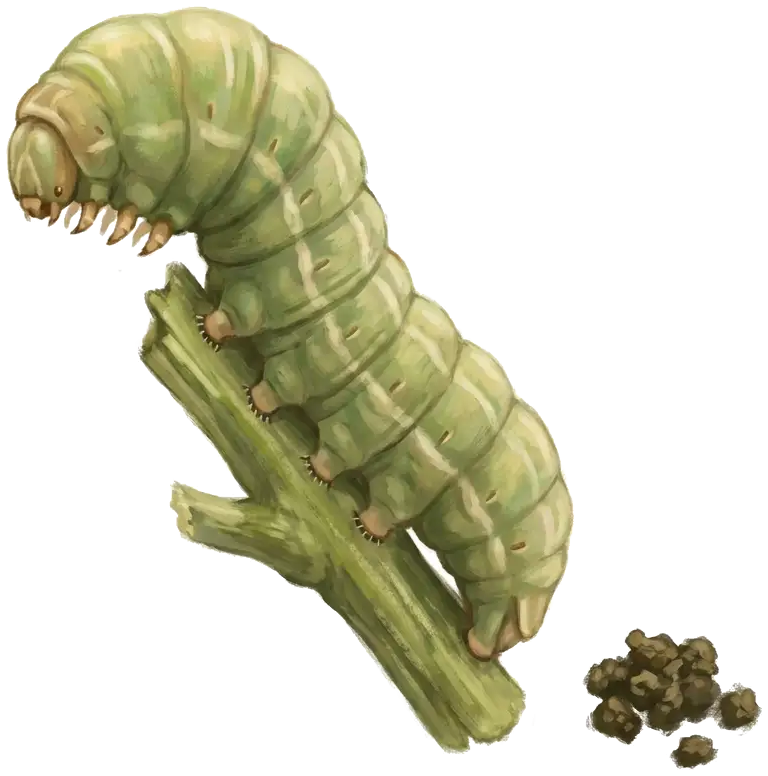 The lodger: a budworm tucked into the cola, eating from the inside out.
Holes, but a specific kind of hole. Caterpillars chew with mouthparts, so the damage is ragged and torn — chunks taken out of leaf edges and centres, nothing tidy about it. That’s different from the fine, even speckling a sap-sucker leaves. If a leaf looks like something bit it, something did.
The frass confirms it. Look for tiny dark grains — like coarse black pepper — on the tops of leaves and, more worryingly, packed into the gaps in the buds. Frass in a cola means a caterpillar is living inside it, eating it out from the middle, and that’s the worst place for one to be. They’re masters of camouflage, often the exact green of the plant, curling tight against a stem or burrowing into a bud during the day. So you hunt the evidence first — the holes and the frass tell you where to look closely.
Where do caterpillars come from and why do they matter so much?
They come from moths and butterflies laying eggs on the plant, which makes them mainly an outdoor and greenhouse problem — but they turn up indoors too, hitching in on a plant brought in from outside, or coming through an open window or vent on a warm evening the same way other flying pests do. If you’ve vented the room by cracking a window in summer, you’ve handed them an entrance. A mesh screen over any opening keeps them out for a few quid.
The reason they punish you out of proportion to their size is where they choose to eat. Leaf damage alone is cosmetic — she can lose a few leaves and shrug it off. But a caterpillar that burrows into a dense bud chews a moist, dark tunnel right through the core, and that tunnel is exactly the warm damp pocket bud rot needs to take hold. So a caterpillar problem in flower often becomes a botrytis problem a week later. The frass packed into a cola is the early warning for both. Catch the caterpillar, you head off the rot.
How do I get rid of caterpillars?
Two simple tools, and the willingness to actually look.
- Pick them off by hand. Genuinely the fastest first move. Find them by following the frass and the holes, and remove them. Check the undersides of leaves, the leaf folds, and open up any bud showing frass to get the one tunnelling inside.
- Check daily. Caterpillars hatch in waves and hide well, so one inspection won’t clear them. Go through the plant every day, follow fresh frass to fresh caterpillars, and keep removing them until the new damage stops.
- Treat with a BT spray. BT — Bacillus thuringiensis — is a naturally occurring bacterium that kills caterpillars when they eat the treated leaf, and hits nothing else. It leaves your beneficials, your soil life, and your nerves alone. DIG stock it. It’s the targeted answer where a broad-spectrum spray would do collateral damage.
- Screen your openings. If they came in through a vented window, fine insect netting over the opening stops the next batch and lets air through.
- Mind the harvest window. You’re going to smoke this. Hand-picking and BT are both gentle, but inspect every bud before harvest and cut out any with frass or rot inside.
FAQ
What are the little black grains on my buds and leaves? That’s frass — caterpillar droppings. It looks like coarse black pepper scattered on the leaf tops or packed into the gaps in a bud. Frass is usually the first sign you spot, because the caterpillar itself is camouflaged and hidden. Frass in a cola means one is living inside it.
Why do caterpillars cause bud rot? A caterpillar that burrows into a dense bud chews a moist, dark tunnel through the core, and that’s exactly the warm, damp, airless pocket botrytis needs to start. So a caterpillar in flower often turns into a bud rot problem within days. Removing the caterpillar early heads off the rot before it begins.
Does BT spray actually work and is it safe? Yes. BT is a soil bacterium that only affects caterpillars when they eat treated leaf — it doesn’t touch your beneficials, your bees, or your soil life. It’s one of the few sprays that’s genuinely targeted, which is why it’s the go-to for chewing pests over a broad-spectrum option.
How are caterpillars different from other holes in my leaves? Caterpillars leave ragged, torn holes plus dark frass — clear chewing damage. Sap-suckers like thrips and aphids leave fine speckling, silvery streaks, or sticky residue instead, with no torn holes. If it looks bitten and there are dark grains about, it’s a caterpillar.
Not sure this is your problem? Run her through the Diagnosis Buddy — five questions and you’ll know.
Fixed it?
Here’s how this stage goes when it’s going right — walk the grow →. Still not sure what you’re looking at? Ask the Diagnosis Buddy →