
Thrips: The Damage People Feed Instead of Treat
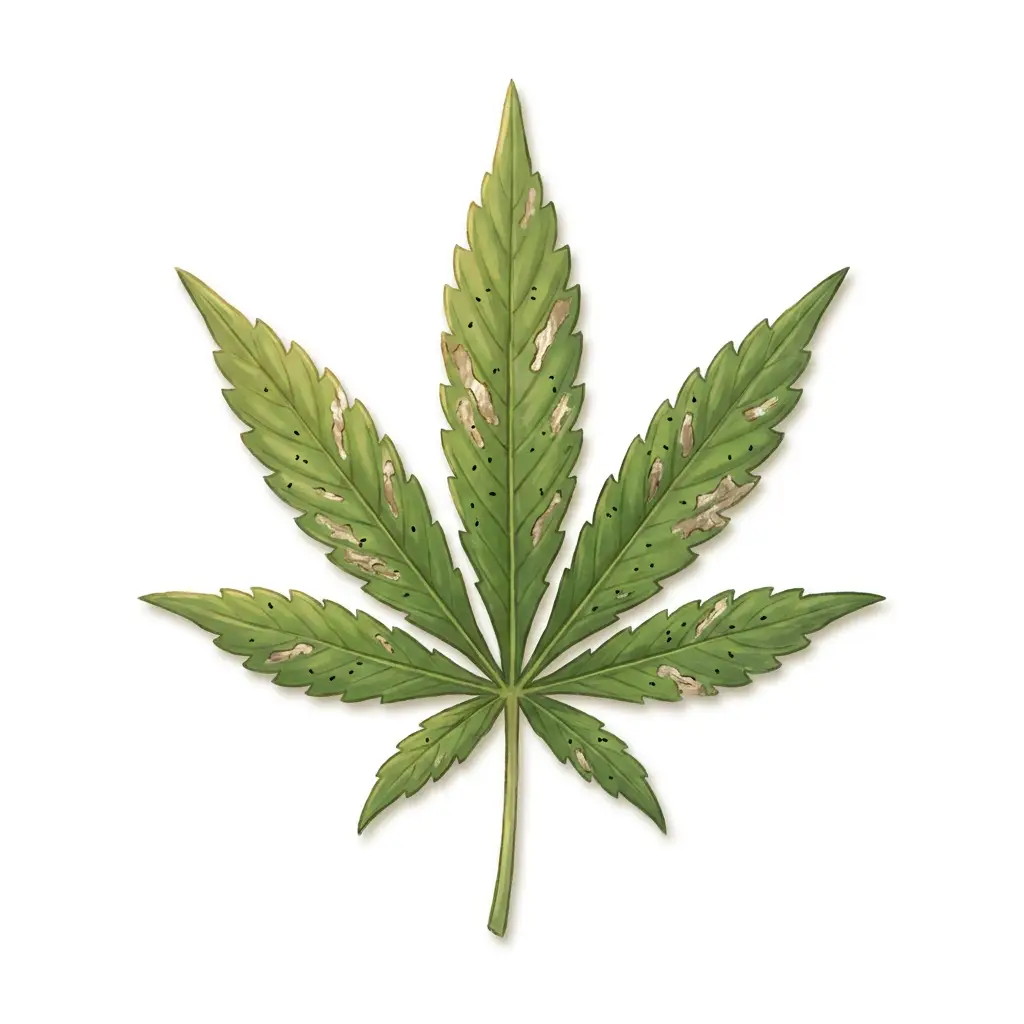 Thrips: silvery, dry-looking patches with tiny black specks (their droppings).
The Botanist saw silver-bronze scarring on his leaves and reached for the CalMag. It looked like a deficiency — discoloured cells, an irregular pattern, damage you could mistake for a nutrient issue if you weren’t looking closely. So he added calcium and magnesium. The scarring spread. He added more. It spread more. He was treating a pest problem with a nutrient bottle, and the thrips were having the time of their lives while he was busy at the shelf. Silvery-bronze streaks with tiny black specks on top of the leaves means thrips — sap-suckers, fast movers — not hunger. Reaching for the feed is exactly wrong. Here’s how to tell them apart and clear them.
The short version:
- Silvery or bronze streaks and pale speckling, with tiny black specks (their droppings) on the tops of the leaves
- Thrips — sap-suckers that rasp the leaf and are easily mistaken for a calcium deficiency
- Blue sticky traps, treat the tops and undersides, and repeat to catch the hatchlings
- Predatory mites clear them if you’d rather go biological — and feeding the plant won’t fix it
Want the full breakdown? Keep scrolling.
What do thrips look like on cannabis?
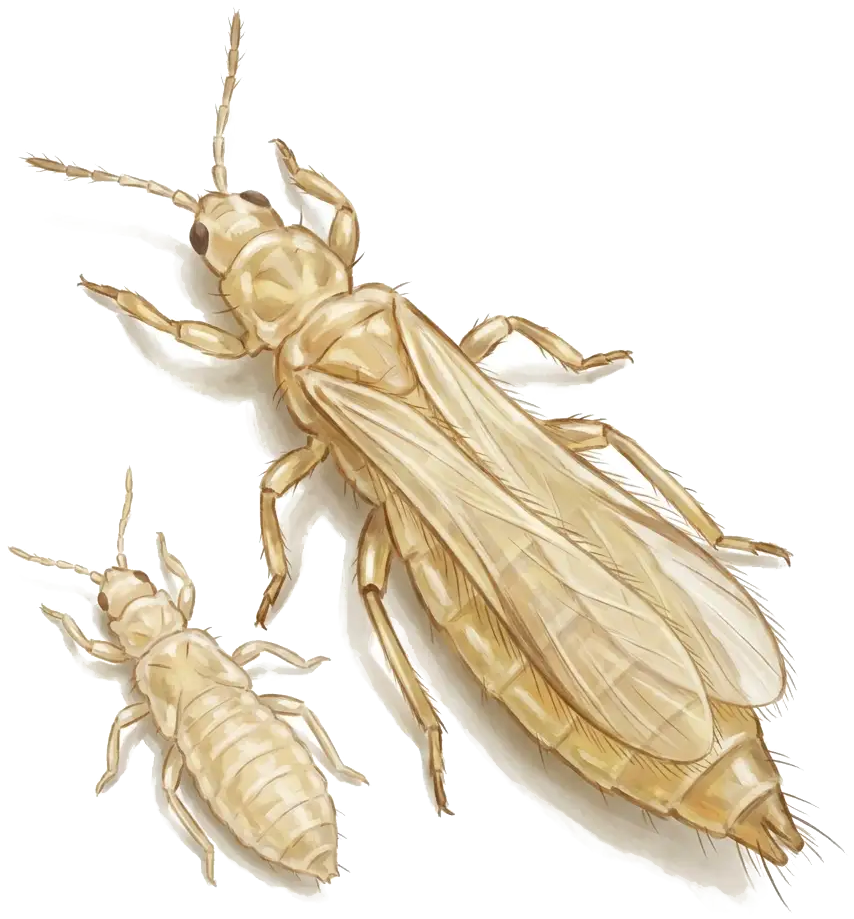 The pest itself: a rice-grain body with fringed wings, fast and hard to spot.
Tiny, elongated insects, about a millimetre long, narrow like a grain of rice, and quick. If you tap a leaf and see tiny things dart for the edges, those are thrips. But like most pests, you’ll notice the damage before the bug: they rasp the leaf surface and suck out the cell contents, leaving distinctive silver or bronze scars. The damage looks patchy and irregular because they feed unevenly, not in a pattern.
The confirming sign is the frass — tiny dark specks of thrip droppings on top of the leaf, in among the silver scarring. That’s the detail that separates thrips from a nutrient problem, so look for it. They’re drawn to the growing tips and hide in new growth, leaf folds, and inside flower buds. If the damage is on the newest leaves and there are dark specks on the surface, you’re looking at thrips, not a feed issue.
Is it thrips or a nutrient deficiency?
This is the trap The Botanist fell into, and thrip damage is one of the most commonly misidentified problems among beginners. The silver scarring genuinely does look like a calcium deficiency to an untrained eye. The difference is in the pattern.
- Deficiencies follow a system. A nutrient problem starts in a specific zone — top of the plant or bottom — and progresses methodically through the leaf, fading or yellowing in a consistent way.
- Thrip damage is random and patchy. The scarring turns up unevenly wherever they’ve been feeding, with no top-to-bottom logic to it.
- Thrips leave frass. Look close and you’ll see tiny dark specks on the leaf surface. A deficiency leaves no droppings, because a deficiency isn’t alive.
The rule of thumb: if the damage is random and inconsistent and nutrients don’t explain it, think pests before you think feed. And if your tips are scarring but you’re feeding gently, it’s far more likely to be thrips than a hunger problem — don’t confuse this with nutrient burn, which starts crisp and brown at the very tip when you’ve been feeding hard. Different end of the leaf, different cause entirely.
How do I get rid of thrips?
You’re breaking a lifecycle, the same as with mites, so one pass won’t do it.
- Hang blue sticky traps. Thrips are drawn to blue (mites and gnats to yellow, thrips to blue), so blue traps catch the adults and tell you how heavy the infestation is. DIG stock them.
- Treat the tops and the undersides. They feed and shelter on both sides of the leaf and in the new growth, so spray everywhere — a proper IPM spray or insecticidal soap breaks down fast and leaves little residue. DIG stock the sensible options.
- Repeat to catch the hatchlings. A single spray kills the ones present but not the next hatch, so treat again every few days, the same three-pass rhythm as spider mites. One spray is a gesture, not a treatment.
- Treat the soil too. Thrips pupate in the soil, so a soil drench alongside the foliar spray catches the stage hiding underground that a leaf spray misses.
- Go biological if you’d rather. Predatory mites hunt thrips and keep working without residue or spray timing — order a sachet, hang it in the tent, let them do it. DIG stock them.
- Mind the harvest window. You’re going to smoke this. No spraying in the last two to three weeks before harvest; if it’s that bad that late, the answer is an early chop, not a late spray.
Then keep the air moving, keep the space clean, and quarantine everything new — thrips hitch in on clones the same as every other pest.
FAQ
How do I tell thrips from a calcium deficiency? Look for the pattern and the droppings. Thrip damage is random and patchy with tiny dark specks (frass) on the leaf surface; a calcium deficiency follows a consistent pattern through a specific zone of the plant and leaves no droppings. If the damage is inconsistent and there are dark specks on top, it’s thrips — don’t reach for the CalMag.
Why do thrips keep coming back after I spray? Because one spray kills the adults but not the eggs or the pupae in the soil. The next generation hatches a few days later and the cycle restarts. You need repeat treatments every few days, plus a soil drench for the pupating stage, to break the lifecycle rather than just trim it.
What colour sticky trap catches thrips? Blue. Thrips are drawn to blue, while fungus gnats and many other pests go for yellow. If you’re specifically monitoring or trapping thrips, use blue traps — they’ll catch more of them and give you a clearer read on how bad the infestation is.
Do predatory mites work on thrips? Yes — there are predatory mites that hunt thrips and keep working continuously without residue or spray timing. They suit prevention and light-to-moderate infestations alongside good airflow and clean habits. For a heavy, established infestation, pair them with sticky traps and treatment rather than relying on them alone.
Not sure this is your problem? Run her through the Diagnosis Buddy — five questions and you’ll know.
Fixed it?
Here’s how this stage goes when it’s going right — walk the grow →. Still not sure what you’re looking at? Ask the Diagnosis Buddy →