Light Leak: She Panicked in the Dark
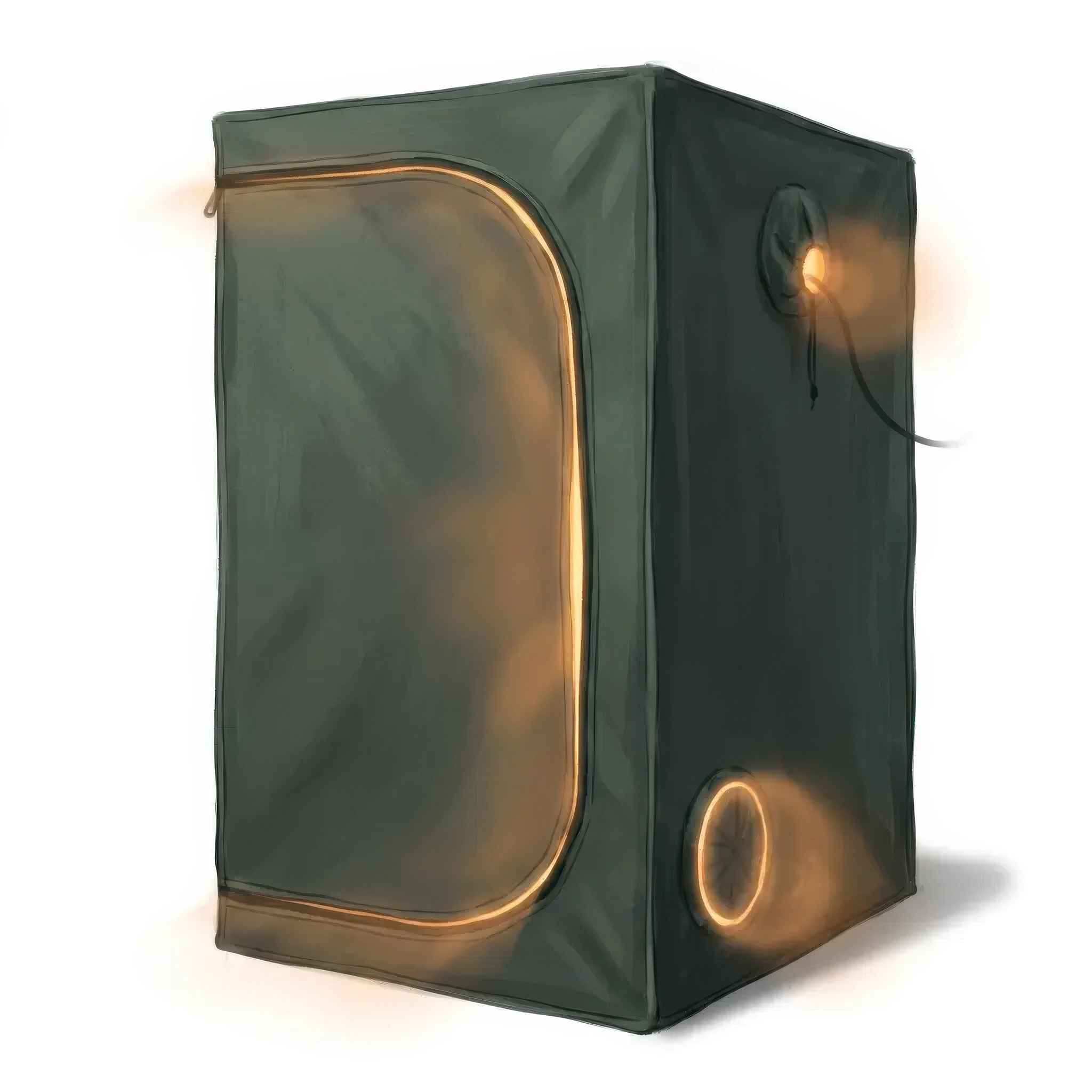 Light leak: stray light reaching her during the dark period, with consequences.
The twelve hours of darkness in flower need to be actual darkness. Not “mostly dark.” Not “the tent zip glows a bit.” Not “I open the tent for thirty seconds at midnight to check on her.” Actual, uninterrupted darkness. The first time a grower finds banana-shaped stamens poking out of the buds, or little pollen sacs, or — worst — seeds where flower should be, the instinct is to blame the genetics. Usually it’s not. Pollen sacs, nanners or seeds in the buds means stress in flower, most often light getting in during her dark hours. She’s panicking, and a panicking plant tries to seed herself before she dies. Move fast, because a bad case seeds the whole crop.
The short version:
- Pollen sacs, banana-shaped stamens (“nanners”), or seeds appearing in the buds during flower
- Stress in flower, most often light leaking into the tent during the dark period — she’s hermied and trying to seed herself
- Make the tent properly light-tight for the full dark period — no LED standby dots, no zip gaps — and pluck visible nanners
- Bad cases will seed the crop, so move fast; pollinated flowers make seeds instead of resin
Want the full breakdown? Keep scrolling.
Why are there pollen sacs and nanners in my buds?
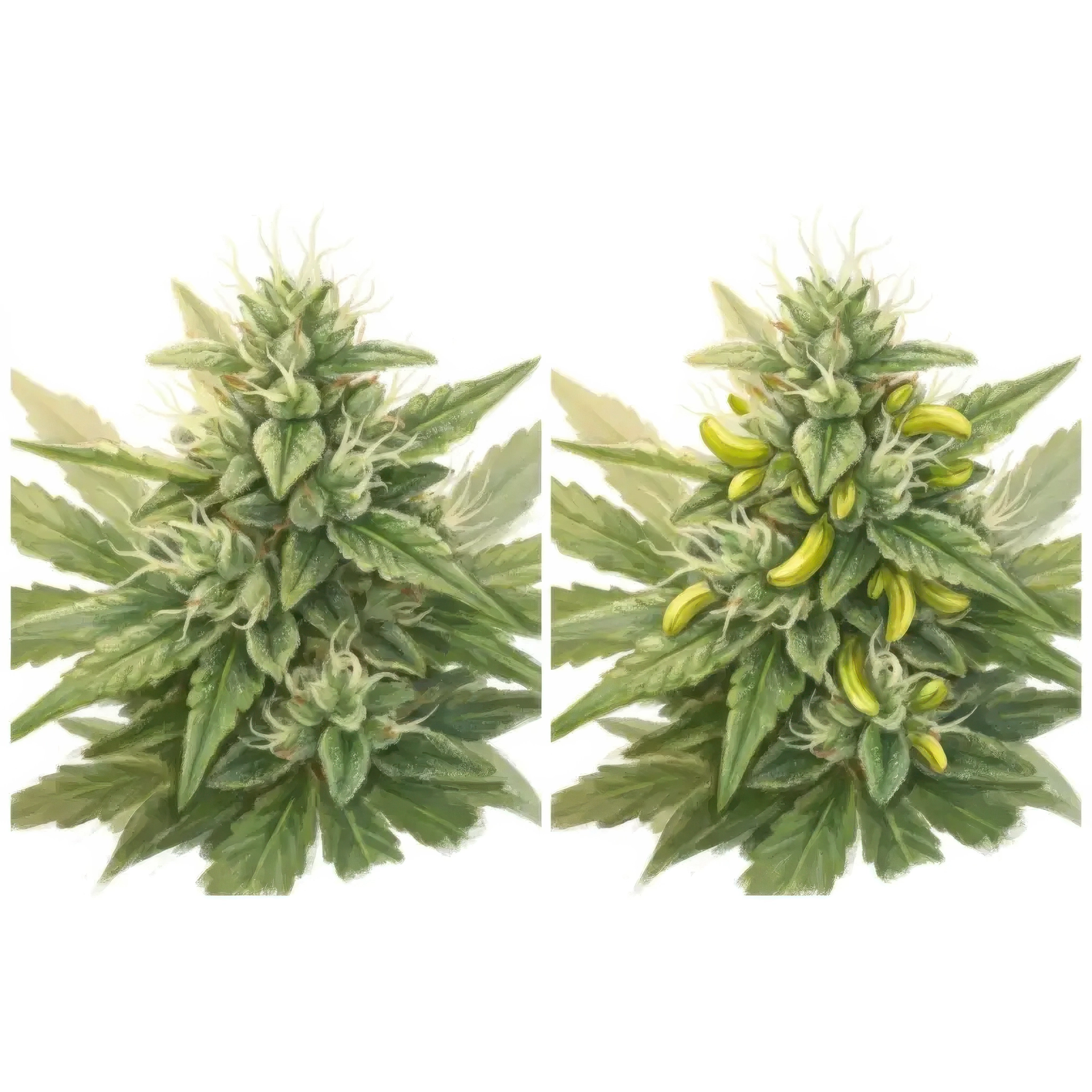 The consequence: a stressed plant can throw ‘nanas and pollinate your own crop.
Cannabis uses the dark period to produce a hormone called florigen that drives flowering. She needs that darkness unbroken — she’s reading the long nights as the signal to make buds. Interrupt the dark period, even briefly, even with a small amount of light, and the florigen breaks down and she gets confused. A confused plant in flower can revert to vegetative growth, stall her bud production, or — the worst outcome — turn hermaphrodite.
A hermaphrodite plant produces both female flowers and male pollen sacs. Those sacs, and the banana-shaped stamens people call nanners, can pollinate the female flowers on the same plant and every other plant in the tent. Pollinated flowers put their energy into seeds instead of resin, so your seedless crop becomes a seeded mess — and the trigger can be as small as a two-second phone flash or a glowing zip seam. The nanners aren’t a disease. They’re her stress response — she thinks she’s in trouble and is trying to make seeds before it’s too late.
What causes a light leak in flower?
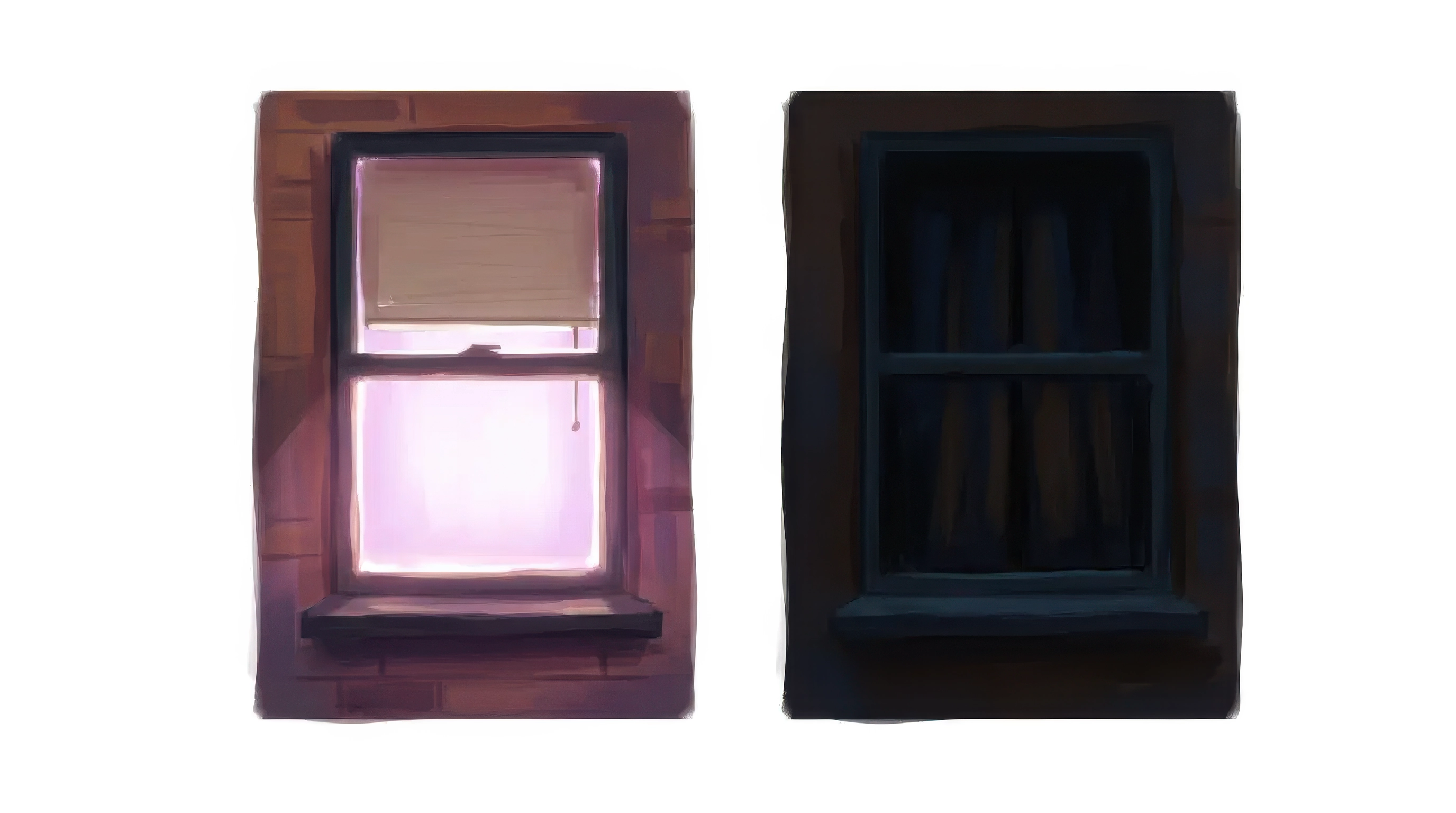 The fix is a seal job: hunt the glow with the lights out, then block it.
Anything that puts light into the tent during the twelve hours it’s meant to be dark. The obvious ones: a zip that doesn’t quite seal, a gap around an intake vent, a duct port that lets a sliver of room light in. The sneaky ones get most growers — the little indicator LEDs on your equipment. The green light on the power strip, the red standby dot on a fan controller, the glow off a timer. Inside a pitch-black tent those tiny lights are enough to break the dark period. Paranoia is appropriate here.
The other cause is you. Opening the tent during lights-off to peek at the buds floods the whole canopy with room light. One leak, once, can trigger a problem you won’t discover for weeks. Finding leaks is simple: before you flip to 12/12, get inside the tent with the zips closed and the lights off, then have the room lights on around you. Any pinprick coming through a seam, a vent or a zip gap shows up in the dark. Tape it. Tape over the indicator LEDs too. Find them now, not in week six.
How do I fix a light leak and a hermie plant?
Two jobs: stop the light, and deal with what’s already happened.
- Make the tent properly light-tight. Close it up, kill the room lights, and check from the inside with the room lit around you. Tape every seam, vent gap and zip gap that glows. Tape over every indicator LED inside the tent — power strip, fan controller, timer, all of them.
- Stop opening the tent in the dark. No midnight checks, no thirty-second peeks during lights-off. If you need to see her, do it in lights-on hours, or use a dim green headtorch, which the plant doesn’t read as a light signal.
- Pluck visible nanners. Find a pollen sac or two on an otherwise female plant and don’t panic — a few caught early can be carefully removed with tweezers. Mist the area first to deactivate any loose pollen, then check her daily for more.
- Judge how far gone she is. A few stress sacs on a healthy female is manageable once the leak’s fixed. If it’s widespread, she may need to come out before she seeds everything else in the tent.
- Move fast. Once pollen is loose it pollinates everything it touches, and pollinated flowers make seeds instead of resin. The faster you fix the leak and remove the sacs, the more of the crop you save.
The deeper lesson is that flowering is as much about what you keep out as what you put in. Light, the thing she needs all day, becomes the thing that sabotages her at night. If she’s also showing bleaching or crisping on the tops, that’s a different light problem — see light burn — but nanners and seeds point at the dark period nearly every time.
FAQ
Will a small light leak really turn my plant hermie? It can. Cannabis needs an unbroken dark period in flower, and even a small amount of light — a glowing zip, an indicator LED, a two-second phone flash — can break down the flowering hormone and stress her into pollen sacs. It doesn’t take much, which is why taping every leak and LED is worth the paranoia.
Can I open my tent during the dark period? Best not to. Opening the tent during lights-off floods the canopy with room light and interrupts the dark period the same as any other leak. If you need to check on her, do it during lights-on, or use a dim green headtorch — green light doesn’t trigger the flowering response the way white light does.
Should I remove a plant that’s gone hermie? It depends how far it’s gone. A few nanners on an otherwise healthy female can be plucked with tweezers — mist first to deactivate loose pollen — and she carries on once the leak’s fixed. If pollen sacs are widespread, she may need to come out before she pollinates and seeds the rest of the tent. Move fast either way.
Will a light leak ruin the whole crop? A bad case can. Once a hermie plant releases pollen, it pollinates the female flowers on every plant in the tent, and pollinated flowers make seeds instead of resin. Catching it early and fixing the leak before pollen is released is what saves the rest of the grow.
Not sure this is your problem? Run her through the Diagnosis Buddy — five questions and you’ll know.
Fixed it?
Here’s how this stage goes when it’s going right — walk the grow →. Still not sure what you’re looking at? Ask the Diagnosis Buddy →