
Low Humidity: When the Air Is Drinking Her Dry
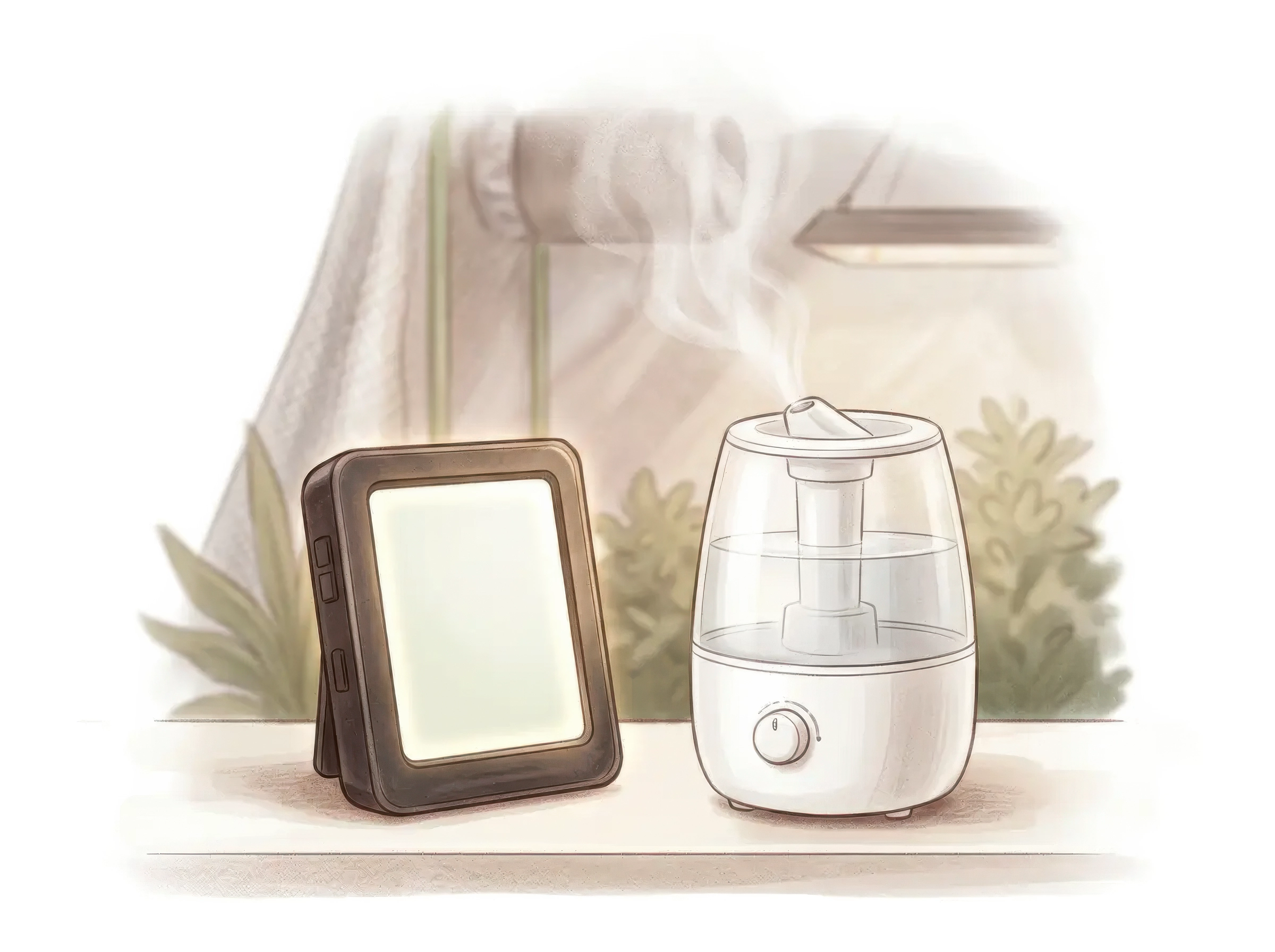 Low humidity: dry air pulls water faster than she can drink, and she shuts down.
This one usually turns up in the same houses as central heating and aircon. The dry air pulls moisture out of everything — your skin, your lips, and your plant. She’s transpiring flat out trying to keep up, drinking the pot dry in a day, and the leaf tips start going crispy at the edges. Most beginners see crispy tips and reach for the pH pen or a nutrient bottle, because crispy tips look like a feeding problem. Bone-dry air makes her transpire too hard — she drinks fast, tips can crisp and growth drags — and it’s common with aircon or heaters running. I once chased a “deficiency” for a fortnight that turned out to be a dehumidifier I’d left running in a room that was already dry as a bone.
The short version:
- Crispy leaf tips and edges, fast drinking, and growth dragging — dry air behind it
- It’s low humidity, not a deficiency — she’s transpiring too hard to keep up with the dry air
- Bring RH up: a humidifier, trays of water, and ease off the extraction a touch
- Aim 40-60% in veg, a touch lower in flower — steady is what she’s after
Want the full breakdown? Keep scrolling.
Why are my cannabis leaf tips crispy and dry?
Because the air is pulling water out of her faster than the roots can replace it. A plant transpires — evaporates water out through tiny pores called stomata — to cool herself and drag fresh water and nutrients up from the roots. When the air is very dry, that evaporation rips along, and she can lose water at the edges and tips faster than she can refill them. The result is crisping that starts at the margins and works in, and a pot that goes light far quicker than you’d expect.
The reason it fools people is that crispy tips are also what mild nutrient burn looks like. Here’s how you tell them apart: low-humidity crisping comes with fast drinking and a dry tent on the hygrometer, while nutrient burn comes from overfeeding and tends to show on the very tips of the newest, strongest leaves regardless of the air. Environment first, water second, pH third, nutrients last — so before you touch a bottle, read the hygrometer. If the air’s dry, you’ve found it. Don’t confuse it with a fan blasting one section of the plant either; direct wind burn crisps the leaves the air is hitting, not the whole canopy.
What humidity should a grow tent be?
Roughly the same band as everything else: 40-60% in veg, with 60% the sweet spot, and a touch lower in flower at around 40-55%. The mistake with low humidity is overcorrecting the other way — you don’t want to drag flower humidity up high to fix crispy tips, because that’s how you invite bud rot. The aim is to lift a too-dry tent back into the band, not to make it damp.
Measure where she lives. Hang a hygrometer at canopy height next to the thermometer and read it daily, because feel lies and dry air is invisible. Two things commonly drag a tent too dry: aircon or a heater running in the room, which strips moisture out of the air, and over-cranked extraction, which pulls air out so fast it can’t hold any humidity. If you want to read temperature and humidity together as a pair, the environmental monitoring guide covers it. For now, watch the number and lift it gently if it’s sitting low.
How do I raise humidity in a grow tent?
Add moisture and slow the air down. Easiest levers first:
- Run a humidifier. The straightforward fix — a small humidifier set to your target RH holds the tent steady without you fussing. DIG stock the sizes that suit a tent. Aim for the band for her stage, not as high as it’ll go.
- Trays of water in the tent. A cheap passive lift. Open trays or a damp towel hung up (not on a heater) add moisture to the air as they evaporate. It won’t move the needle as much as a humidifier, but it takes the edge off a dry tent for nothing.
- Ease off the extraction. If your extraction fan is running hard, it may be pulling air out faster than the tent can hold any moisture. Dial it back a notch — enough to keep the air fresh and the temperature in range, but not so hard it’s stripping the humidity to nothing.
- Mind the heat source. If a heater or aircon in the room is the culprit, you may be fighting it constantly. A humidifier inside the tent usually wins, but it’s worth knowing what’s drying the air so you’re not surprised.
Change one thing, wait a day, then read the hygrometer again. The crispy tips that are already there won’t heal — that damage is set — so judge the fix on the new growth coming in clean and the drinking slowing back to a sensible pace. And don’t overshoot into damp: pushing RH too high to chase crispy tips just swaps low humidity for high humidity and the mould risk that comes with it.
FAQ
Will crispy leaf tips recover? The crisping that’s already there won’t reverse — once a leaf edge has dried out, that’s set. Judge the fix on the new growth coming in clean and the drinking slowing to a normal pace once the air’s back in range. The damaged leaves still photosynthesise, so there’s no need to strip them off.
How do I tell low humidity from nutrient burn? Low-humidity crisping comes with fast drinking and a dry reading on the hygrometer, and it can show across the canopy. Nutrient burn comes from overfeeding and tends to bite the very tips of the newest, strongest leaves. Read the hygrometer before you blame the bottle — environment comes first in the diagnostic order.
Is low humidity worse in veg or flower? It bites hardest in veg and early growth, when she’s building leaves and wants to transpire freely — dry air there stalls her and crisps the new growth. In flower you actually want it lower anyway, so a slightly dry flowering tent is less of a worry, as long as the tips aren’t crisping badly.
Can I just spray the leaves to raise humidity? A light misting helps for a few minutes, but it evaporates fast and won’t hold the tent steady, and spraying in flower risks wetting the buds and inviting rot. A humidifier holds a steady RH far better, and it’s the reliable fix — leave the buds dry and let the air do the work.
Not sure this is your problem? Run her through the Diagnosis Buddy — five questions and you’ll know.
Fixed it?
Here’s how this stage goes when it’s going right — walk the grow →. Still not sure what you’re looking at? Ask the Diagnosis Buddy →