When Nothing Matches: The Full Plant-Problems Picture List
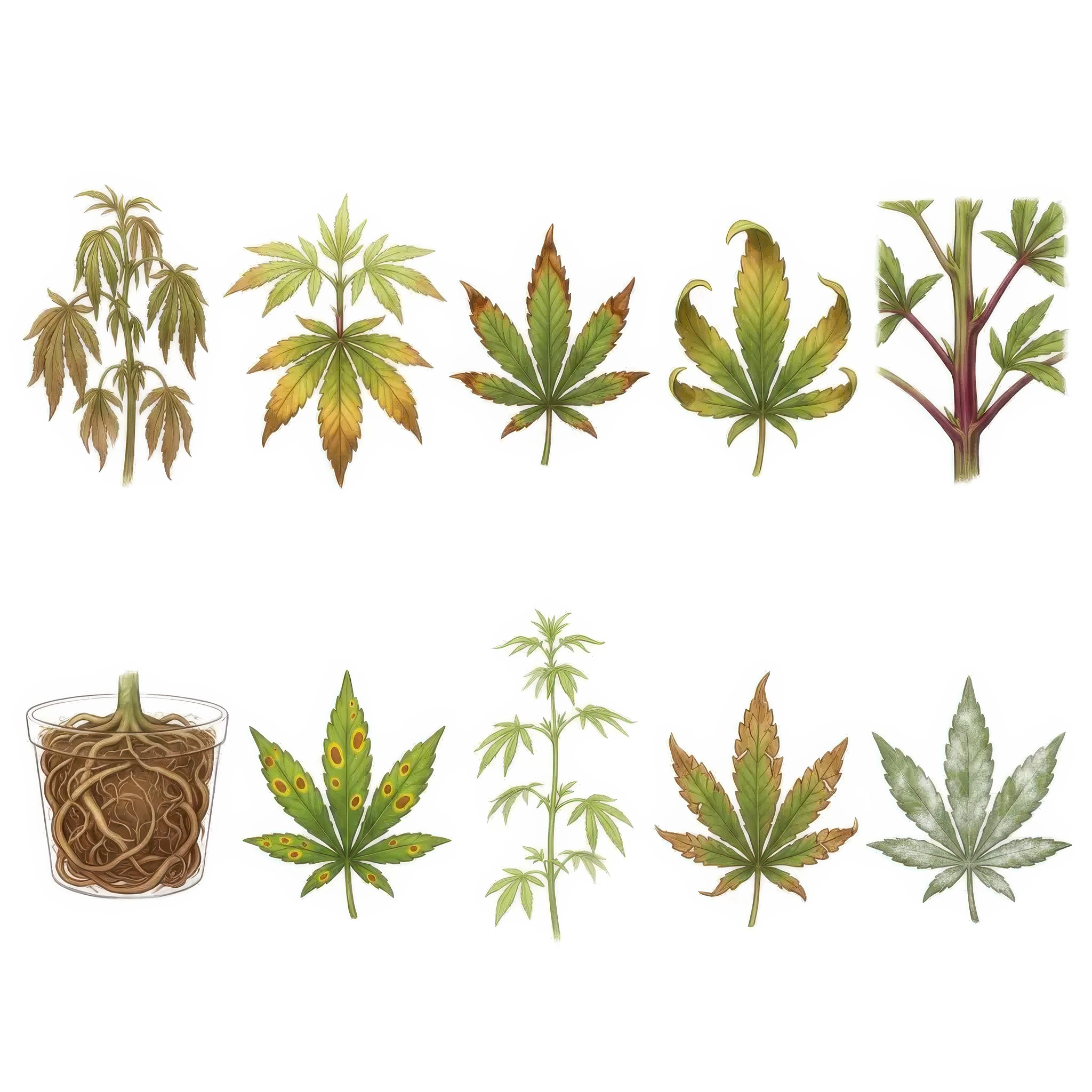 Ten symptoms, one grid. Find yours, then follow it to the right guide.
Sometimes you run through every question — colour, spots, droop, bugs — and nothing lines up cleanly. The plant looks wrong in a way that doesn’t fit the tidy descriptions. That’s not you failing at diagnosis; plants are awkward patients. They can’t point at where it hurts, they show two problems at once, and they all express things slightly differently. This page is the fallback that never fails: stop describing, start comparing. Eyes on real photos until one of them looks like yours.
The short version:
- Match your plant against the pictures below — read NOTHING until a photo stops you
- Before anything else: check pH and check your watering. Between them they’re behind more mystery symptoms than everything else combined
- One problem at a time, one change at a time
- Still stuck? Start the Diagnosis Buddy again from the top — second runs catch what panic missed
Want the full breakdown? Keep scrolling.
Why can’t I identify my plant problem?
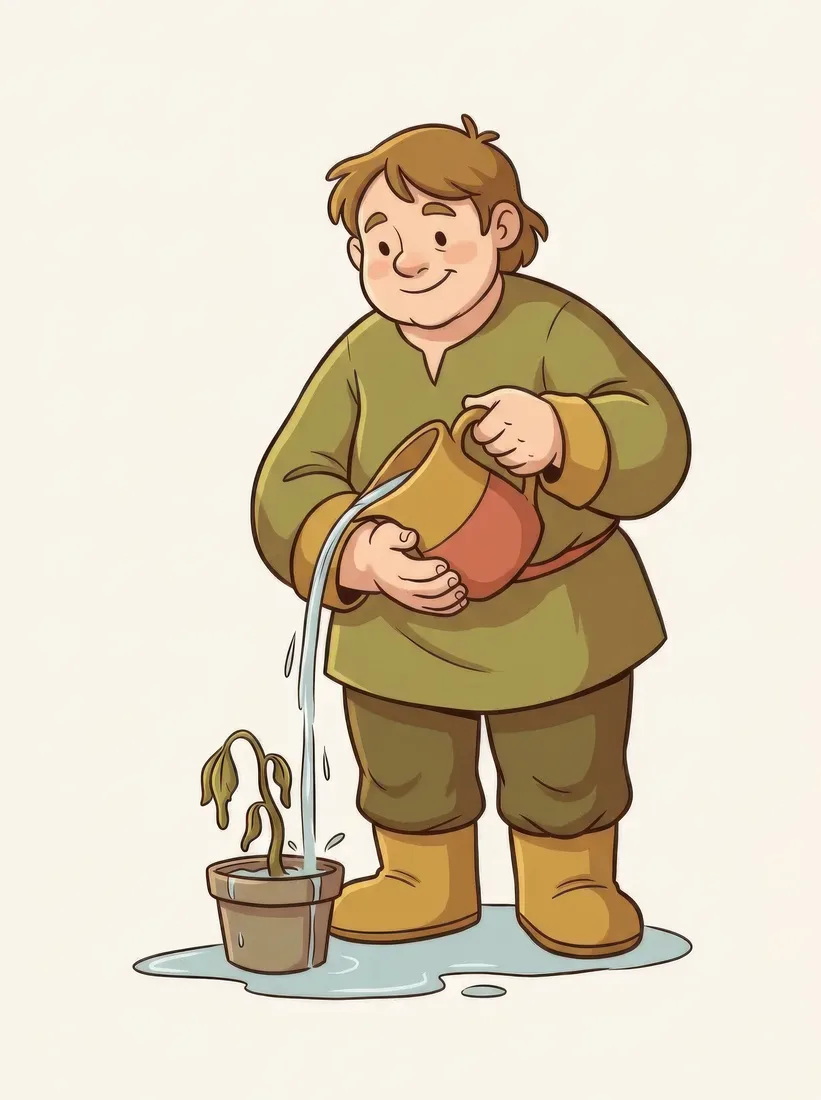
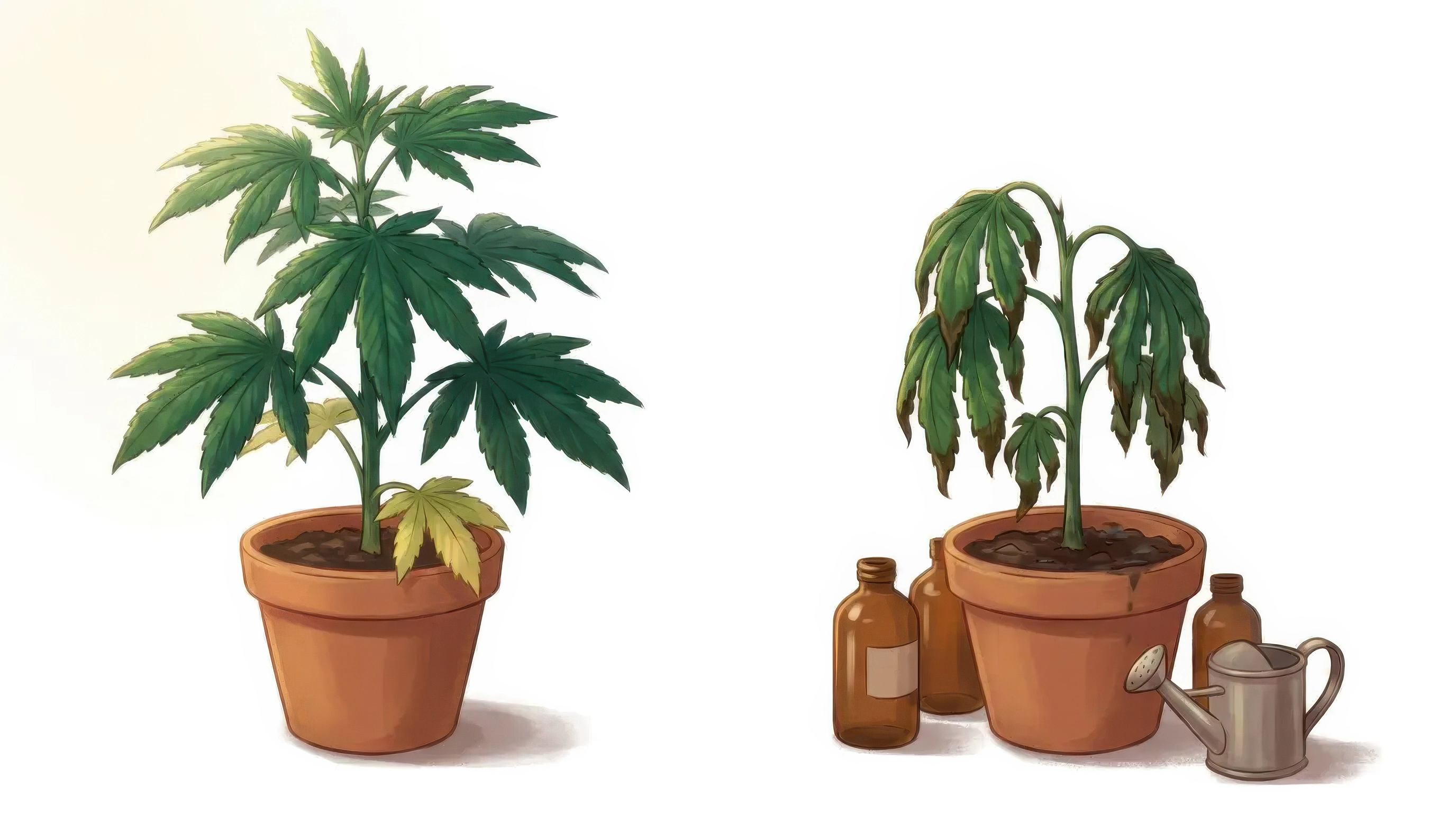 Step one is usually ‘don’t panic’. Half the time she’s fine.
Three honest reasons. One: early-stage problems look like each other — half a dozen issues all open with “slight yellowing.” Two: problems overlap — a pH drift causing a magnesium lockout while the heat’s also a touch high gives you a plant wearing three costumes at once. Three: the descriptions you’re comparing against were written about textbook cases, and your plant didn’t read the textbook.
Which is why pictures beat words here. You’re not diagnosing anymore, you’re matching.
Check these two things first
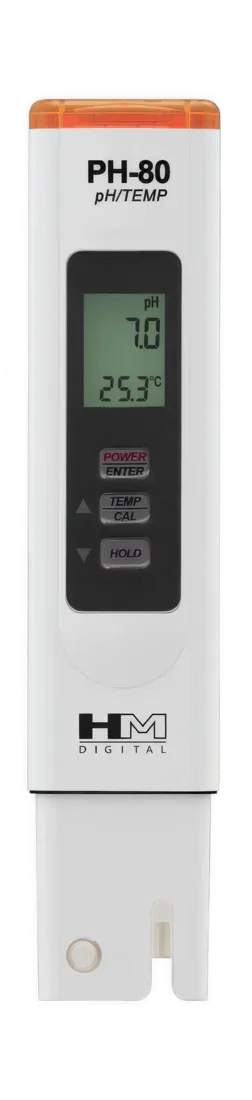
Before the picture list, two checks — because when nothing matches cleanly, one of these is usually pulling strings behind the scenes:
- pH. The quiet villain of this entire site. Out-of-range pH locks nutrients out and produces strange, mixed, nothing-quite-fits symptoms — a bit of yellowing here, some spotting there, general unhappiness. Test what’s going in: soil wants 6.2–6.5, coco and hydro want 5.8–6.2. If you don’t own a pH pen, that’s the purchase that ends more mysteries than any other — DIG stock reliable ones. The pH lockout guide explains why this one check covers so much ground.
- Watering. Lift the pot. Heavy and wet for days = overwatering, which fakes deficiencies, droop and curl convincingly — see the overwatering guide. Feather-light and she revives after a drink = underwatering. Watering trouble hides behind colour trouble more than anything else.
Both fine? To the pictures.
The picture list — match yours
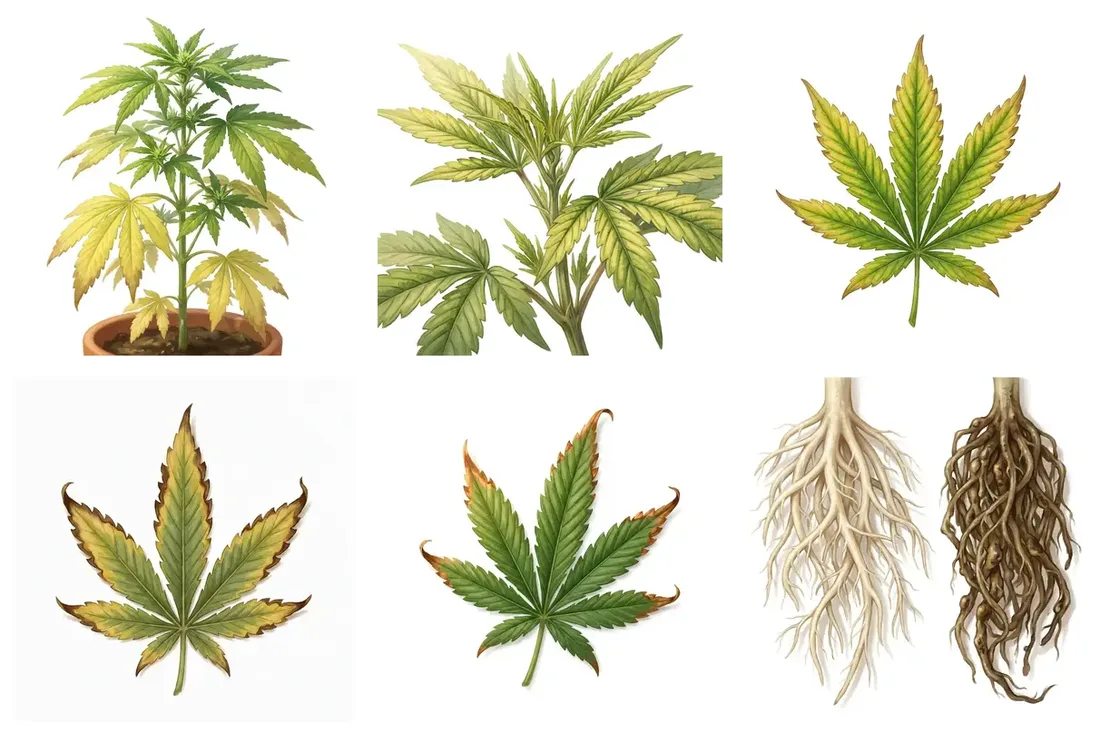
(Build note: each entry renders with its reference photo. Compare, click through, fix.)
Leaves — colour:
- Lower leaves uniform yellow, moving up — nitrogen deficiency
- Yellow BETWEEN veins, veins green, lower leaves — magnesium deficiency
- Pale new TOP growth, veins green — iron deficiency
- Very dark, glossy, tips clawing down — nitrogen toxicity
- Dark dull leaves, purple stems, bronze blotches, slow growth — phosphorus deficiency
- Purple stems, plant otherwise happy — purple stems (usually nothing)
Leaves — damage:
- Brown crispy leaf TIPS — nutrient burn
- Scorched EDGES on older leaves — potassium deficiency
- Rusty brown speckling (coco/RO grows) — Cal-Mag deficiency
- Bleached or crispy tops nearest the light — light burn
- Leaves cupping or tacoing upward — heat stress
- Tiny pale stippling dots, maybe fine webbing — spider mites
- Silvery scratched patches — thrips
- Random mixed symptoms that fit nothing — pH lockout
Whole plant:
- Drooping, pot heavy — overwatering
- Drooping, pot light, revives after a drink — underwatering
- Stretched, leggy, reaching — not enough light
- Growth stalled, water runs straight through the pot — root-bound
- Drooping while wet, roots brown and smelly — root rot
- Slow and sulky in a cold room — cold stress
Buds:
- Grey fuzz or brown mush inside buds — bud rot
- White powder dusted on leaves/buds — powdery mildew
- Spindly towers from the bud tops — foxtailing
- Bananas, pollen sacs or surprise seeds — light leak / hermie
Bugs:
- Little black flies around the soil — fungus gnats
- Green/black clusters on stems and undersides — aphids
- Chewed holes and droppings, outdoor grows — caterpillars
Found your match? One change at a time
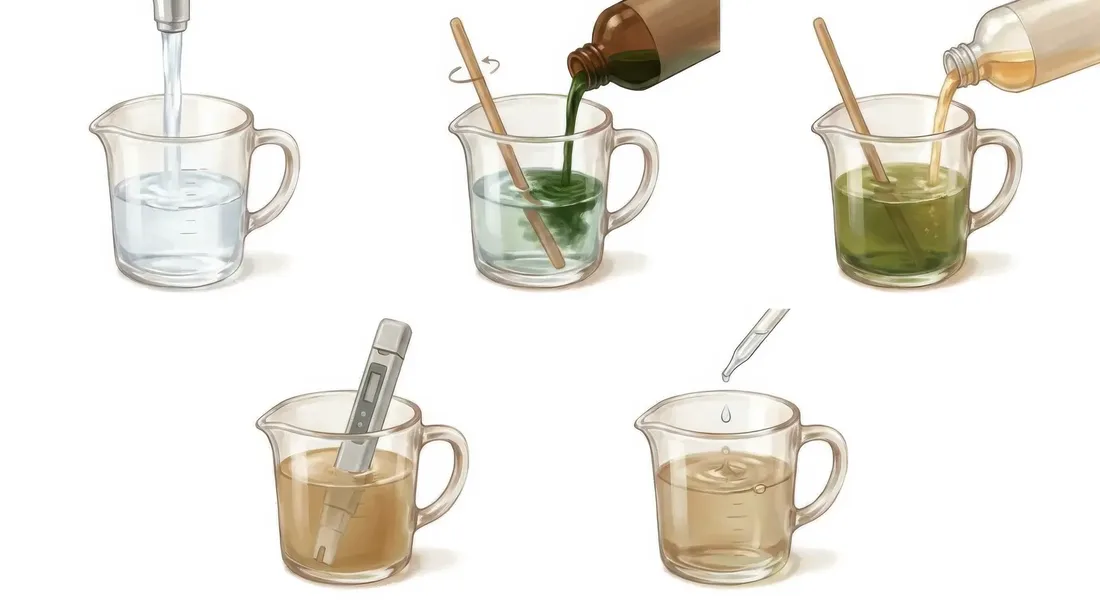
Whichever guide the photo sends you to: make the ONE change it prescribes, then give her several days before touching anything else. The strongest temptation when nothing’s been matching is to fix everything at once out of relief — new feed, pH correction, light moved, supplement added, all on the same afternoon. Do that and she might even recover, and you’ll have learned nothing, and neither will I when you ask me what worked.
FAQ
What’s the most common cannabis growing problem? Overwatering, with pH drift close behind. Between them they cause — or impersonate — most of the list above. It’s why “lift the pot” and “test the pH” open every diagnosis worth having.
Can a plant have two problems at once? Easily, and it’s a big reason nothing seems to match. Fix in this order: watering, then pH, then environment, then feed. Earlier fixes often clear the later symptoms on their own.
How long before I know if a fix worked? Most fixes show in new growth within a week to ten days. Old damaged leaves rarely recover — judge the new ones, not the scars.
What if I still can’t find the problem? Re-run the Diagnosis Buddy from the start, slowly, answering only what you can actually see. If it dead-ends again, get photos — whole plant, close-up, roots if you can — and bring them to someone who’s seen a thousand of these. The counter at DIG has seen several thousand.
Not sure where to start? The Diagnosis Buddy walks you there — five questions and you’ll know.
Fixed it?
Here’s how this stage goes when it’s going right — walk the grow →. Still not sure what you’re looking at? Ask the Diagnosis Buddy →